Get Help On Healthy Eating
From disease-specific nutrition advice to weight loss and diet expertise, Franciscan Health's registered dietitians are here to help.
Search the site for providers, locations, and content.
Eating salads are great ways to incorporate more vegetables into your meal plan.
“That doesn’t mean every salad is build the same, or meet nutritional recommendations,” said Franciscan Health registered dietitian Amanda Crosby. “You can easily eat through your budget for saturated fat, sodium, and calories in a large chef salad.”
So how can you eat half a plate of vegetables and get a better result?
The building blocks for a delicious and filling salad include a variety of greens – look for dark green leafy lettuces like romaine, spinach, kale or arugula.
If you have access to fresh herbs like basil, thyme, oregano or mint, they add zest and extra nutrients to your salad bowl.
Whether you enjoy your protein or prefer a plant-based meal plan, there are plenty of protein options to choose from.
All these protein foods will keep you feeling fuller longer.
Slice up fresh fruit that is in season or on sale – choose a rainbow of colors! Dried fruits without sugar or frozen, no-sugar added is another option.
Raw vegetables like carrots, cucumbers, tomato, peppers, onion, broccoli and cauliflower add crunch and color.
Warm or cold whole grains add bulk and satisfaction. Try whole wheat couscous, barley, quinoa, bulgur or wild rice.
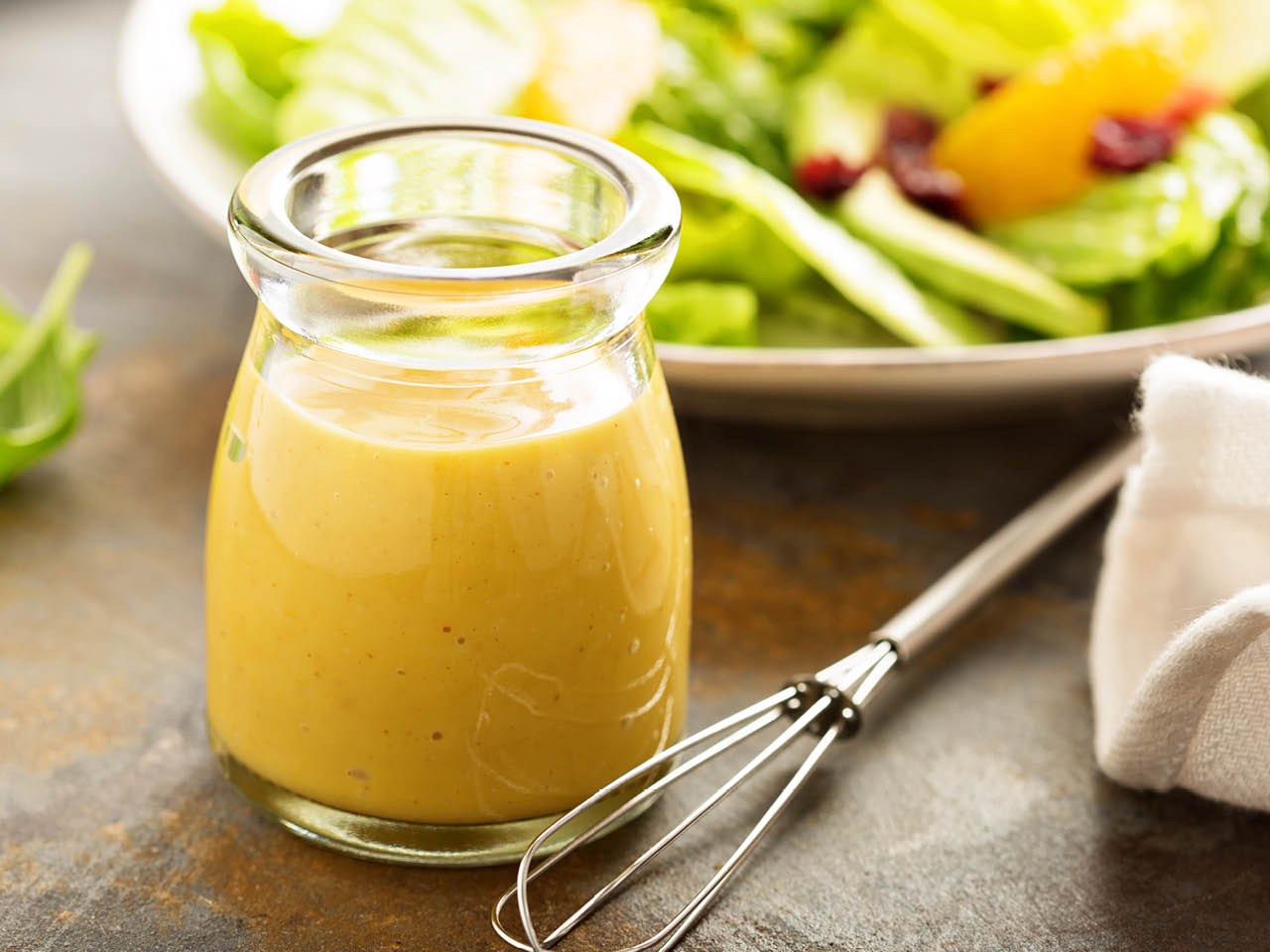
Making homemade salad dressing is simple, takes 1-2 minutes to make, and typically uses ingredients you have on hand. All of these dressings can be refrigerated in a covered container for at least 3 days. Whisk or shake well before serving.
Check out these recipes for easy, homemade, healthy salad dressings.
In a small bowl, whisk together all the ingredients. Serve immediately or refrigerate in an airtight container for up to 2 weeks.
Notes
2 tablespoons = 45 calories; 3 gm fat, 0 sat fat, 2 gm mono fat; 52 mg sodium, 4 gm carb, 0 fiber, 1 gm protein
Combine all ingredients in a jar. Stir well with a fork or shake in a tightly sealed jar.
Notes
2 tablespoons = 45 calories; 3.5 gm fat; 2 gm mono; 1 gm poly; 0.5 gm sat fat; 59 mg sodium, 0 fiber, 2 gm sugar
Combine all ingredients by whisking in a small bowl or shaking in a small jar with a tight-fitting lid. Serve immediately or cover and refrigerate for up to 5 days.
Notes
2 tablespoons = 33 calories; 1.5 gm fat, 1 gm monounsaturated fat; 22 mg Na, 5 gm carb, 0 fiber, 0 protein
In a medium bowl, combine all ingredients and stir well. Refrigerate 1-2 hours before serving for the best flavor.
Notes
2 tablespoons = 21 calories; 0 gm fat, 56 mg Na, 3 gm carb, 2 gm protein
Ingredients
Whisk all ingredients together. Cover and refrigerate until needed.
Notes
2 tablespoons = 45calories; 3 gm fat, 52 mg Na, 4 gm carb, 1 gm protein
Salad dressings can be the downfall of many well-intentioned mea plans. Commercial salad dressings are often a high-sodium, high-sugar condiment, even if you are using a low-fat dressing.
Here is a comparison of some commercial versus homemade salad dressing. For 2 tablespoons salad dressing:
