Building Strength As You Age: How To Build Muscle And Protect Your Health
Key Takeaways: How To Build Muscle And Protect Your Health
- Strength training can help protect your joints and support everyday movement.
- Age-related muscle loss is also known as sarcopenia. Resistance training can help.
- Exercises for healthy aging can start with four movements: squat, hinge, push and pull.
- Start slow if you haven’t worked out in months or years.
If you’re an adult, it’s typical to spend, on average, about 122 hours every week sitting. In the car. At your desk. While on your laptop. The result? Shorter, tighter hip flexors. Deactivated gluteal muscles (gluteal amnesia).
These weakened areas in your body can lead to injury and keep you from the activities you love. As you get older, losing muscle isn’t just about strength—it can affect balance, mobility and your ability to stay independent. So, what should you do about strength training as you age?
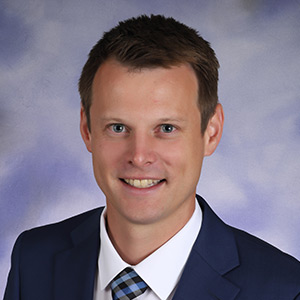
Andrew Hills, DO, a specialist in sports medicine, physical medicine and rehabilitation at Franciscan Health, often hears that question in his practice. Here, he offered ways to help keep your body strong as the years go by.
What Causes The Type Of Injuries You Often See?
“If you go out and do some weekend-warrior event because you're still in the mindset that you're 20 years old, but you're in a 40-year-old body that sits for 120-plus hours a week, that can lead to injury,” Dr. Hills said.
He added, “Before we figure out how to prevent that and maintain function, let's look at the biology of why these injuries happen.”
Starting with sarcopenia.
What is sarcopenia?
“Sarcopenia is the term for muscle loss,” Dr. Hills explained. “It’s a progressive decline as we get older. From ages 50 to 80, we’ll unfortunately lose about one-third of our muscle mass. “It tends to affect more of our quicker, fast-twitch muscles. We lose our power and speed a lot faster than we lose our endurance.”
Along with sarcopenia, there are joint problems
“Our joints also start to take on more of a burden,” said Dr. Hills. “Cartilage starts to lose its water content, which can lead to osteoarthritis. On X-rays, we do not actually see cartilage; we see it as a space. When that space starts to narrow, that's where people get the osteoarthritis diagnosis.”
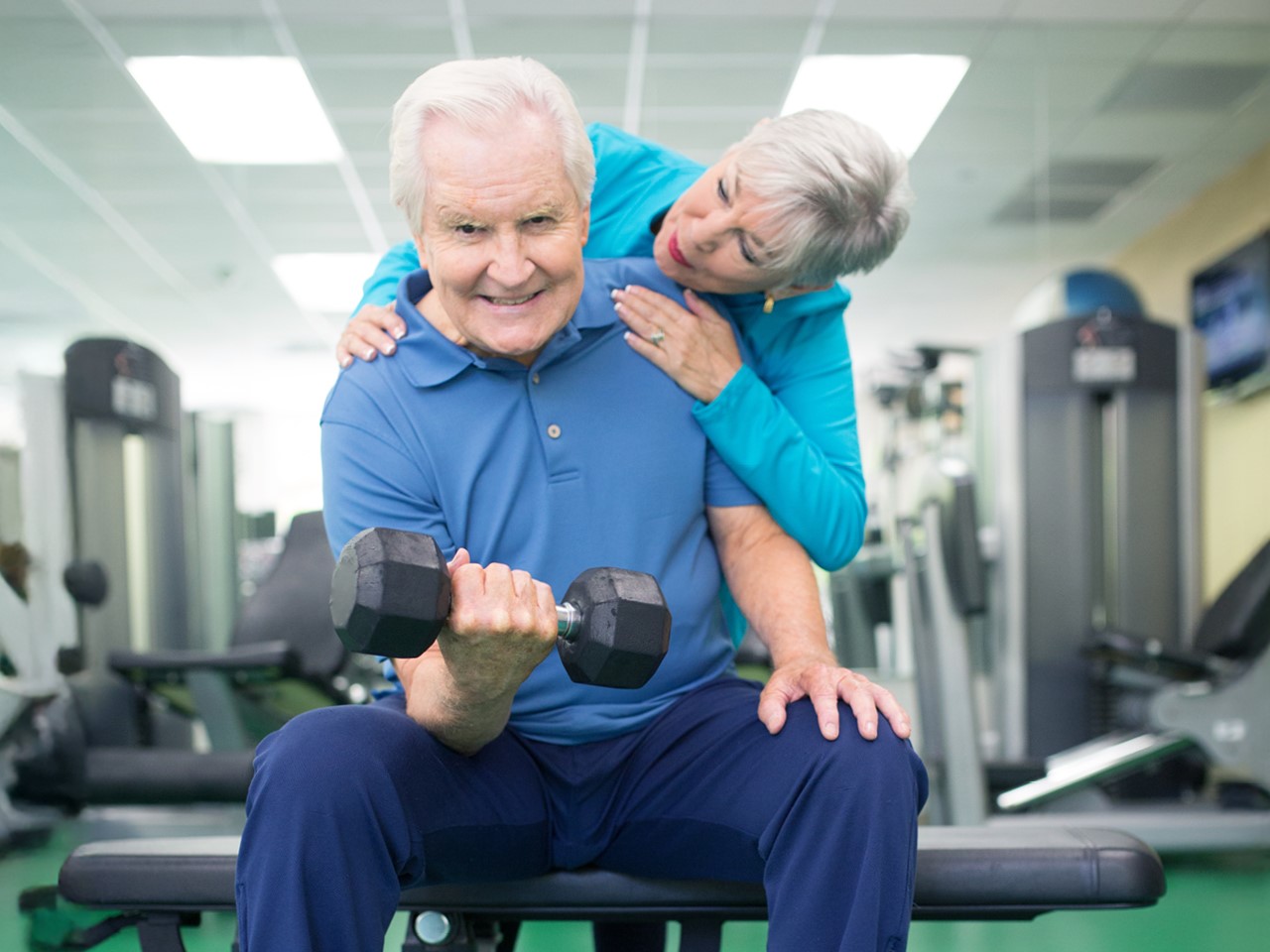
Dr. Hills noted that strength training is like armor. Building muscle after 50 is like building armor around your joints. “That’s because the muscles are not just for show,” said Dr. Hills. “The stronger we can get those muscles, the more they can act as shock absorbers to protect our joints.
“With weight-bearing exercises, especially from a strength standpoint, loading the bones is a major defense against conditions like osteoporosis and osteopenia.”
Why Is Resistance Training Important For Older Adults?
There’s some good news: “We do know we can prevent muscle loss and reverse it,” said Dr. Hills. “The best way we know how to do this is through resistance training for older adults.”
You may wonder, Do I need to be a bodybuilder? Do I need these 20 different exercises to target every muscle in my body?
“That can get overwhelming,” said Dr. Hills. “I break it down to four core movement patterns.”
Four core resistance training movements
- Squat — “Go from a seated to a standing position.”
- Hinge — "A hinge movement is like our deadlifts, where we fire up our glute and our hamstring muscles. We want to keep those muscles strong to help protect the back.”
- Push — “We all need a pushing activity. That’s like your bench press, which can help keep the upper body strong and work on the shoulder stability.”
- Pull — “We cannot forget about pull activities. We live in a world where we sit at our computers, our desktops, our phones.”
“We really want to strengthen the muscles between our shoulder blades and our mid-back, to counteract those chronic postures,” said Dr. Hills. “We need to add at least two days a week for strengthening to prevent these declines and to keep us functional as long as possible.”
Are Middle-Aged Adults Too Old To Lift Weights?
“Your age doesn’t matter,” emphasized Dr. Hills. “We have evidence that shows that strength training not only builds our muscles, but it also potentially counteracts bone loss.
“However, if it’s been a while since you’ve done any active or exercise routine, you want to go slowly.”
What Is The Safest Way To Start Strength Training?
“It isn’t beneficial to stretch cold muscles. You want more of a dynamic warm-up,” advised Dr. Hills. “And if you haven’t exercised for years or months, you want to go slow and steady. You want to listen to your body. If back in high school you were doing 5Ks, but you haven’t run in five or 10 years, it’s best to start with a quarter mile to see how your body responds.”
Dr. Hills added, “The other big thing to incorporate into your strengthening program is balance exercises. Instead of doing only body-weight squats with both legs, consider movements, such as split squats, that change your center of gravity slightly and work on balance at the same time.”
How Can I Tell The Difference Between Soreness And Pain?
“If your pain’s dull and achy, and it just lingers for 24 to 48 hours and then gets better on its own, that’s a good pain,” said Dr. Hills. “What I mean by that is, we do want some soreness to stimulate your muscles to grow.
“But if you get a sharp, stabbing pain or every single Monday you say, ‘I’m worse this Monday than I was last Monday,’ then that can be a sign you’re doing too much too quickly.”
What Is The Main Message For Staying Strong As I Age?
“Don’t forget about strength training as part of your exercises for healthy aging,” said Dr. Hill. “It’s also important to go slow and steady and listen to your body.”
If you’re unsure where to start, a Franciscan Health sports medicine specialist can help you understand pain, movement issues or safe ways to stay active as you age. And, as always, talk with your primary care provider before you start any new exercise program.

Don't wait for pain to sideline you.
If you or your athlete are dealing with recurring aches, stiffness or overuse symptoms, schedule an evaluation with a sports medicine specialist.
Request An AppointmentFeatured Providers
Andrew L Hills, DO, CAQSM
Sports Medicine +1 more
Accepting new patients
Franciscan Physician Network
