
Request An Appointment
Don't wait, prioritize your health. Find the right Franciscan Health doctor for your needs, and request an appointment today.
Search the site for providers, locations, and content.
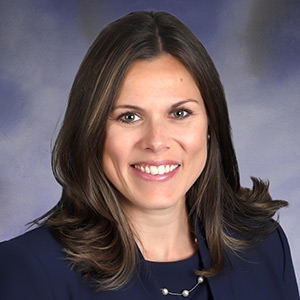
“If you have dense breasts, you’re not alone,” said Jamie Murphy, MD, a breast surgeon with Franciscan Physician Network in Indianapolis. “About half of all women do, and it can raise questions about mammograms and breast cancer screening.”
Dense breast tissue is common, but it can make mammograms more difficult to read and small cancers harder to spot. Starting in 2024, new federal guidelines require mammography centers to tell patients if they have dense breasts and explain what that means for screening. Understanding your breast density helps you make informed choices about follow-up tests and take steps to protect your health.
“Breast density describes how much fibrous and glandular tissue is in your breast compared with fatty breast tissue.
Only imaging, such as a mammogram, can measure density. Doctors classify breast density into four categories.
“Dense breasts simply have more glandular tissue, which appears white on a mammogram — the same color as cancer,” Dr. Murphy explained. “That’s why dense tissue can sometimes hide small abnormalities.” It’s like trying to see a cloud against a cloudy sky — it blends in.
Breast density falls into the following categories:
Women in the heterogeneously dense or extremely dense category have dense breasts.
Dense breasts don’t cause cancer, but they are linked to a higher chance of developing it. According to the National Cancer Institute, women with dense breasts are four to six times more likely to develop breast cancer than women with mostly fatty tissue.
“When we see extremely dense breasts, we know there’s a slightly higher risk for breast cancer,” said Dr. Murphy. “We don’t know if that’s because of the tissue itself or because it’s harder to see through that dense tissue.”
Breast density can also change over time. It can decrease with age, after pregnancy or during menopause. But not always. That’s why your mammogram report includes your density level each year.
Dense breasts make it harder to detect cancer on a mammogram because the dense tissue and tumors both appear white. This overlap can make even experienced radiologists miss small changes.
That’s why 3D mammography, ultrasound and MRI play a crucial role for women with dense breasts. They help doctors see what a traditional mammogram might miss.
You can’t feel dense tissue and it doesn’t change the way your breasts look or feel.
The only way to know if you have dense breasts is through your mammogram results.
If your mammogram shows you have dense breasts, talk with your doctor about what kind of follow-up dense breast screening is right for you.
It’s common to have dense breasts, and it’s not something to worry about. What matters most is to stay informed and take an active role in your breast health.
Dense breasts are just one piece of your overall health story. The most important step is to stay consistent with screening and speak up about any changes you notice.
Mammograms are the most important tool for early breast cancer detection. But if you have dense breasts, your doctor might recommend supplemental screening for dense breasts to help see through the tissue. These can include:
Your healthcare provider can help decide which test makes sense based on your risk factors, age and health history.
Franciscan Health offers 3D mammography and supplemental screening options to help detect breast cancer early, even in women with dense breast tissue. Our breast specialists can help you understand your mammogram report, discuss your personal risk and guide you to the right next step.
If you’re not sure where to start, take our quick Breast Cancer Risk Assessment. It’s a simple way to learn more about your risk factors and start a conversation with your healthcare provider about your screening plan.
Your doctor can help you create a breast screening plan that fits your personal risk, age and breast density. “In most cases, women should continue with yearly mammograms,” Dr. Murphy said. “For women with extremely dense breasts or other high-risk factors, your doctor may recommend alternating mammograms and MRIs every six months.”
If you’re unsure what type of dense breast screening is best for you, ask your provider to explain your mammogram results and discuss whether additional imaging could help you get a clearer picture.
Schedule your mammogram today at your nearest Franciscan Health Breast Center. And if you’ve been told you have dense breasts, ask if additional dense breast screening could help you get the clearest possible results.

Surgery
Accepting new patients
Franciscan Physician Network
