
Request An Appointment
Don't wait, prioritize your health. Find the right Franciscan Health doctor for your needs, and request an appointment today.
Search the site for providers, locations, and content.
Most women learn that the menstrual cycle is important for pregnancy, but few are taught that it is also a powerful indicator of overall health. Every cycle provides valuable information about hormonal function, reproductive wellness, and even the body's response to stress and illness.
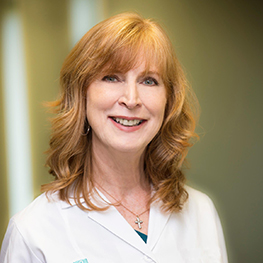
"The Fertility Education and Medical Management (FEMM) program is a comprehensive fertility awareness approach that combines evidence-based fertility education with medical management, said OBGYN Vicky Sherman, MD, medical director, Franciscan FEMM. "By teaching women to recognize and chart natural biomarkers of fertility, FEMM empowers them to understand both their fertility and their overall reproductive health."
Whether your goal is achieving pregnancy, avoiding pregnancy, identifying the cause of irregular cycles, or simply learning more about your body, FEMM provides practical tools to help women make informed decisions about their health.
Many people associate fertility awareness with natural family planning, but the FEMM program at Franciscan Health goes much further. While the method can be used effectively to achieve or avoid pregnancy, it also uses menstrual cycle biomarkers to evaluate hormonal and reproductive health.
The FEMM protocol recognizes ovulation as an important indicator of overall wellness. By learning to identify healthy cycle patterns—and recognize abnormalities when they occur—women gain valuable insight into their reproductive health and can seek appropriate medical evaluation when needed. When taught by a certified FEMM educator and used consistently, FEMM is up to 98% effective for avoiding pregnancy while also supporting women in achieving optimal health before conception.
Although some women choose FEMM because it aligns with their personal or religious values, many others are drawn to the method for entirely different reasons. Some prefer a non-hormonal approach to family planning. Others want to understand their menstrual cycles, identify the root causes of hormonal symptoms, or monitor their reproductive health without suppressing their natural cycle. Women who use hormonal contraception may experience side effects, while others simply prefer to understand how their bodies function naturally. FEMM offers an evidence-based alternative that emphasizes education, informed decision-making, and individualized care.
FEMM views ovulation as an essential sign of reproductive health. A healthy ovulatory cycle reflects the coordinated function of the brain, thyroid, adrenal glands, and ovaries, all working together to regulate hormone production.
Rather than simply managing symptoms, FEMM seeks to identify the underlying causes of concerns such as:
These menstrual cycle biomarkers provide important clinical information that can guide appropriate evaluation and treatment. Understanding the menstrual cycle as a vital sign helps women recognize that reproductive health is an integral part of overall health—not something to be ignored until pregnancy is desired.
"Hormones influence nearly every organ system in the body, affecting far more than fertility alone," said Dr. Sherman. "They play an essential role in metabolism, bone health, cardiovascular function, mood, sleep, and cognitive well-being."
FEMM is built upon decades of scientific research in reproductive endocrinology and women's health. Certified FEMM educators and medical providers receive extensive training in fertility biomarkers, hormonal physiology, and the clinical protocols used to evaluate and address reproductive health concerns. Rather than simply treating symptoms, FEMM seeks to identify and address the underlying hormonal imbalances that may contribute to conditions affecting a woman's health and fertility.
Fertility awareness is often viewed as a woman's responsibility, but FEMM encourages couples to learn together. When both partners understand the menstrual cycle and fertility biomarkers, family planning becomes a shared responsibility rather than an individual burden. Couples gain a deeper appreciation for the woman's cycle and are better equipped to communicate openly about their family planning goals and reproductive health. Many couples find that learning FEMM together fosters greater trust, communication, and mutual respect while promoting informed, collaborative decision-making.
Although many people associate fertility awareness with pregnancy planning, FEMM offers benefits long before and long after childbearing years. Adolescents can learn what constitutes a healthy menstrual cycle. Women in their reproductive years can monitor fertility and identify hormonal concerns. During the transition to menopause, cycle charting continues to provide meaningful insight into changing hormone patterns.
FEMM-trained providers also evaluate women experiencing conditions such as:
Because reproductive hormones influence overall health, fertility awareness remains a valuable tool throughout a woman's reproductive lifespan.
Many fertility tracking systems rely on wearable devices, daily temperature monitoring, or costly ovulation predictor kits. FEMM takes a different approach.
Women learn to recognize naturally occurring fertility biomarkers—particularly changes in cervical mucus—to identify their fertile window. With proper instruction from a certified FEMM educator, these observations become a reliable source of information about both fertility and hormonal health. By learning to understand the body's natural signs, women gain knowledge that no device can replace.
Life events, illness, travel, emotional stress, and changes in routine can all influence ovulation. Women who attempt fertility awareness without formal instruction may misinterpret their charts, sometimes believing they have ovulated more than once in a cycle. In reality, stress may temporarily interrupt the ovulatory process, delaying ovulation and creating multiple mucus patterns before ovulation finally occurs. A trained FEMM educator can help women correctly interpret these patterns, providing reassurance while identifying situations that may warrant further medical evaluation. Understanding these subtle changes allows women to better appreciate how closely reproductive health reflects overall physical and emotional well-being.
Learning FEMM begins with education.
"Certified FEMM educators teach women how to recognize and chart fertility biomarkers while helping them understand what those observations reveal about their reproductive health," Said Dr. Sherman. "The free FEMM app makes charting convenient and allows women to track their cycles with confidence."
When charting reveals irregularities or potential hormonal concerns, a FEMM-trained medical provider can use this information to guide further evaluation and treatment. Whether your goal is family planning, improving hormonal health, preparing for pregnancy, or finding answers to persistent menstrual concerns, FEMM offers an evidence-based approach that empowers women with knowledge about their own bodies.
To learn more about FEMM or schedule an appointment with a certified FEMM educator or medical provider, contact Franciscan FertilityCare Center at (317) 528-7071.
Obstetrics & Gynecology
Accepting new patients
Offers virtual visits
Affiliated Exclusively