
Request An Appointment
Don't wait, prioritize your health. Find the right Franciscan Health doctor for your needs, and request an appointment today.
Search the site for providers, locations, and content.
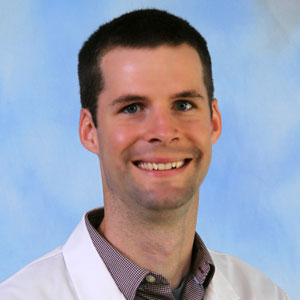
Everyone experiences heartburn occasionally, but when could it be something more serious? Kevin Burke, DO, with Franciscan Health Physician Network’s gastroesophageal reflux disease (GERD) program, answered common questions about GERD and shared important information on its treatment.
GERD stands for gastroesophageal reflux disease. This chronic digestive disorder occurs when the tube that carries food to your stomach doesn’t close properly. This opening allows the stomach contents to leak back into the esophagus (your throat), causing irritation.
Normally, a ring of muscle called the lower esophageal sphincter prevents the backflow of stomach contents into your throat. However, in people with GERD, the lower esophageal sphincter becomes weakened or relaxes, allowing stomach acid to flow both ways.
According to the National Institutes of Health, roughly 20% of Americans have GERD.
“The classic symptoms of GERD are heartburn, the burning pain in the middle of your chest, or regurgitation, the sensation that something’s coming up from the stomach into your chest,” said Dr. Burke.
Often heartburn symptoms appearing more than twice a week can lead to a GERD diagnosis.
“But atypical symptoms, such as difficulty swallowing and a pressure-like pain, not a burning, can also occur,” Dr. Burke explained.
GERD symptoms typically worsen after eating, when lying down or bending over. Certain symptoms require an evaluation, including:
For both men and women, GERD is one of the most common digestive complaints. Close to 40 percent of the U.S. population experiences some form of chronic acid reflux every month.
“Sometimes GERD is sporadic and can flare up depending on what you eat.” Dr. Burke said. “But it’s quite prevalent in the population.”
If left untreated, GERD can lead to health complications.
“It can cause the throat to narrow or constrict, making it difficult to swallow. For some, uncontrolled inflammation over time can increase the risk of esophageal cancer,” said Dr. Burke. “It’s important to identify patients who may be at high risk or are experiencing symptoms which may indicate GERD is severe.”
Doctors diagnose GERD in several different ways.
“First, we conduct a thorough history and physical, talk to patients about their symptoms and key in on the ones which may require more aggressive treatment,” said Dr. Burke.
The Franciscan Health team believes in shared decision-making. So after an evaluation, our doctors give a medical opinion, and based on your priorities and goals, we work to determine the best steps forward.
“We also can give medications that treat acid reflux,” said Dr. Burke. “If they show an adequate response, it’s a fairly good indication that acid is causing their symptoms. But sometimes a person has more serious symptoms, and in those instances, we conduct more invasive testing, one of which is endoscopy.”
During an endoscopy, a doctor inserts a thin, flexible tube called an endoscope through the mouth and into the throat and stomach. The endoscope has a light and a camera, allowing the doctor to see the throat and stomach lining.
“We look for inflammation, take tissue samples, and if we see anything abnormal, we can treat it,” said Dr. Burke. “And sometimes, as part of the endoscopy, we can place a wireless capsule in the lower throat. The capsule stays in place for four days, then detaches on its own and passes through the patient’s digestive tract.”
The capsule provides continuous data on how much stomach acid reaches the throat.
Dr. Burke said that heart issues can also masquerade as reflux.
“That’s important for us to consider when seeing a patient complaining of heartburn,” he said. “We want to ensure this isn’t something other than reflux.”
“Many patients, by the time we see them in our clinic, they’ve been on acid reflux medication – whether over-the-counter medicine or their primary care provider has prescribed something,” said Dr. Burke.
Treatment for GERD usually involves lifestyle changes, including adjusting the foods you eat, avoiding trigger foods, losing weight if necessary, eating smaller meals and not lying down immediately after eating.
“We like avoid prescribing long-term medication if we can,” said Dr. Burke.
“Several studies on sleep position indicate patients who are side sleepers – sleeping on the left side – can improve reflux and the amount of acid flowing back into the throat,” said Dr. Burke. “This is because of where the stomach sits. When you’re on your left side, the liquid pools into an area that keeps it away from the throat.”
When sleeping on your right side, acid pools along the entrance of the throat and tends to flow into it.
Also, to help the acid remain in the stomach when sleeping and prevent worsening reflux, doctors recommend positional devices like a wedge placed on the mattress or electronically elevating the head of your bed.
Dr. Burke said several changes can help reduce GERD symptoms. For instance, patients can avoid eating big meals.
“People do a little better if they eat smaller, more frequent meals because big meals fill the stomach, and the contents can wash back up into the throat.”
Try these additional tips:
If you suffer from heartburn or GERD symptoms, these lifestyle changes may help:
GERD can increase a patient's risk of esophageal cancer, experiencing narrowing of the esophagus and having problems swallowing.
Franciscan Health's GERD program provides a multidisciplinary approach for diagnosis and treatment for patients suffering from gastroesophageal reflux disease or GERD. The gastroenterologists at Franciscan Health have specialized training in endoscopic procedures of the digestive tract. While many GI treatments can be offered as outpatient procedures, we also offer inpatient procedures and recovery when necessary.
Read more about the links with heartburn signs and your overall health:

Gastroenterology +1 more
Accepting new patients
Franciscan Physician Network
