Request An Appointment
Don't wait, prioritize your health. Find the right Franciscan Health doctor for your needs, and request an appointment today.
Search the site for providers, locations, and content.
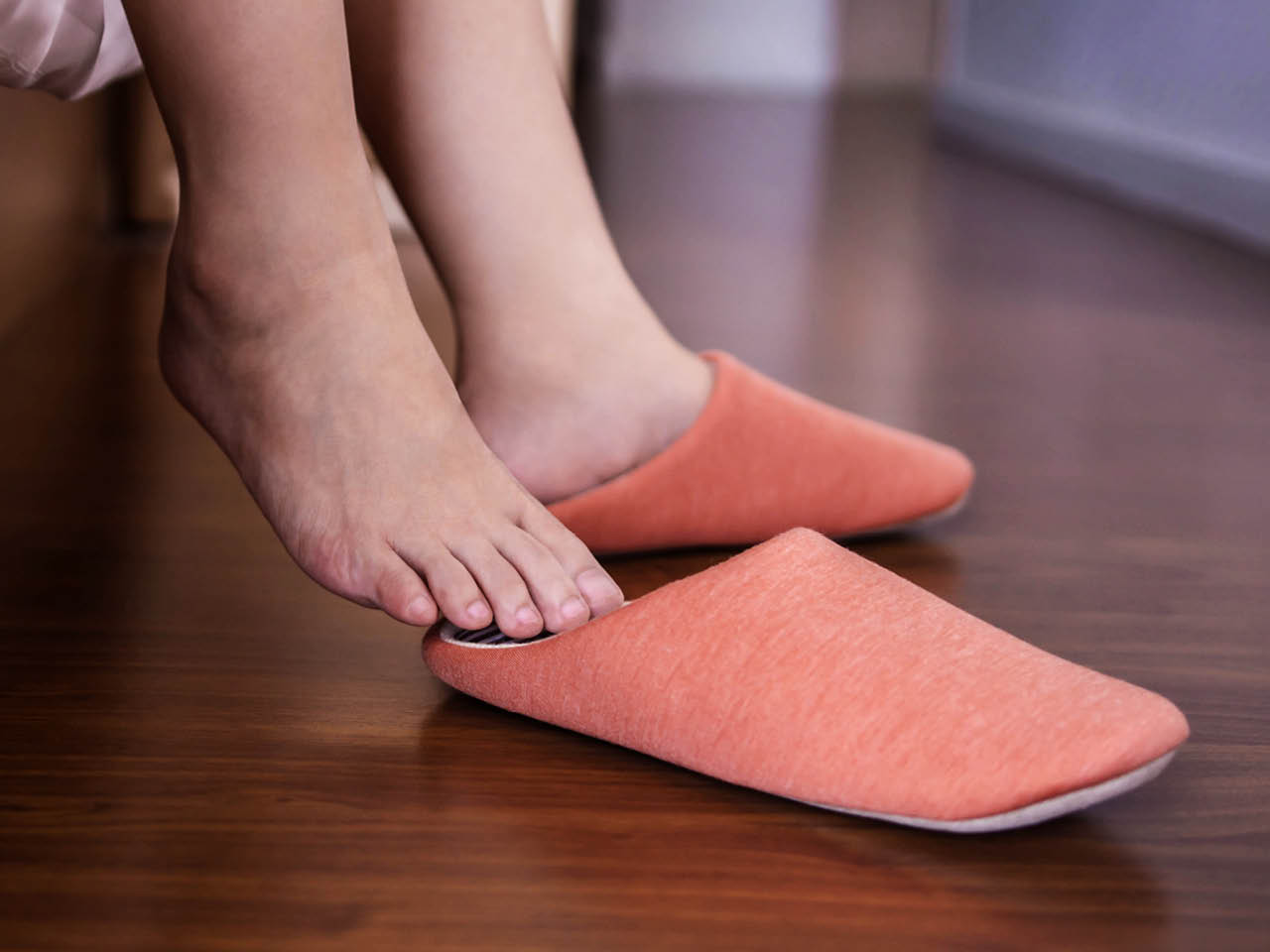
Do the first few steps out of bed each morning cause you to wince in pain? Plantar fasciitis might be the cause.
Plantar fasciitis is one of the most common causes of heel pain, affecting more than 2 million people each year. Learn what to do if you think you have plantar fasciitis symptoms and when to see a doctor.
Plantar fasciitis, which often causes a stabbing pain in your foot near your heel, develops when tissue supporting the foot's arch becomes irritated.
Plantar fasciitis is the most common heel injury in athletes, especially runners, because jumping and repeated pushing off can hurt the plantar fascia. But you don't have to be an athlete to suffer from plantar fasciitis symptoms.
Plantar fasciitis is caused by inflammation and swelling of the plantar fascia, a long, thin ligament that extends from the heel to the toes on the bottom of the foot. This thick band of tissue forms part of your soft arch in your foot.
Chronic overuse or repetitive tension on the plantar fascia causes pain on the heel bone. The inflammation and swelling of the plantar fascia can lead to a feeling of sharp pain in the foot, toward the heel, or a feeling of tenderness throughout the underside of the foot, especially at the ball of the foot.
Plantar fasciitis may be caused by:
Other causes of plantar fasciitis include:
This ligament in the heel of the foot can become inflamed after wearing non-supportive footwear on hard, flat surfaces for a prolonged period.
Morning pain is from the sudden tension of the plantar fascia as it gets stretched after shortening overnight. Plantar fasciitis most commonly occurs with the first few steps in the morning or after sitting for a long time and toward the end of the day from prolonged standing.
A bone spur is a small, abnormal bone growth that can cause pain if they rub on a nerve or other tissue. A heel spur may be located on the underside of the heel bone where it attaches to the plantar fascia.
A person may experience heel spurs if they have long-standing plantar fasciitis, but the heel spurs themselves do not cause the pain.
Treatment options for heel spurs are like the treatments as for plantar fasciitis. These include home care including rest, ice, anti-inflammatory medicine, stretching and correct footwear or shoe inserts.
More serious heel spurs may require corticosteroid shots (injections) under a physician's guidance or surgery.
It's important to maintain flexibility in the foot and the ability to fully extend the big toe at the joint. Proper footwear and proper training techniques are also important.
To avoid overuse injuries such as plantar fasciitis:
Home treatment for plantar fasciitis includes:
Icing the heel is important, and using a frozen water bottle can help a person stretch their plantar fascia while icing.
“You can try some gentle hands-on massage with your own hand or rolling a ball or a frozen water bottle to help decrease some of that sensitivity and increase the flexibility or mobility of that fascia,” said Austin Kiel, a physical therapist at Franciscan Health Indianapolis.
Rest, elevating the foot and wearing good supportive shoes with a stiffer sole and slightly higher heel also can help during recovery from plantar fasciitis.
“Stretching your calf, stretching your fascia, can be as easy as putting your foot up against a wall and leaning forward till you feel that stretching sensation,” Kiel said. “I like to recommend holding it between 15 to 30 seconds. If you can get to that higher range of duration, the literature and the data suggest that you're going to get more of an actual change in tissue length, but you can get improvements with less of a hold.”
While plantar fasciitis may make it harder to do your regular activities, it is important to not change the natural way you walk, as this can lead to other joint, foot or back problems.
Non-impact exercises such as swimming, walking or biking can be helpful exercise alternatives with plantar fasciitis.
While many people with plantar fasciitis do recover without much treatment in a few months, not treating plantar fasciitis may result in chronic heel pain that makes it harder to do your regular activities. It is important not to change the natural way you walk, trying to prevent pain, since this may cause additional foot, knee, hip or back problems to develop.
If home treatments for heel pain and plantar fasciitis fail, a visit to your doctor or a physical therapist may be in order. In Indiana, you can schedule your first physical therapy visit without a doctor's referral.
For most people, you won’t need surgery for your plantar fasciitis.
Treatment options your doctor may suggest include:
Rest, icing, stretching, orthotics and physical therapy are some of the many treatment options.
“Typically, I always recommend to people try some of the stretching, try some of the self-treatment on your own,” Kiel said. “If you feel like you're not making any substantial progress, it's better to be seen earlier than waiting before this develops into more of a chronic condition.”
More than 90 percent of people improve within 10 months of starting treatment. Heel pain is usually treated conservatively without surgery.
While surgery is rare and typically considered a last resort for treating plantar fasciitis, it may be necessary for chronic and unresponsive cases. A surgeon will release part of the plantar fascia from the heel bone to relieve tension and reduce inflammation.
A gastrocnemius recession, which releases and effectively lengthens one of the calf muscles to decrease the calf tightness and relieve the tension of the plantar fascia, and plantar fascia release are two options for surgery if conservative treatments have failed to work for 12 months or more.
If your heel pain continues despite home treatments or it starts to affect your daily life, it’s essential to talk to your provider. “Don’t wait until the pain is excruciating,” advised Dr. Diel. “Early intervention can prevent the condition from worsening.”
Plantar fasciitis doesn’t have to limit your life. With proper guidance and care, you can manage this common foot condition. To take significant steps toward relief and recovery, recognize early symptoms, understand the causes, and explore home and medical treatments.
The plantar fascia is a thick banded tissue that runs from the heel to the ball of the foot, connecting the whole bone to the toes.
Inflammation of the plantar fascia is called plantar fasciitis.
“Usually, my best example is I see people did something more than what they usually would do, like they went on vacation, did a lot more walking than they used to, or was helping somebody move,” Dr. Diel said. “Also, it can be from high-impact activity, like you start training for a 5K or running or anything that causes impact or strain on the heel.”
“If someone did a lot more walking or they went on vacation, it can come through as like a sharp intense pain that radiates along the arch, or it can be something that comes on gradually where you'll feel it first thing in the morning, will be worse, and then it kind of loosens up through the day,” Dr. Diel said. “But usually, a little bit of tightness you'll feel in the back of the heel.”
About 2 million people are treated for this heel condition each year, according to the American Academy of Orthopaedic Surgeons.
“Some people will be a little bit more flat-footed than others,” Dr. Diel said. “But definitely, all of us are carrying a few extra pounds today, so that weight definitely contributes to it.”
Most people with plantar fasciitis recover without much treatment in a few months.
“Short answer, it can return,” Dr. Diel said. “Usually, most people will develop routines where they'll stretch. Ultimately, what it comes down to is the more stretched you can keep this ligament, the less it will flare up and the less pain you'll have. A lot of people will change the type of shoes they're wearing. They'll switch their shoes out more often. They'll wear better arch supports and what basically caused their pain in the beginning, they'll stop doing that. It's a lifestyle change.”
“If you've tried the stretching, the icing, a lot of people will have already tried different gym shoes. Anything that's starting to affect your daily life or causing you to walk differently, come on in,” Dr. Diel said. “You don't have to wait until it's excruciating.”


Podiatrist +1 more
Accepting new patients
Franciscan Physician Network
