Take The First Step Toward Pain Relief
If joint pain interferes with your life, Franciscan Health can help. Request an appointment with a Franciscan Health orthopedic specialist near you.
Search the site for providers, locations, and content.
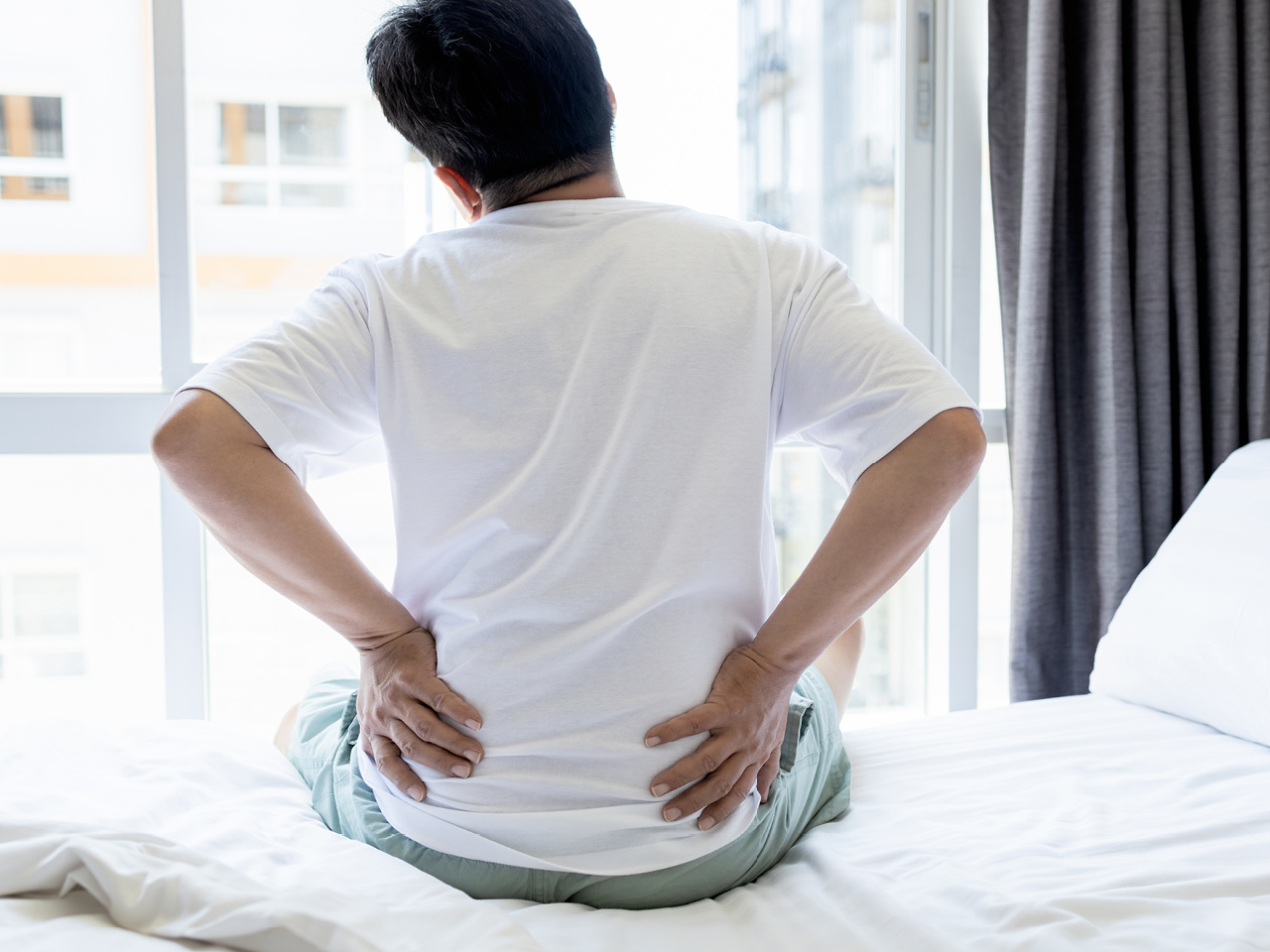
A good night’s sleep is essential for your health, but for many people, hip pain makes getting that rest nearly impossible. You might start the night comfortable, only to wake up a few hours later with a deep ache or sharp pain in your side. You toss, turn, and try to find a new position, but the discomfort lingers.
If this sounds familiar, you are not alone. "It's one of those things I get asked all the time, 'Well, my knee or my hip, it hurts at night. Why is that?'" said Nikhil Pandhi, DO, a board-certified sports medicine doctor with Franciscan Physician Network Orthopedics & Podiatry Munster.
Hip pain at night is a frequent complaint that affects adults of all ages, though the causes often change as we get older. Whether the pain comes from the joint itself or the muscles surrounding it, the result is the same: lost sleep and tired, painful days.
Understanding why your hips hurt when laying down is the first step toward pain relief. By looking at how your hip joint functions, how your daily activities impact your body, and what medical conditions might be at play, you can find the right solution to get back to a peaceful night’s rest.
Many patients ask why their hips seem to function reasonably well during the day but start throbbing the moment they try to sleep. According to Dr. Pandhi, this phenomenon of hip pain worsening at night has a physiological explanation related to how we use our bodies.
When you are active throughout the day, you are constantly putting weight on your hip joints. Whether you are walking, standing at a workstation, or running errands, that pressure adds up.
"By the end of the day, most likely you have less space in your hip joint," said Dr. Pandhi. "As the fluid compresses, you lose space in the joint."
In addition to this loss of cushioning space, the lining of the hip joint, known as the synovium, can become inflamed. If you already have early-stage arthritis or another underlying issue, a full day of activity can leave this lining in the hip irritated. This creates an inflammatory response. When you finally lie down and the distractions of the day fade away, your body registers this inflammation as a deep ache.
Furthermore, gravity and pressure play a role. When you lie directly on your side, you press the soft tissues, bursa, and hip joint against the mattress. If there is already inflammation present, this direct pressure acts like pushing on a bruise, causing immediate discomfort.
You might think that resting your hips by sitting all day would help prevent hip pain at night, but the opposite is often true. A sedentary lifestyle can be a major contributor to hip stiffness and night pain.
If you work at a desk, you may be sitting for 40 to 50 hours a week. This seated posture keeps your hamstrings and your hip flexors in a shortened position, placing your body in a state of imbalance.
Over months or years, this routine leads to decreased strength in your hips. When you finally stand up or lie down to sleep, those tight hip flexors pull on your lower back and pelvis, while your weakened glutes fail to support the joint properly. This imbalance creates tension that manifests as aching hips at night.
Movement is the antidote to prevent hip pain at night. Health experts often use the phrase "motion is lotion." Synovial fluid, which lubricates your joints, circulates better when you move. Taking frequent breaks to walk, stretch, or use a standing desk prevents the muscles from locking into a shortened position.
Sleeping on your side can result in more hip pain than sleeping on your back, according to the Arthritis Foundation.
If you sleep on your side, gravity can pull the top leg down, twisting your pelvis and straining the hip.
If you are struggling to sleep because of sore hips, there are several strategies you can try at home to reduce discomfort and improve hip mobility.
Placing a pillow between your knees can keep your hips aligned and reduce tension on the joint. If you sleep on your back, placing a small pillow under your knees can take pressure off your hip flexors and lower back.
Over-the-counter non-steroidal anti-inflammatory drugs (NSAIDs) like ibuprofen and naproxen can be used on a short-term basis to reduce inflammation and relieve pain. Speak to your doctor about how often and how long you should take them.
Ice packs and heating pads can also provide instant, temporary relief for pain.
Loosening tight muscles before bed can significantly reduce night pain. Learn about stretches that can be done for stiff hips.
"One of the best ways to prevent hip pain is staying active, even with as simple of an activity as walking," said Lafayette physical therapist Patrick Yoder, PT, DPT, who practices at Franciscan Health in West Lafayette, Ind.
You do not need to run marathons to see benefits. Gardening, household chores or a daily walk around the block can keep the hip joints lubricated and mobile.
A worn, sagging mattress offers less support and puts more pressure on your hip joints. Also, soft mattresses may be unable to support your hips, according to the Sleep Foundation.
Many people try to "wait out" the pain, but suffering in silence can lead to a decline in your sleep quality and your overall health. If hip stiffness or pain prevents you from doing the things you love—like playing with grandchildren, golfing or simply walking through a grocery store—it is time to seek medical advice for hip pain.
Dr. Pandhi warns that avoiding treatment can lead to a vicious cycle. Hip pain leads to inactivity, inactivity leads to weight gain, and weight gain puts even more pressure on the hip joint.
Hip pain is not a single condition. It is a symptom that can point to several different problems. Distinguishing between them often requires an expert eye, but understanding the common culprits can help you describe your symptoms better.
Medical reasons for hip pain can include:
Learn more about common causes of hip pain.
Diagnosing the cause of your hip pain begins with a conversation with your doctor and an examination. Dr. Pandhi emphasized the importance of getting X-rays while standing up. Lying-down X-rays might make the joint look fine, but a standing X-ray reveals how much joint space you actually have when your body is bearing weight. This provides a "true idea" of your daily joint function.
The doctor will also check to ensure the pain is actually coming from the hip. It is a common misconception that hip pain is always a hip problem; often, issues in the lower back can radiate pain to the hip area. A thorough exam differentiates between the two.
Many patients avoid seeing the doctor for hip pain because they fear they will be told they need immediate surgery. However, orthopedic surgeons view hip replacement surgery as a last resort.
Depending on your diagnosis, your treatment plan for chronic hip pain might include:
Hip pain at night does not have to be your new normal. By understanding the causes and seeking the right help, you can return to a life of movement and restful sleep.
"I examine the patient and put the patient through a range of motion, check their strength, their neurovascular status of their hip, and get an idea if what I'm seeing on the X-ray is actually correlating to what I'm seeing on exam," Dr. Pandhi said. "You know, is this a true joint problem or is it outside the hip joint, or is it the back?"
Depending on your health insurance and condition, you may qualify for direct access to physical therapy to evaluate your hip pain. Contact one of Franciscan Health's physical therapy locations in Indiana for further guidance.
During your first physical therapy visit, your physical therapist will assess your condition, create a personalized plan to help your hip pain and guide you through exercises to improve function and reduce pain.
The length of your physical therapy program depends on what is causing the hip pain, your goals and progress. PT plans for hip pain are tailored to each patient’s needs.


Sports Medicine
Accepting new patients
Franciscan Physician Network
