
Connect With A Cardiologist
Request an appointment with a Franciscan Health cardiologist near you and stay on top of your heart health.
Search the site for providers, locations, and content.
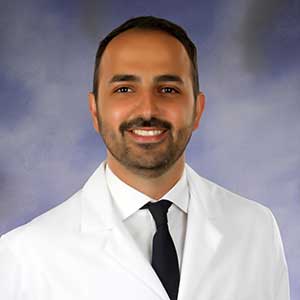
Hypertrophic cardiomyopathy – or HCM – is when the heart muscle becomes unusually thickened and cannot pump blood as well as it should. HCM is the leading cause of sudden death in athletes, but it can happen to non-athletes too. We recently sat down with George Lolay, MD, a cardiologist at Franciscan Health Indianapolis, to learn more about HCM.
HCM occurs in about 1 in every 500 people. “However, recent literature says it may actually be much more common and happen in as many as 1 in 200,” Dr. Lolay said.
As the leading cause of sudden death in athletes – people considered much healthier than the general population – there’s a misconception that HCM occurs more often in athletes. However, that’s not the case.
Dr. Lolay explains that there aren’t any gender, race or occupational differences in people who develop HCM.
In most cases, a genetic mutation passed down in families causes HCM. But in a smaller number of people, HCM develops without any family history.
In young people, the only symptom of HCM is most often death – either during sleep or physical exertion (such as high-intensity workouts or contact sports). If a person is older and develops the condition, they are less likely to experience sudden death as the initial symptom. Their symptoms may include the following:
Another condition that causes thickening of the heart muscle – stiff heart syndrome – can cause similar symptoms. However, stiff heart syndrome differs from HCM and occurs when the heart muscle thickens in response to high blood pressure. This can lead to shortness of breath and fluid buildup in the lungs and legs.
If you have a family history of sudden unexplained death or a family history of the gene mutation that causes HCM, you should undergo an annual screening echocardiogram (heart ultrasound). You should also encourage your first-degree relatives (parents, siblings and children) to have genetic tests and annual screening echocardiograms, if recommended based on your genetic tests.
Dr. Lolay stresses that a screening echocardiogram each year is critical. If you carry the gene mutation, the condition can develop suddenly – even if your prior year’s screening echocardiogram showed no sign of the disease.
If you have the gene mutation that causes HCM, no preventive measures will prevent it. However, your annual screening echocardiogram can ensure the condition hasn’t progressed. If you have developed hypertrophic cardiomyopathy, your annual screenings allow your heart doctor to begin a treatment regimen as soon as possible.
Dr. Lolay explains that researchers have firm recommendations for athletes with HCM.
“Experts say that because it’s an unpredictable disease, athletes should not participate in competitive sport,” he said.
At a minimum, Dr. Lolay advises that anyone diagnosed with HCM should avoid intense cardio workouts and contact sports. They should also work with their cardiology care team on personalized recommendations if they want to participate in recreational sports.
“The treatment for HCM depends on how the disease affects your heart,” explains Dr. Lolay.
Your HCM treatment plan will consider how the condition affects your body and what other health conditions you may have.
Dr. Lolay notes that there is a new medication called mavacamten (Camzyos) that the U.S. Food & Drug Administration (FDA) has recently approved for use. “Researchers continue to explore how this new medication fits into the HCM treatment plan before the care team explores surgical options for a patient,” he said.
If you have a family history of sudden, unexplained death or HCM, schedule an appointment with a member of our Heart Care team to get started on your annual screening regimen.

Cardiovascular Disease +1 more
Accepting new patients
Franciscan Physician Network
