Request An Appointment
Don't wait, prioritize your health. Find the right Franciscan Health doctor for your needs, and request an appointment today.
Search the site for providers, locations, and content.
The Centers for Disease Control and Prevention (CDC) recently confirmed that blood-sucking “kissing bugs” have been found in more than 32 states, including Indiana, but what exactly are kissing bugs? And what is Chagas disease that they may carry?
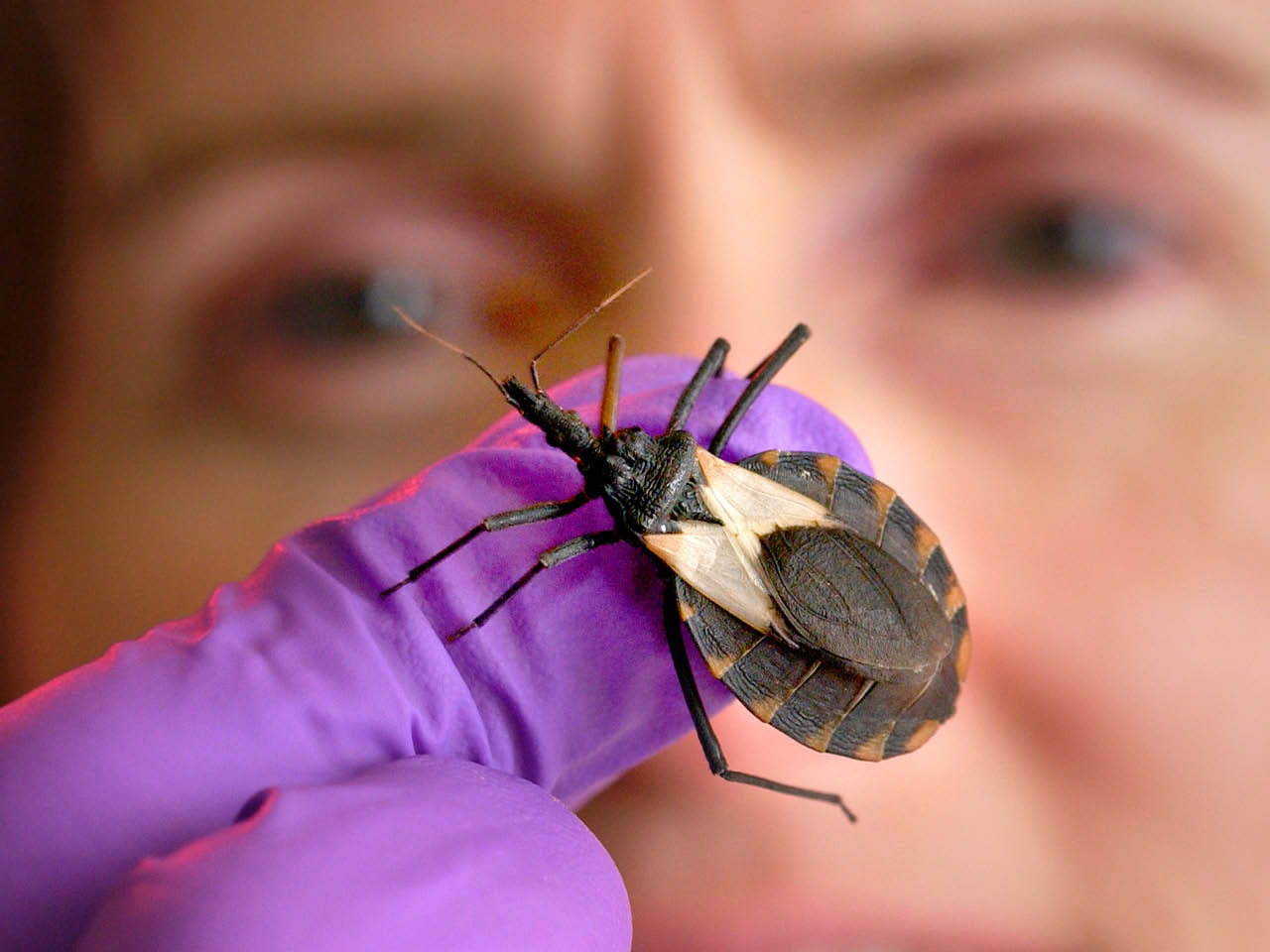
The “kissing bug is a triatomine, which is a type of reduviid bug that can carry Trypanosoma cruzi, the parasite that causes Chagas disease.
Kissing bugs feed on blood during the night, and they are called kissing bugs because they prefer to bite humans around the mouth or eyes.
An adult kissing bug is somewhat larger than a penny, ranging from about 0.75 to 1.25 inches in length. Their heads are cone-shaped, and their legs are long and thin. Unlike some other species, the legs are uniformly thin along the length of the leg, and there are no “bulging” thicker areas. A kissing bug has distinctive mouthparts that appear as a large black extension to the head. All kissing bugs are dark brown and/or black; and many have orange/red stripes or solid orange/light brown around the outside part of their bodies.
Learn how to identify kissing bugs.
Kissing bug bites can lead to transmission of a potentially fatal parasite, T. cruzi. he insects drop their contaminated feces on the skin while they're feeding. This fecal matter can then enter the bloodstream through the bite wound, allowing the parasite to affect the heart and gastrointestinal system
If a person contracts Chagas disease by being bitten by a kissing bug, the symptoms typically include severe redness, itching, swelling, welts and hives, CDC officials say. There are two phases of the disease.
An allergic reaction such as Romaña’s sign, the swelling of the child's eyelid, is a marker of acute Chagas disease. Swelling is due to Trypanosoma cruzi infecting the eyelid when bug feces are accidentally rubbed into the eye, or because the bite wound was on the same side of the child's face as the swelling.
During the acute phase of Chagas disease, which lasts for the first few weeks or months of infection, a person may have no symptoms or mild signs, such as:
Because these early symptoms of Chagas disease are similar to those of other illnesses, most people do not know their illness is from infection with the T. cruzi parasite. Some people never show symptoms, the CDC says.
The CDC estimates that at least 280,000 persons with an infection from T. cruzi parasite are living in the United States.
A blood test can determine whether you have Chagas disease, and if you are found to have Chagas disease, you may be referred to a specialist for heart testing and treatment.
Chagas disease has two stages:
Shortly after infection, people may develop symptoms including:
During the chronic phase of Chagas disease, which can last for decades or even for the entirety of someone’s lifetime, most people have no symptoms.
However, approximately 20–30 percent of infected people develop severe complications, including:
If Chagas disease goes untreated, the parasite can damage the heart, esophagus or colon years after infection, sometimes causing serious health issues.
If you are concerned that you may have been bitten by a kissing bug and contracted Chagas disease, you should discuss your concerns with your healthcare provider. Chagas disease is diagnosed by blood tests. You might be referred to a specialist for heart monitoring and for treatment.
Pregnant mothers who think they may be infected by a kissing bug bite should see their OBGYN for testing. The risk of an infected mother spreading Chagas disease to an unborn child is less than 1 in 10.
Chagas disease does not spread through casual contact with people or animals who are infected.
Chagas disease can be spread:
Learn how Chagas disease spreads.
Chagas disease is treated with antiparasitic treatments and medications to manage symptoms.
Kissing bugs have been found across the southern United States, as well as in Indiana and Illinois. Triatomines often come out at night and are attracted to lights, and they can be found outdoors around wood piles and debris in the yard, beneath porches, in spaces under cracked cement. They are most active from May to October, when the weather is warmer.
There is no vaccine to prevent Chagas disease, so experts recommend people protect themselves:
The CDC recommends locating outdoor lights away from dwellings such as homes, dog kennels and chicken coops and turning off lights that are not in use. Other precautions to prevent house infestation from kissing bugs include the following:
Get more tips on reducing your exposure to kissing bugs.
If you suspect you find a kissing bug, do not touch or squash it, as its body may be contaminated with the virus. Place a container on top of the bug, slide the bug inside, and fill it with rubbing alcohol or, if not available, freeze the bug in the container. Then, you may take the container with the suspected kissing bug to your local extension service, health department or a university laboratory for identification.
Any surfaces that may have come into contact with the bug should be cleaned with a solution made of 1 part bleach to 9 parts water (or 7 parts ethanol to 3 parts water).
