Request An Appointment
Don't wait, prioritize your health. Find the right Franciscan Health doctor for your needs, and request an appointment today.
Search the site for providers, locations, and content.
Leukemia, lymphoma, and multiple myeloma are often called “blood cancers” since they originate in blood cells, but they are distinct from one another.
Within these three blood cancers, broad classes of blood cancer are multiple, distinct cancer types.
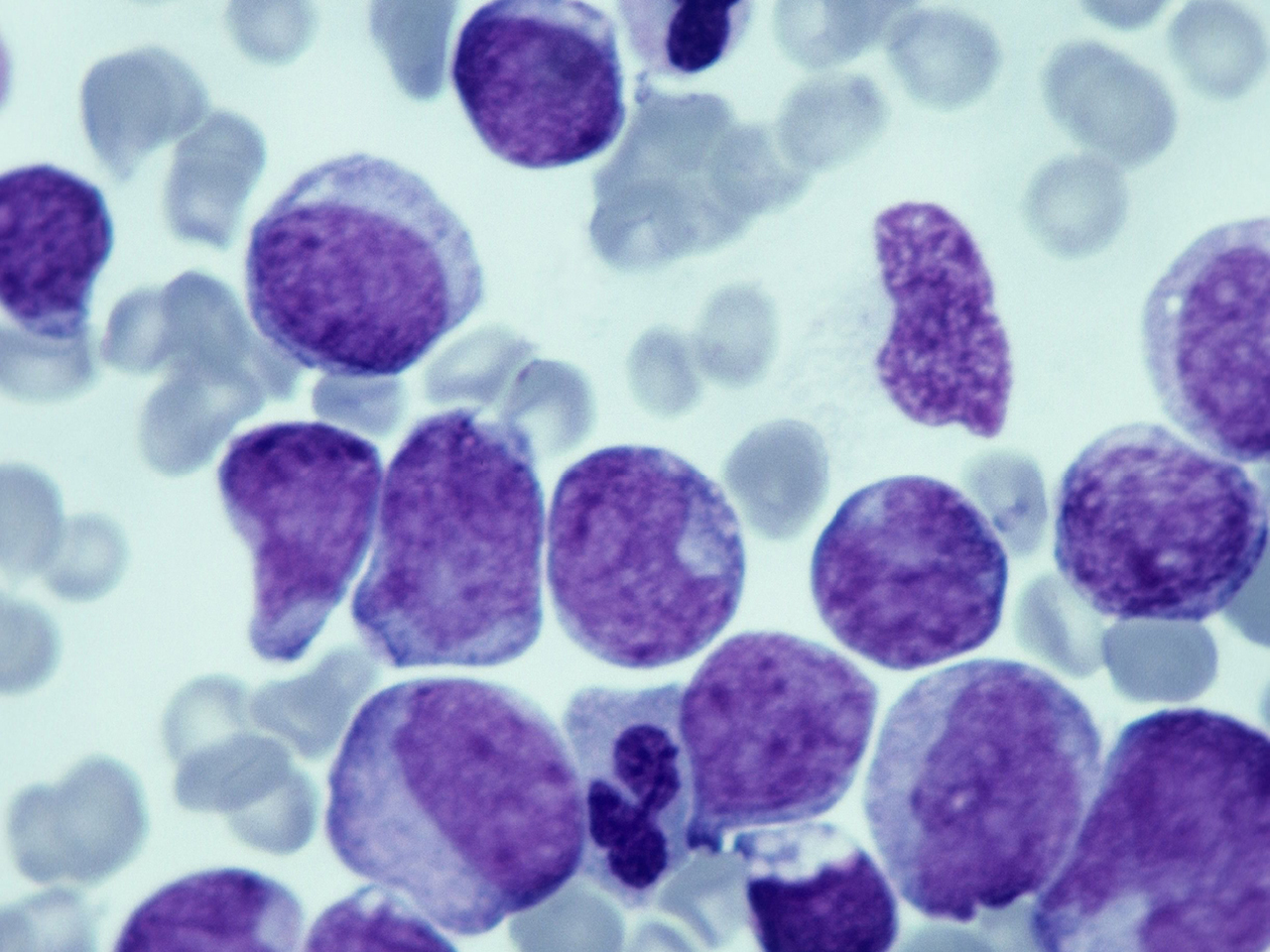
Leukemias are cancers of the white blood cells in the bone marrow and blood and, rarely, the lymphatic system. The abnormal production of white blood cells can interfere with the body's ability to fight infections.
Lymphomas are cancers of immune cells called lymphocytes. Lymphomas are typically diagnosed as either indolent (slow-growing) or aggressive, and can be found in various parts of the body, including the lymph nodes, spleen and bone marrow.
More than 70 different types of lymphomas exist – and each is identified broadly as either non-Hodgkin lymphoma or a Hodgkin lymphoma, depending on the type of lymphocyte being affected. Diffuse large b-cell lymphoma (DLBCL) is the most common type of non-Hodgkin lymphoma, while classical nodular sclerosis type is the most commonly diagnosed Hodgkin lymphoma.
Myeloma, also known as multiple myeloma, is a cancer of the plasma cells, immune cells that are found in the bone marrow. When myeloma cells multiply, this can lead to bone damage, anemia, kidney problems, high blood calcium levels and a weakened immune system. Myeloma is usually diagnosed as either active or indolent – sometimes also referred to as “smoldering myeloma” – meaning it does not currently cause outward symptoms.
Blood cancers are far more common than you might think: One person in the United States is diagnosed with a blood cancer, including leukemia, lymphoma or myeloma, every three minutes.
The American Cancer Society estimates that in 2026:
In general, the risk of developing leukemia, lymphoma, or multiple myeloma increases with age. The majority of diagnosed blood cancers occur in patients over the age of 60. Smoking also increases the risk of developing these cancers. People with a family history of these conditions may also be more likely to develop the disease themselves. Other risk factors include prolonged exposure to radiation or certain chemicals or the presence of an autoimmune disease or other conditions that could lead to a weakened immune system.
The outward symptoms of leukemia, lymphoma and multiple myeloma are similar and include:
Meanwhile, in addition to the above symptoms, patients with myeloma also frequently report noticing persistent bone pain, particularly in the back or hips.
Typically, a diagnosis for leukemia, lymphoma or multiple myeloma begins with a simple blood test known as a complete blood count (CBC). This test provides information about the levels of red blood cells, white blood cells, and platelets in the bloodstream. If results show an abnormal level of any of these cells, imaging tests plus either a bone marrow biopsy or lymph node biopsy may be ordered to provide a diagnosis.
If one of these blood cancers is diagnosed, patients are referred to an oncologist (a cancer specialist) and a hematologist (a physician specializing in treating diseases of the blood). Treatment plans are customized to each individual.
“Treatment typically involves chemotherapy in combination with targeted immunotherapy,” said Felix Mensah, MD, an oncologist with Franciscan Health Indianapolis. “We offer the latest, cutting-edge treatments available today, and our entire care team is made up of supportive, compassionate team members. The quality of care that is available at Indiana Blood & Marrow Transplantation (IBMT) – Franciscan Health’s specialized, Indianapolis-based center for treatment of leukemia, lymphoma and myeloma – is on par, I believe, with any top institution in the country.”
Immunotherapy – sometimes called immuno-oncology – refers to the use of drugs or other interventions that work to empower the body’s own immune system to more successfully target and attack cancer.
“As part of treatment, some patients may also need a bone marrow transplant, stem cell transplantation, or other novel therapies, such as CAR T-cell therapy,” Dr. Mensah said.
In CAR T-cell therapy, a patient’s T-cells – a type of immune cells found in the blood – are collected and reengineered in a lab. They are then reintroduced into the body and work to attack the cancer cells.
Most patients undergo a targeted combination of chemotherapy and immunotherapy for three to six months – a process that’s made easier with the compassionate team at Franciscan Health.
Stem cell transplantation and chemotherapy or radiation therapy are used by transplant doctors to increase the chance of eliminating the disease in the marrow and then restoring normal blood cell production. The infusion of stem cells from a closely matched donor, who may be a sibling or not related to you, will begin to restore your marrow function and blood cell production. Some transplants rely on immune cells from the graft or donor infusion to suppress the underlying disease.
The IBMT program at Franciscan Health Indianapolis is the first program in Indiana to offer deceased donor bone marrow transplants, providing a match for patients who may otherwise not have a treatment option.
Other cancer treatment options available through Franciscan Health Cancer Center include:
Patients with CTCL, organic rejection or Graft versus Host Disease can be treated closed to home in a personalized, convenient setting.
The Indiana Blood and Marrow Transplantation (IBMT) program at Franciscan Health Cancer Center Indianapolis specializes in the treatment of patients with leukemia, Hodgkin or non-Hodgkin lymphoma, multiple myeloma and other blood cancers. Our nationally recognized physicians pioneered the first transplant program for blood cancer in Indiana. Our team is committed to clinical excellence, earning multiple awards, and is accredited by the Foundation for Accreditation in Cellular Therapy (FACT).
IBMT at Franciscan Health provides access to the latest research, clinical trials and specialized treatments for blood and marrow cancers.
IBMT provides financial support for lodging, transportation and medical care through the IBMT Patient Assistance Fund, based on financial need and assessments. (Learn how to help support the Bone Marrow Transplant Patient and Family Assistance fund through the Franciscan Health Foundation.)
Lab and imaging tests are used to help detect and monitor hematological cancers. These tests can include:


Hematology +3 more
Accepting new patients
Affiliated Exclusively