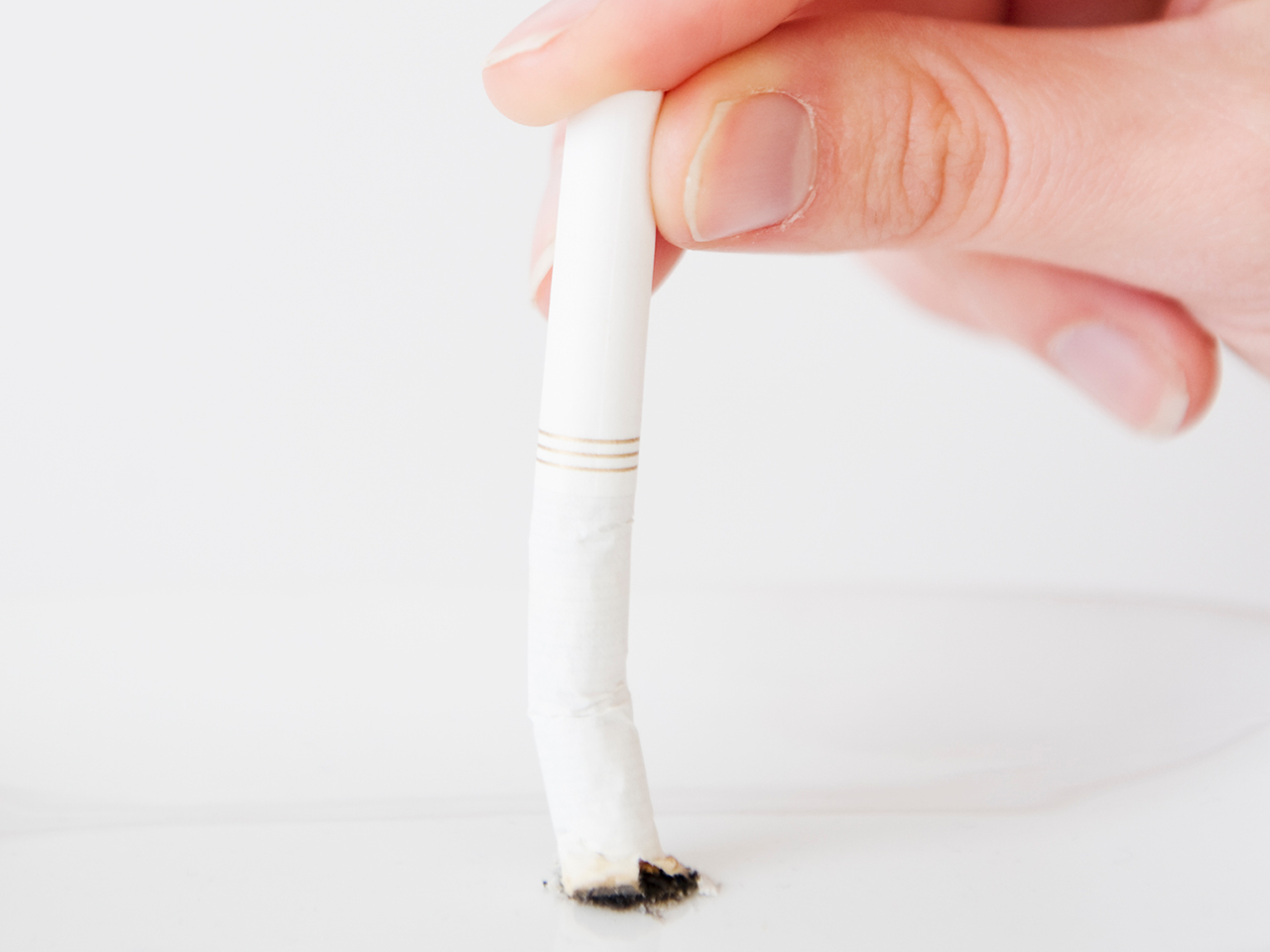
Ready To Finally Quit?
Whether you want to quit smoking for your health and longevity, or because your loved ones have expressed concern, we want you to know you are not alone.
It’s your time to quit, and Franciscan Health can help.
Search the site for providers, locations, and content.
2027 is just a few short weeks away, but now’s the time to set the foundation for smoking cessation success with your New Year's resolution.
For smokers wanting to quit the habit for the new year, now’s the time to take steps to make your transition to not smoking easier, said Laura Arent, certified tobacco treatment professional with the Franciscan Health Aspire tobacco cessation program.
“The most important key to success takes place in the forefront of planning, that’s making a plan to quit,” Arent said.
Arent offers tips for people who want to make smoking cessation part of their health goals in 2027 and explores some effective strategies to help you prepare for a successful quit attempt.
Whether it's Jan. 1 or another date that you want to quit smoking or vaping, pick your quit date and commit to it.
“Make a quit date, circle in calendar, set an alarm. Set it far in advance, about 4 to 6 weeks, so we can prepare for that day,” Arent said. “Don’t pick the 4th of July to quit smoking when you go to the family barbecue where everyone’s drinking and smoking and having good time, because it’s setting you up for failure.”
Before you think about how to quit smoking, learn more about when and why you smoke. Pay close attention to when, where, and why you smoke. Identify triggers such as stress, social situations, or specific routines that prompt the desire to smoke. This self-awareness will serve as a foundation for creating a personalized quit plan.
In the weeks before your quit date, consider keeping a smoking diary. Record each cigarette, noting the time, location, activities you are doing while smoking and your accompanying feelings. This will help you pinpoint patterns and habits that can be addressed in the upcoming weeks.
If you’re planning to stop smoking in the future, work to gradually make the transition to life without nicotine use or smoking habits.
“If you’re smoking more than a pack a day, we want to get you down to a pack a day,” Arent said. And then slowly transition to half a pack, etc.
Tips for cutting back your daily tobacco use include:
Your drinking habits can impact your success in stopping smoking. Your drinking habits can impact your desire to fight the urge to smoke.
“Aside from stress, the #1 reason people say they relapsed is that they decided to drink,” Arent said. “At least for the quit date, and for a few weeks after, commit to not drinking alcohol.”
But it’s not just alcohol you need to consider.
“Look at your coffee association as well,” Arent said. “If you always have a cup of coffee while you smoke on the back porch, drink your coffee at the dining table.”
“A physical craving for nicotine only lasts 2-3 minutes, and it will get easier if you’ve got something in place,” Arent said.
Arent recommends building a “rescue kit” for those nicotine cravings. Take a first aid kit, shoe box or purse, and fill it with things to help you through the times when you’re coping with cravings.
Ideas for the rescue kit include:
While quitting cold turkey one day might work for some people, having a solid plan leading up to your quit day can set you up for greater success.
“You’re planning for a big change in your life,” Arent said. “Taking a couple of weeks to plan is going to do you some really big favors. It’s going to be so much easier than to white-knuckle your way through it.”
Questions to consider as you plan for your quit day include:
As your quit date approaches, focus on building positive habits to replace smoking and reduce stress. Consider the following:
Be sure to talk with family or household members about your anticipated quit date.
“Nicotine withdrawal can be terrible,” Arent said. “When you’re going through nicotine withdrawal, let your spouse or children know you’re going to be grumpy for few days. Maybe you want them around you for support, maybe you want to be left alone. And if that changes, perhaps you find you don’t want them around, let them know you need to step out.”
Additionally, think about how you will handle other smokers you are routinely around. The social aspect of smoking can be a challenge.
“Prepare for people who still smoke,” Arent said. “You need to have a heart-to-heart and let them know you’re quitting smoking, but can we set up boundaries. Don’t ask me to smoke with you, or buy me cigarettes. Start practicing, ‘No thank you, I don’t smoke anymore.’”
Quitting smoking is a gradual process that requires careful planning and commitment. By taking steps to reduce nicotine intake, identifying smoking patterns, and establishing healthy habits, you'll be better equipped to face the challenges of quitting. Remember, each person's journey is unique, so tailor these strategies to fit your individual needs.
Give yourself patience as you make the transition to a life without smoking.
“You’re changing all the routines we’ve set in place over 5, 10, 20 years in a two-week timeframe,” Arent said.
With determination and a well-thought-out plan, you can increase your chances of success on your journey to a smoke-free life.
Whether you want to quit smoking for your health and longevity, or because your loved ones have expressed concern, we want you to know you are not alone.
It’s your time to quit, and Franciscan Health can help.
