Request An Appointment
Don't wait, prioritize your health. Find the right Franciscan Health doctor for your needs, and request an appointment today.
Search the site for providers, locations, and content.
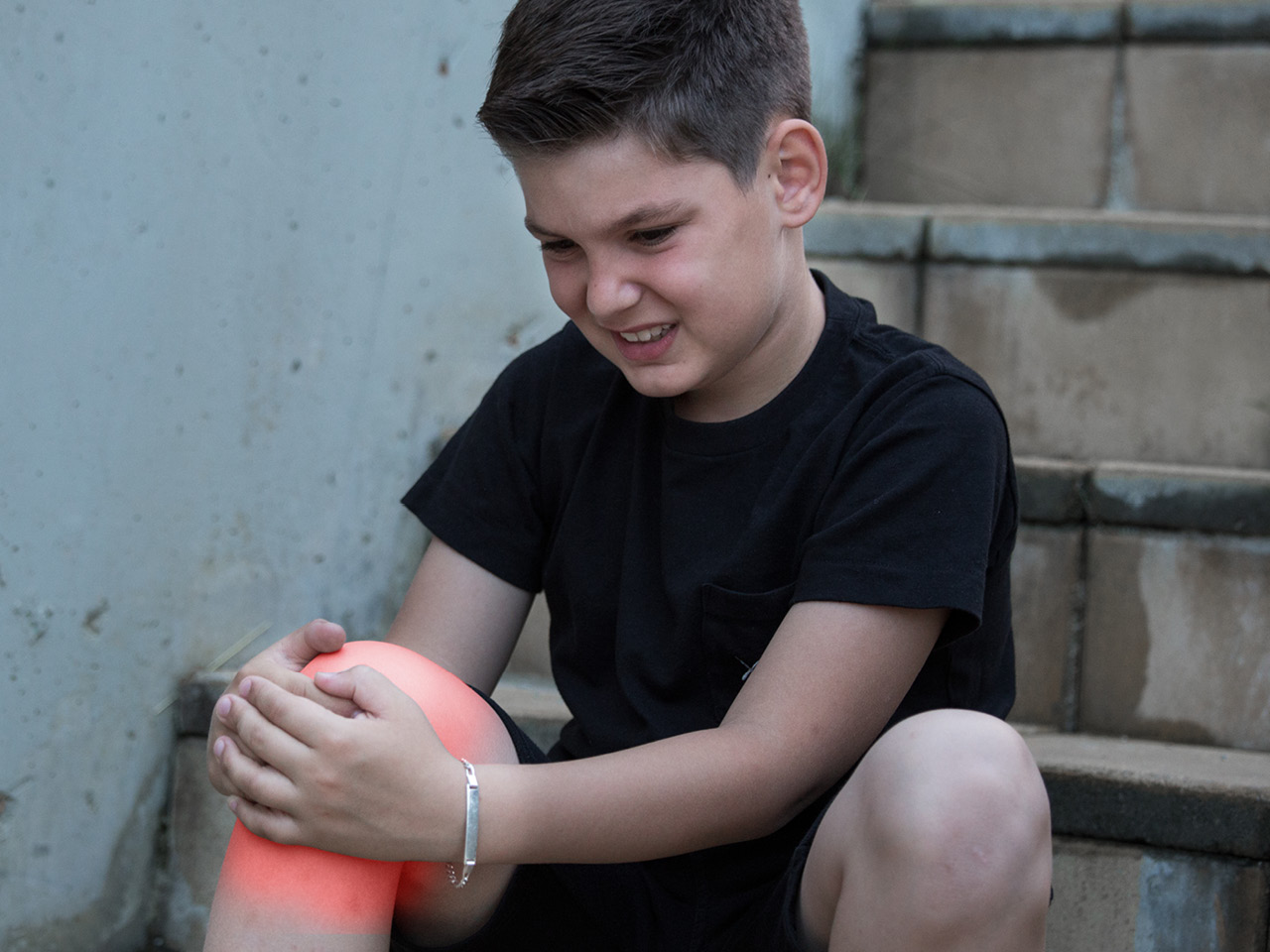
As parents, we're familiar with growing pains in young children. But knee pain persists, especially below the kneecap, it can leave parents of older children and teens worried.
Swelling and knee pain just below the knee cap may be Osgood-Schlatter disease (OSD), a fairly common source of adolescent knee pain that, in most cases, resolves on its own.
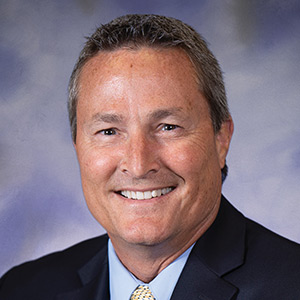
Lafayette sports medicine doctor Gregory A. Rowdon, MD, discusses the causes and symptoms Osgood-Schlatter disease (OSD), and what can be done for teens who experience OSD pain.
Osgood-Schlatter disease, marked by pain and swelling just below the kneecap, usually affects girls ages 10 to 13 and boys ages 12 to 14 who are experiencing a sudden growth spurt during puberty. Often, symptoms of OSD lessen once the growth spurt is complete.
"Osgood-Schlatter disease often results from a combination of a growth spurt and being physically active - especially in sports that involve jumping and quick, high-dynamic movements of the knees," said Dr. Rowden, who practices with Franciscan Physician Network in Lafayette, Indiana.
Osgood-Schlatter disease occurs during a sudden growth spurt when the bones of the legs grow so quickly that the muscles and tendons surrounding the knee cannot stretch out quickly enough to keep up. This causes swelling in the knee tendon.
Typically, patients experience OSD pain only in one knee, usually in their dominant sports leg. But studies have shown that up to one in five patients experience the condition in both knees.
Osgood-Schlatter disease typically causes pain and swelling just below the front of the knee, at the point where the patella (knee) tendon attaches to the shin bone. A swollen bump may be noticeable under the kneecap, and the patient may experience redness, tenderness, and even increased temperature at the site.
Patients with Osgood-Schlatter disease may experience general pain at the knee or pain only when the knee is in use or touched.
"Patients with OSD often say they experience pain with activity or immediately after being active, particularly with sports activities," said Rowdon. "Their knee might also be sore to the touch, such as when it's in direct contact with the floor."
Without treatment, OSD-related knee pain can get worse - to the point that it becomes bothersome to even do daily activities, like walking up or down stairs or squatting down to pick something up.
Most young athletes with pain from Osgood-Schlatter disease should be able to continue to play sports, allowing for modifications to training when needed.
In most cases, the condition gets better on its own after the growth spurt. However, you can take steps to help diminish the pain and swelling until the condition resolves.
Patients with OSD should ice their knee for 15-20 minutes following physical activity and use NSAIDs - such as Advil or Aleve - to help further reduce inflammation of the knee.
Your physician may recommend wearing a knee brace for "jumper's knee" (also known as patella tendonitis).
"While these braces are designed for patellar tendonitis, they can also help Osgood-Schlatter disease symptoms by changing movement mechanics and reducing tugging on the knee," Rowdon said.
Young athletes can also work with their team sports trainers or a physical therapist to do a series of guided stretching exercises to increase muscle flexibility and reduce tendon inflammation in their knees.
While Osgood-Schlatter disease typically affects young athletes going through puberty, the condition can rarely lead to long-term issues in adulthood. In these cases, adults may experience lingering irritation due to the presence of small, loose bone fragments in the knee.
Surgery is typically only needed for adults dealing with lingering effects of an earlier period of Osgood-Schlatter disease. Typically, these older patients' OSD-related knee pain can be fully resolved through a short, minimally invasive surgery to remove any small, disjointed bone fragments in the knee.
Physicians rarely recommend surgery for younger, teen or pre-teen patients with OSD symptoms.
"Surgery is rarely indicated for Osgood-Schlatter disease," Rowdon said. "You don't want to be overly aggressive with a problem that, for most patients, is most likely going to go away on its own."
If your child or teen is struggling with knee pain, talk with their pediatrician, coach, or sports trainer to see if an appointment with a sports medicine specialist is needed.

Sports Medicine
Accepting new patients
Franciscan Physician Network
