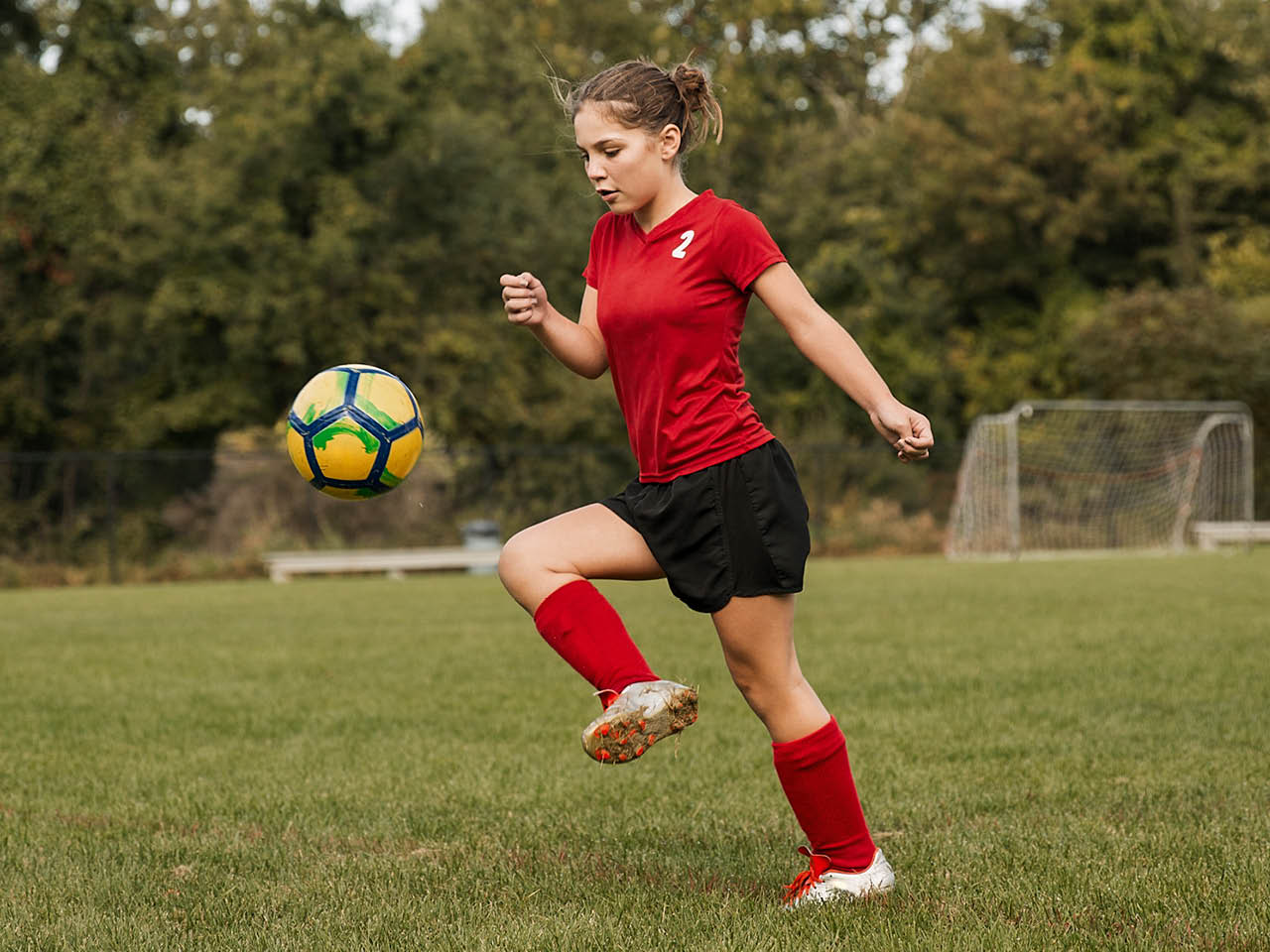
A consistent warm-up program may make the difference in preventing injuries in soccer players, says Sean Calloway, MD, an independent orthopedic surgeon who chooses to practice at Franciscan Health Indianapolis Orthopedic Hospital in Carmel.
“Before you’re going to compete, it’s extremely important that you warm up,” Dr. Calloway said. “There are several different ideas concerning the best way to get ready for competition. FIFA and USA Soccer have adopted the concept of actively warming up. We’re no longer standing in a circle. We're not stretching cold muscles and counting to 15.”
“FIFA has developed what is called the ‘11+,’ an international program that looks at how to prevent injuries in athletes,” he said. “The ‘11+’ is based on lower-extremity strengthening and core strengthening. We’re able to build it into our rehabilitation programs, but also build it into a ‘pre-haB’ program to prevent these types of injuries.”
Warm-Ups to Prevent Soccer Injuries
The “11+” consists of a series of 15 exercises divided into three separate components:
- Running exercises focusing on cutting, change of direction, decelerating and proper landing techniques and strength (8 minutes)
- Plyometric and balance exercises that focus on core strength, eccentric control and proprioception (10 minutes)
- Running exercises to conclude the warm-up (2 minutes)
The comprehensive warm-up program takes about 20 minutes to complete, but it’s well worth the effort for players who have been able to continue play uninjured. A research study through the University of Basel in Switzerland reports that the “11+” warm-up program reduced soccer injuries in youth players by about 50 percent.
This international effort has come as soccer's popularity (and the rate of youth injuries) is rising. A 10-year study of soccer injuries among high school players found that ligament sprains, muscle strains, and concussions are the most common injuries for these student athletes.
“One particular at-risk group is middle-school and high-school aged girls playing soccer, basketball, and other sports that require cutting and pivoting. The rate of ACL tear in girls is much higher than in boys. One main reason for this increased risk is the lack of a standardized exercise program to strengthen certain muscle groups that are commonly weaker in girls,” Dr. Calloway said.
Cool Downs Prevent Soccer Injuries
Equally important to the warm-up is the body's need to cool down after a soccer game, Dr. Calloway added.
“A lot of us forget that, after we’ve run for 90 minutes, we need to actually cool our bodies down before sitting in the car for half an hour,” he said. “A specific cool-down regimen is needed. This was very evident when I was with the US soccer team. We would spend 30 minutes after a competitive game cooling down and making sure that the athletes were back to baseline.”
Reducing Likelihood Of Soccer Injuries
The American Association of Pediatrics offers \tips to reduce the likelihood of injury during sports:
- Plan at least one day off per week for recovery and at least one month off per year from training for a particular sport to allow the body to recover.
- Condition muscles during practice to strengthen them.
- Be sure to stretch after games or practice to increase flexibility and make stretching part of a daily fitness regimen.
- Take breaks during practice and games to reduce injuries and prevent heat illness.
- Maintain and follow safety rules — for example, don't slide head first in baseball and softball, don't spear in football and no checking in hockey.
- If there is pain, stop the activity.
- Drink plenty of fluids before, during and after exercise or play to help avoid heat injury. Decrease or stop practices or competitions when it is very hot or humid. Wear light clothing.
Sports Medicine Services
At Franciscan Health, our goal is to help prevent, treat and rehab sports-related injuries. We offer a full spectrum of care, from pre-participation sports physicals and evaluating injuries to recommending proper sports nutrition and providing athletic training and physical therapy.