
Take The First Step Toward Pain Relief
If joint pain interferes with your life, Franciscan Health can help. Request an appointment with a Franciscan Health orthopedic specialist near you.
Search the site for providers, locations, and content.
If shoulder pain keeps you up at night or forces you to quit the activities you enjoy, it may be time to consider shoulder replacement surgery. For many, shoulder replacement offers long-term relief and a smoother recovery than expected.
“Shoulder replacements usually have the smoothest recovery of any shoulder procedure I perform,” said Ryan Nixon, MD, an independent shoulder and knee surgeon who chooses to practice at Franciscan Health Indianapolis Orthopedic Hospital in Carmel, Ind. “Patients often say it was easier than their rotator cuff surgery.”
During shoulder replacement, your orthopedic surgeon removes the damaged part of your joint and replaces it with metal and plastic parts. The goal is simple: relieve pain and restore motion.
“Surgeons recommend this option when arthritis, rotator cuff damage or long-term joint wear makes everyday use difficult,” said Dr. Nixon.
The right procedure depends on your shoulder structure and tendon health. There are two main options for shoulder replacement surgery.
“The reverse replacement changes how the shoulder works, so the deltoid muscle can do more of the lifting,” said Dr. Nixon. “It gives that muscle more strength and helps keep the joint stable.”
Today, reverse shoulder replacements are more common. They make up most shoulder replacements in the U.S.
“About 70 percent of shoulder replacements, we do are reverses,” said Dr. Nixon. “They work well even with a torn rotator cuff.”
Shoulder replacement is your choice. You don’t need to wait for the “perfect” age. You do it when the time feels right.
“I tell people, don’t live in pain because you think you’re too young,” Dr. Nixon said. “Would you rather be miserable for 20 years, or enjoy life now and have a revision down the road when the techniques have only improved?”
Some people might have done some early treatments already with their primary care and are still not improving. That’s when people can choose to see a specialist.
“We they come into the office and we do a full evaluation, get a history, a good physical exam,” said Bernardo Israel Yahuaca, MD, an orthopedic surgeon at Franciscan Physician Network Coolspring Health Center in Michigan City. “Most of the time we're able to really pinpoint where that pain or what that pain generator is without having necessarily to jump to getting an MRI or advanced imaging.”
You might benefit from shoulder replacement if:
At Franciscan Health, our orthopedic surgeons perform most shoulder replacements as outpatient procedures. Most patients go home on the same day.
“Ninety-five percent of my patients leave the surgery center in about six hours,” Dr. Nixon said. “That shocks people.”
During the procedure, surgeons make a small cut in the front of the shoulder and work between major muscles. Only one tendon, the subscapularis, gets detached, which the surgeon repairs during the procedure.
“We avoid major muscles, which helps speed up recovery,” Dr. Nixon said.
“We go through the front, between the deltoid and pectoral muscles, not through them. We use dissolvable stitches and waterproof dressings,” Dr. Nixon said. “The incision is small, and you can usually shower after three days.”
Recovery from shoulder replacement surgery is often easier than people expect.
“It’s not a tough rehab,” said Dr. Nixon. “My average patient is off pain meds quickly. By six weeks, they’re back to a normal routine.”
After shoulder replacement surgery, you'll begin physical therapy. Here’s a typical recovery timeline after shoulder replacement:
“You can play golf, tennis or pickleball again,” he said. “I don’t put lifetime restrictions on people. Treat the shoulder like it’s normal. You don’t need to live in fear of dislocation.”
Age should not be the sole factor in deciding if you are a good candidate for a shoulder replacement surgery.
Some patients are told that they are too young to consider shoulder replacement despite severe arthritis, but I often disagree," Dr. Nixon said. "Age is one factor in many when considering if shoulder replacement is appropriate. This decision is tailored to the individual. Often if the arthritis is severe and the patient has failed conservative measures, then I think replacement can be an appropriate option despite being younger than what is average. I would rather have improved pain and function for 20-30 years and accept the possibility of a revision if the alternative is living with it until a more typical age is reached."
For older adults, reverse total shoulder may be a better option even with a healthy rotator cuff.
"Patients over 70 often have less functional demands and can achieve a satisfactory result with less risk of revision with a reverse shoulder placement," Dr. Nixon said. "This is a shared decision tailored to the individual patient."
Surgery isn’t always the first treatment option after an orthopedic injury. Depending on the injury, patients may recover with medications, physical therapy, injections or simply time.
“A lot of times we're able to get people feeling better and back to their pre-injury function without surgery,” said Dr. Yahuaca.
However, certain injuries, such as some broken bones that are significantly displaced, may require surgery to help restore function.
If shoulder replacement surgery is the way patients decide to go, know that it has improved over the years. Better technology, stronger implants and advanced training have all improved the shoulder replacement experience, recovery and outcomes.

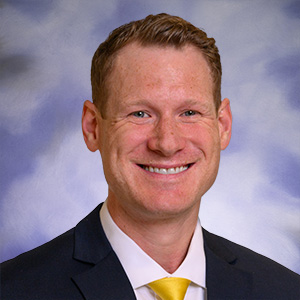
Orthopedic Surgery
Accepting new patients
Affiliated Exclusively
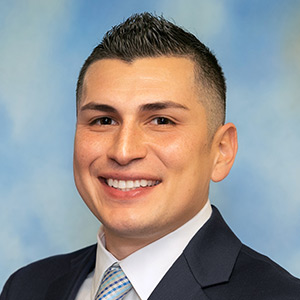
Orthopedic Surgery
Accepting new patients
Franciscan Physician Network
