Request An Appointment
Don't wait, prioritize your health. Find the right Franciscan Health doctor for your needs, and request an appointment today.
Search the site for providers, locations, and content.
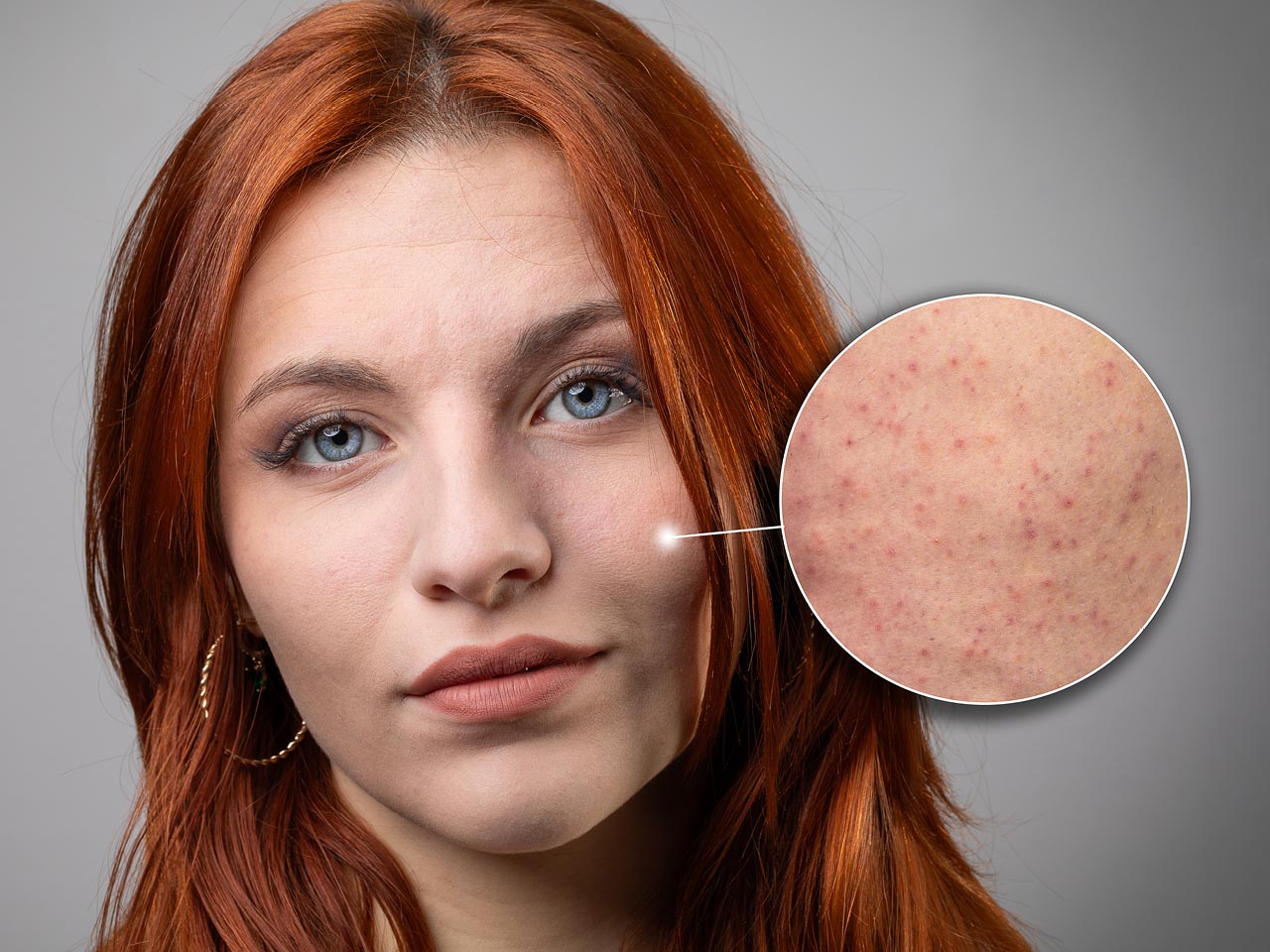
Those small, rough bumps that often appear on the upper arms, buttocks, thighs or cheeks have an unusual nickname — strawberry skin. The medical term is keratosis pilaris (KP), a harmless but common skin condition that can cause your skin to feel dry and bumpy.
Daniel Hekman, MD, an Indianapolis family physician with Franciscan Health, explained what causes these bumps and what you can do to manage KP. Dr. Hekman, who has a special interest in skin care, sees patients at Franciscan Physician Network Franklin Township Family Medicine.
With KP, your skin develops bumps that resemble goosebumps. These bumps occur when keratin, a natural skin protein, clogs your hair follicles. The bumps can appear anywhere on your body where you have hair follicles.
Doctors don’t know why keratin builds up in people with KP, but genetics often play a role. KP is especially common in:
“KP is one of those conditions that tends to run in families,” Dr. Hekman added. “If your parent or sibling has it, there’s a good chance you might, too.”
Because KP can look similar to other conditions, such as acne, eczema or even a rash, it helps to know the differences.
“If the bumps don’t hurt or pop like pimples and don’t seem infected, KP is likely the cause,” Dr. Hekman said.
Dr. Hekman explains that while KP is primarily a cosmetic concern, it can cause itchiness or dryness, especially during the winter months. “Some people feel self-conscious about KP because of its appearance,” he said. “We want patients to know that while we can’t cure it, we can make it look and feel much better.”
Good daily skin care can make a big difference. Dr. Hekman recommended these steps:
Some over-the-counter products work better than others in managing KP. In his practice, Dr. Hekman recommends:
For most people, KP is harmless and doesn’t require medical treatment. However, if at-home care isn’t helping or your skin becomes red, itchy or inflamed, talk to your doctor or a dermatologist. Prescription-strength creams, such as retinoids or stronger exfoliating agents, can help manage more persistent cases.
In some cases, laser treatments or chemical peels may reduce redness and improve skin texture.
“Even though KP isn’t serious, it’s always worth checking in with your doctor if you’re unsure,” Dr. Hekman said. “We can help identify what’s going on and tailor a plan that fits your skin type.”
Keratosis pilaris may not completely go away, but with consistent care, its appearance often improves over time. “The key is patience,” Dr. Hekman said. “Your skin renews itself gradually, so gentle care every day goes a long way.”
If you have questions about your skin or want to explore treatment options, talk with your Franciscan Health primary care provider. Together, you can find ways to help your skin feel smoother and healthier.
Don’t wait — find a Franciscan Health doctor and request an appointment today.

Dermatology +1 more
Accepting new patients
Franciscan Physician Network
