Request An Appointment
Don't wait, prioritize your health. Find the right Franciscan Health doctor for your needs, and request an appointment today.
Search the site for providers, locations, and content.
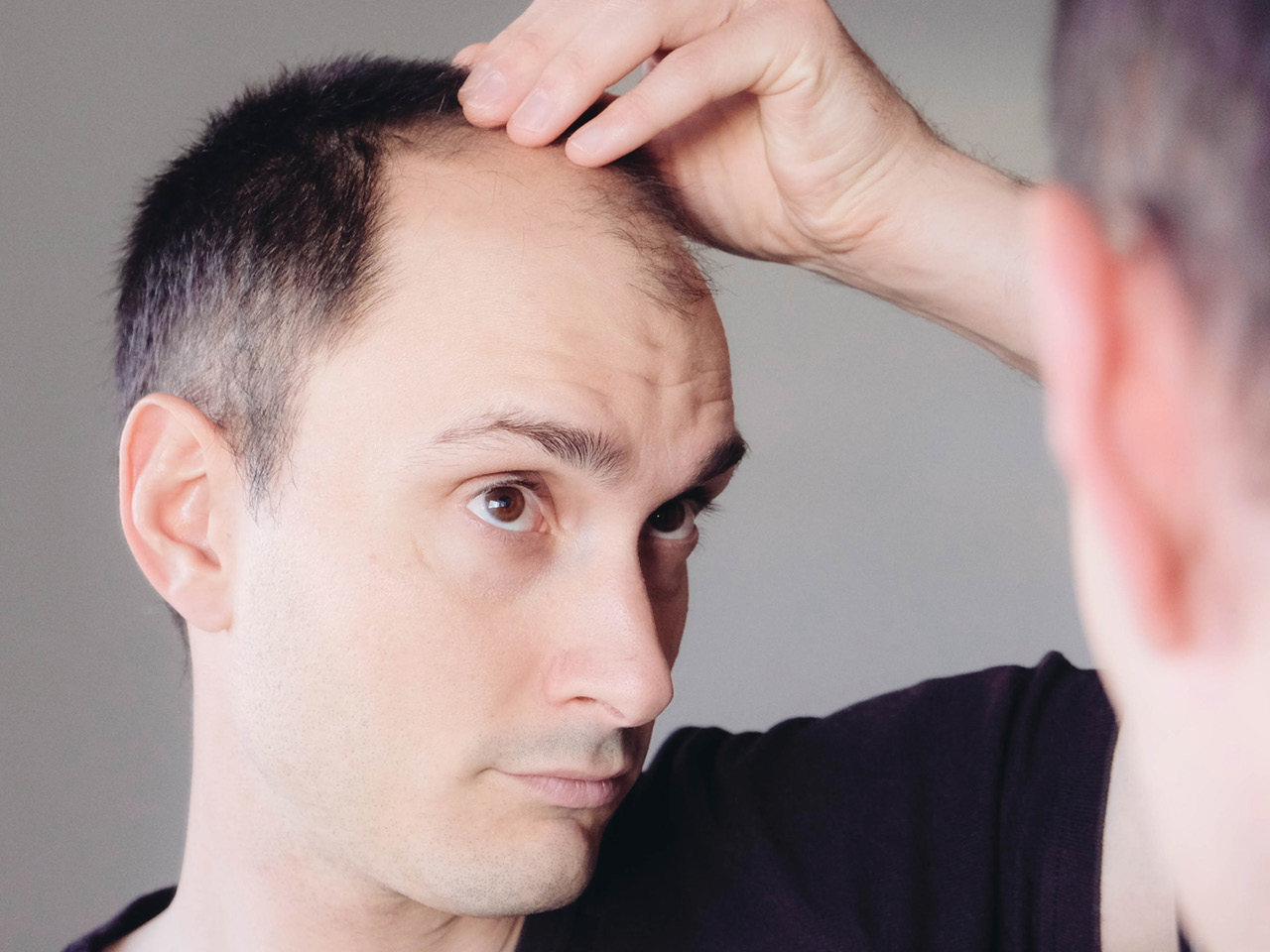
If you notice your hairline is thinning or you’re losing more strands of hair than usual, it can be alarming. To help slow or reverse hair loss, a healthcare provider needs to determine and treat the underlying cause(s).
Mahrosh Ahmed, MD, a family physician with Franciscan Physician Network in Lafayette, Ind., provides details on the top causes of hair loss, when to seek professional treatment and how genetic hair loss may be prevented.
Genetics, an underlying health condition or lifestyle factors can all cause hair loss. Some people experience multiple types of hair loss at the same time.
The exact causes for your hair loss can determine whether your hair:
The following health conditions can contribute to hair loss:
Alopecia areata is a form of hair loss that's triggered by your immune system mistakenly viewing hair follicles as threats to your health. This can trigger patchy hair loss on the head, complete hair loss on the head or the loss of body hair.
The autoimmune condition -- which can be genetic and for which there is no cure -- is most common among children and adults in their early 20s.
Tell your doctor if you notice sudden or severe hair loss in round bald patches. Hair loss in these patterns is not typical and may be a symptom of alopecia areata.
By far the most common form of hair loss, androgenetic alopecia impacts both men and women. It is also known as male pattern or female pattern hair loss.
“Genetics or hormone shifts can influence androgenetic alopecia, and it can start at any age,” said Dr. Ahmed.
Despite some old wives’ tales, the genes for this condition can come from one or both parents.
This type of hair loss occurs differently for men and women:
Women with polycystic ovarian syndrome (PCOS) may develop androgenetic alopecia due to an increase in testosterone (male hormone) in their body.
Central centrifugal cicatricial alopecia, or CCCA, causes hair loss in the center of the scalp. This is the most common type of hair loss seen in women with darker skin tones, affecting nearly 15% of Black women. CCCA can cause scarring by destroying hair follicles. Once the hair follicle scars completely, regrowth becomes difficult, and the hair loss may be permanent.
This hair loss typically occurs about three months after a stressful event, such as:
“If the stressor is not addressed or resolved, the hair loss will continue, and people may develop a chronic condition that can lead to ongoing stress,” explained Dr. Ahmed.
Traction alopecia results from regularly wearing hairstyles that pull the hair too tightly over many years or decades.
Several health conditions or medical treatments can lead to hair loss. These include:
Learn more about other causes of hair loss from the American Academy of Dermatology.
If your healthcare provider has ruled out underlying medical conditions for your hair loss, they will likely perform blood work to check for metabolic problems, such as a thyroid issue, or a vitamin or mineral deficiency.
If your blood work reveals these nutrient levels are not optimal, your doctor may recommend supplements, medications or lifestyle changes. Over time, these changes may decrease your hair loss.
The best treatment for your hair loss depends on its underlying cause. Treatments may include:
Because hair grows slowly (about a half-centimeter per month), it can take a long time to see results from hair loss treatment. Expect to use a topical cream consistently for at least three months before you see results. It generally takes at least three to six months of oral medications to see results. And if you choose a cosmetic treatment for hair loss, it may take six months to a year to see full results.
If androgenetic alopecia causes your hair loss, you’ll need to continue treatments for as long as you want to see results and prevent further hair loss. If hormone changes or an underlying health condition cause your hair loss, it will usually resolve once you address your other condition.
Keeping your scalp healthy can help you grow healthy hair. There are steps you can take to help keep the hair you do have, including:
“Our bodies are so complex,” Dr. Ahmed said. “If you’re not getting the right nourishment, growing healthy hair will not be the body’s priority.”
If you notice any of these symptoms, you should speak with your primary care provider (PCP):
“These symptoms may be a sign that inflammation or an infection is contributing to your hair loss,” Dr. Ahmed said. “If you let inflammation go on long enough without proper treatment, it can lead to permanent hair loss.”
Your doctor may be able to diagnose your condition and treat you for hair loss. If your situation is more complex, they may refer you to a dermatologist specializing in treating hair loss.
If hair loss runs in your family, you can start early to help reduce your chances of hair loss. Discuss topical options that are available over the counter with your provider.
“These creams are medicated and can have interactions with other medications,” Dr. Ahmed said. “Speak to your provider about options and before initiating any new medication.”
If you notice you’re losing more hair than you used to or that your hairline is receding, start by speaking with your Franciscan Health primary care provider.


Family Medicine
Accepting new patients
Offers virtual visits
Franciscan Physician Network
