
Invest In Your Child's Health
Investing in your child's well-being sets the stage for a lifetime of health. Franciscan Health's network of experienced pediatricians is here to support your family every step of the way. Find a pediatrician near you.
Search the site for providers, locations, and content.
Keeping reading time accessible and engaging for your child can benefit them throughout their childhood and later in life. Getting their reading routine started on the right foot requires some planning ahead of time. See how early you can start building your child's literacy and how resources like the Reach Out and Read Program can help.
Many are quick to recognize the benefits of early reading for children, but just how early can parents start? New parents may be surprised at just how far ahead they can get started.
"Parents can start reading to their children while they're still in the womb and then continue that throughout early childhood into their school year," said Daina Roberson, MD, pediatrics and internal medicine physician at Franciscan Physician Network Dyer. "Around 15 weeks, babies can hear mom's voice internally. And around 25 weeks, they're able to hear sounds outside of the womb. So, it's a great time to start reading to your kids and so many benefits."
Dr. Roberson explained that there can be several benefits to reading to your child during pregnancy or early infancy, including:
"There's some research that shows that third-trimester babies will pick up on language patterns that they heard in the womb later on," Dr. Roberson said. "We definitely want you to start reading as early as you think about it. It's a great way to connect with your baby as well as promote those early literacy skills."
She explained that building a habit of reading lays the groundwork for school readiness and long-term benefits throughout life. It can also help the rest of the participating family develop a love for reading and family bonding time, which is essential to any child's emotional development.
Building vocabulary stems from very early and frequent interactions with parents.
"To develop language with infants and toddlers, it is crucial to have parental interaction," said Franciscan Health speech therapist Christina Iwachiw. "Basic activities that a parent can do are playing with the child on the floor, reading simple books to the child, talking to the child with simple phrases, and staying away from technology! Parents are the model for language; it doesn't just happen."
It takes only simple things to engage a baby, such as talking and reading to them. In fact, it's hard to overstress the importance of reading to babies. A separate study done at the University of Iowa found that babies respond more to reading than to even toy- or puppet-play and, in turn, learn more from it.
A very young baby may only babble in response to hearing your voice as you read. Still, when you respond by repeating or expanding on their sound or offering a word with that sound, this back-and-forth interaction helps with language development.
Another important difference maker for a child's early development is reading books with bright pictures and simple sentences, rather than single words. Be engaged as you read so that the baby develops not only a great vocabulary but also a love for books that will serve them well throughout life.
Scott Webb (Host): You may have heard the expression reading is fundamental. And today, we're going to learn about the importance of literacy and child health and development from Dr. Daina Roberson. She's board-certified in Internal Medicine and Pediatrics with Franciscan Health, and her perspectives on literacy are particularly meaningful because she follows patients from birth through adulthood.
This is the Franciscan Health Doc Pod. I'm Scott Webb. Dr. Roberson, it's lovely to have you back again. Last time, we talked about vaccines and kids and a little bit about adults. And today, we're going to talk about the importance of literacy and how it relates to children's health and development. I loved reading books to my kids. I loved doing all the different voices. It was so fun for me, and I hope it was fun for them. But I want to have you explain the benefits of early literacy and how early parents maybe should start to read to their children. I know some research reveals it's a positive experience to read to babies in the womb. I didn't quite do that. I did more maybe singing, which really annoyed my wife, but I hope my children enjoyed that. So, I just want to have you share some of the findings on the benefits.
Dr. Daina Roberson: Parents can start reading to their children while they're still in the womb, and then continue that throughout early childhood into their school year. So actually, around 15 weeks, babies can hear mom's voice internally. And around 25 weeks, they're able to hear sounds outside of the womb. So, it's a great time to start reading to your kids and so many benefits.
There's, of course, the bonding that comes just from reading while the baby's in the womb or even in early infancy. There are some studies that show increased brain activity, that reading to your baby in the womb or stimulate their brain and help them build those neural connections. Language development. There are some studies that show that babies read to in the womb or early on had greater language skills later in life. Of course, just early literacy skills is something we want to promote. The stress relief that comes from just sitting and reading a book or singing, like you said, to the baby.
And then, there's some research that actually shows that third trimester babies will pick up on language patterns that they heard in the womb later on. They can recognize some of those words. So, that's a great benefit. You're giving them an early head start. So, we definitely want you to start reading as early as you think about it. It's a great way to just connect with your baby as well as promote those early literacy skills.
Host: Yeah. And of course, there's never a bad time to read Good Night Moon, for example, you know? I specialized in Good Night Moon as I'm sure many parents do. And I just want to have you maybe share how early literacy and reading together as families can have a positive impact on healthy childhood development, family wellness, all that good stuff.
Dr. Daina Roberson: Again, I mean, I think some of this, we just think about, you know, the importance of bonding with your children and the relaxation and fun that comes with it, but there is research that shows that reading together with infants and young children can strengthen their relationships with their parents, with their caregivers. It promotes early brain development and attachment, especially during crucial growth stages when they're read to.
So, that's just a great benefit. And I think it also sort of lays the groundwork for school readiness and just long-term benefits throughout life for literacy skills. So, it helps the whole family just develop a love for reading and family bonding time, which is important to any child's emotional development as well.
Scott Webb: Yeah, for sure. And you go from Good Night Moon and then maybe later, you know, like with our teenage son, Harry Potter and things like that. And he had developed that love of reading, which, you know, we all shared and then we saw the movies and all that good stuff. So, I know you, as a pediatric provider, you participate in Reach Out and Read, a program that's supported by the American Academy of Pediatrics, National Pediatric Literacy Model, really. So, I want to have you share with us the details of the program, all the ins and outs.
Dr. Daina Roberson: I'm really excited about Reach Out and Read. We actually just got approved for our clinic to be one of the Reach Out and Read sites. And so, essentially, pediatricians and other primary care physicians are trained to give literacy guidance to parents and caregivers from infancy up through about five years old at the well-child visits.
And so, we kind of focus on early language exposure, naming pictures, rhyming words for phonemic awareness, things like that. But the goal is really to promote early literacy and to help just kind of cultivate a love for reading in each child that we care for. And so, at every visit, we introduce a new developmentally appropriate book, and we hope to build the kid's library by the time they get to kindergarten, that they're already exposed to books. They already have a love for reading, and that they'll continue to build their library at home. So when they get to school, they're already sort of ahead of the game, if you will.
Host: Yeah. We talked last time, we were talking about vaccines, how often at well visits, that's a good time to catch up on, you know, immunizations and shots and things like that. This sounds like something that my kids would have enjoyed a whole lot more than, "Oh, since you're here anyway, let's get these shots while you're here. How about this book?" Right? So, that's just so cool. I always look forward to that. Even when I was a kid. I can remember going to the doctor's office and the library of books, probably Dr. Seuss, things like that. But do you have a nice little sort of area there for kids, a little library setup? And I'm just sort of picturing it in my head. What does it look like?
Dr. Daina Roberson: Yeah. There'll be some space in our lobby. Kids can certainly look at books and read through them while they're waiting to be called back in the back part of the office where the exam rooms are. We'll have a little library with shelves and things and kids can come and pick out a book, if they like. I think it'll be really fun and exciting. Actually, my youngest just had his four-year-old well-child this past weekend, and he got a new book that he was super excited about, even though they got was like, "It's okay. I got a new book," you know. So, I think it's going to really be great and we're just going to try to make it super kid and family-friendly so that kids can develop that love for reading every time they come in.
Host: Yeah, I love that. Yeah, of course, in my kid's day, it was get a sticker, get a lollipop, but you know, you start talking books, as the enticement to be a good kid and get those shots and cooperate during the well visits, that's awesome. From your perspective, you know, as a pediatrician, as an internal medicine provider, why do you love this initiative so much?
Dr. Daina Roberson: Yeah. I think this is just so crucial, I think, as a part of any child's development. But I think, overall, early literacy, lifelong learning, those are vital components of success in any area of life, no matter what the kids decide to do or even families. And so, it really is a privilege to be a pediatrician as well as an internal medicine doc and be able to care for parents, patients, their families from birth all the way throughout their life. And so, this initiative helps to cultivate that love for reading across generations. You know, not only am I seeing a baby when they come in, but I likely am also seeing their older siblings and their parents. And I even have families where I'm seeing their grandparents. And so, we can share and just encourage them to have this family bonding time and develop this love for reading and family wellness. And I think that results in improved mental and emotional and physical health for everyone. So, I'm super excited to be a part of this.
Host: Yeah, it's great. Just brought a big smile to my face today, reminiscing about my kids and books and that, you know, things that we shared as a family like reading. So, I appreciate your time. As I said, we've spoken a couple of times now. Hopefully, we'll get to speak again in the future. Thanks so much.
Dr. Daina Roberson: Sure. Thank you for having me again.
Host: And to learn more, visit franciscanhealth.org and search child development. And if you found this podcast helpful, please share it on your social channels, and be sure to check out the full podcast library for additional topics of interest. This is the Franciscan Health Doc Pod. I'm Scott Webb. Stay well, and we'll talk again next time.
Building a healthy reading habit doesn't revolve only around time at home. It should also include public spaces, such as libraries or even a doctor's office.
"I'm really excited about Reach Out and Read," Dr. Roberson said. "We were recently approved for our clinic to be one of the Reach Out and Read sites. Pediatricians and other primary care physicians in our clinic are trained to give literacy guidance to parents and caregivers from infancy up through about five years old at the well-child visits."
Dr. Roberson explained that her team focuses on several areas for children, such as:
"At every visit, we introduce a new developmentally appropriate book," Dr. Roberson said. "We hope to build the kid's library by the time they get to kindergarten. This way, they're already exposed to books, have a love for reading and that will continue to build their library at home. So when they get to school, they're already ahead of the game."
Like a library or a quiet room, a reading space is essential for kids, and Dr. Roberson's team, with the Reach Out and Read program, has that space in mind.
"There'll be some reading space in our lobby," Dr. Roberson said. "Kids can certainly look at books and read through them while they're waiting to be called back into the exam rooms in the back."
She explained that they have a small library with shelves where kids can come and select a book during their wait.
"I think it's going to really be great and we're just going to try to make it super kid and family-friendly so that kids can develop that love for reading every time they come in," she said.
While reading is crucial as a part of any child's development, the benefits can go well beyond their childhood.
"I think early literacy and lifelong learning are vital components of success in any area of life, no matter what the kids decide to do or even families," Dr. Roberson said. "It really is a privilege to be a pediatrician and internal medicine doctor that cares for kids and their families from birth all the way throughout their lives."
The Reach Out and Read program helps to cultivate that love for reading across generations, she added.
"I'm not only seeing a baby during appointments," Dr. Roberson said. "I also could be seeing their older siblings, parents and even grandparents. We encourage them to have this family bonding time and develop this love for reading and family wellness. And I think that results in improved mental, emotional and physical health for everyone."

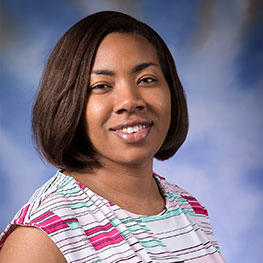
Internal Medicine +1 more
Accepting new patients
Franciscan Physician Network
