Request An Appointment
Don't wait, prioritize your health. Find the right Franciscan Health doctor for your needs, and request an appointment today.
Search the site for providers, locations, and content.
We just might have to thank Kim Kardashian for raising awareness of psoriasis - a common disease that affects more than 8 million Americans. The lifelong condition that she and other celebrities like LeAnn Rimes have causes unsightly and itchy skin patches.
One of the most frustrating aspects of psoriasis for patients is encountering others' negative reactions to their skin flare-ups. If you don't understand the disease, you might fear getting close to someone who's afflicted. Or, you might even dismiss psoriasis as just a cosmetic problem.
Here, we explain what causes psoriasis, types of psoriasis and what you can do if you have psoriasis. A Franciscan Health primary care physician breaks down common myths about this common skin condition.
Psoriasis is a chronic autoimmune condition that mainly affects the skin.
“When you have psoriasis, your immune system sends signals to your skin cells to grow too fast,” said Daniel Hekman, MD, an Indianapolis family physician with Franciscan Health who has a special interest in skin care. “Normally, skin cells take about a month to form and rise to the surface. In people with psoriasis, this process happens in just a few days. Because the skin can't shed these cells fast enough, they pile up and form thick, scaly patches.”
Psoriasis symptoms can vary widely depending on the type and severity, but some common signs include:
Psoriasis symptoms may come and go. You might have flare-ups followed by periods when the condition improves or even goes away for a while.
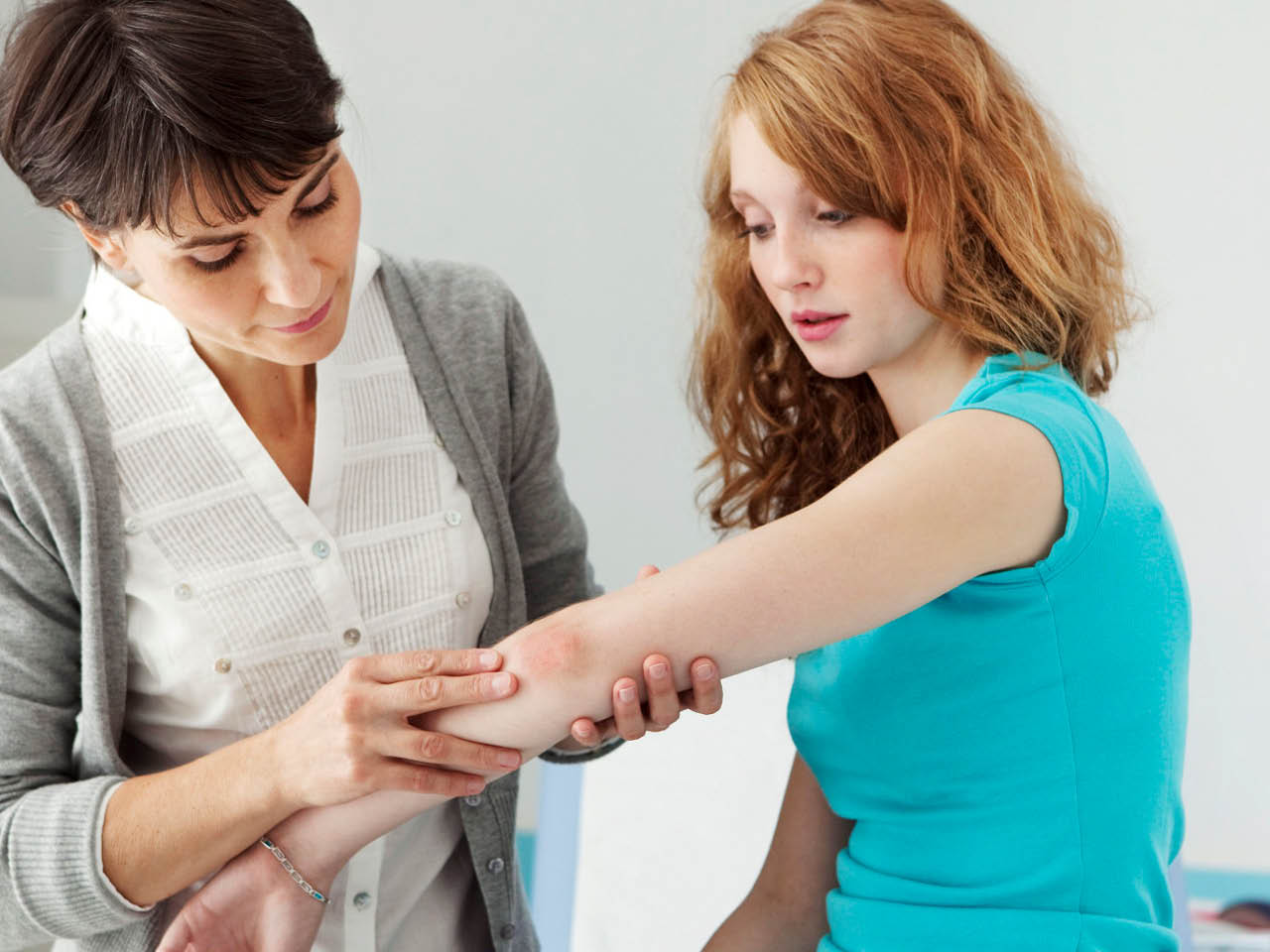
Plaques, or the scaly patches of skin from psoriasis, can appear anywhere, but they are most common on the elbows, knees, scalp and lower back.
There are five types of psoriasis, and it is important to know the different types so that the condition is treated appropriately:
Plaque psoriasis, the most common form of psoriasis, appears as raised, red patches covered with a silvery white buildup of dead skin cells. These patches or plaques most often show up on the scalp, knees, elbows and lower back. They are often itchy and painful, and they can crack and bleed.
Guttate is a form of psoriasis that appears as small, dot-like lesions. Guttate often starts in childhood or young adulthood and can be triggered by a strep infection.
Inverse psoriasis shows up as very red lesions in body folds, such as under the breasts, under the arm or in the groin. It may appear smooth and shiny.
Pustular psoriasis is characterized by white pustules (blisters of noninfectious pus) surrounded by red skin. The pus consists of white blood cells. Pustular psoriasis is not an infection, nor is it contagious. Pustular psoriasis can occur on any part of the body, but occurs most often on the hands or feet.
Erythrodermic psoriasis a particularly severe form of psoriasis that leads to widespread, fiery redness over most of the body. Erythrodermic psoriasis can cause severe itching and pain, and make the skin come off in sheets. It generally appears on people who have unstable plaque psoriasis.
The exact reason psoriasis develops isn't fully understood. It seems to be a combination of genetics and triggers in the environment, which lead to the immune system becoming overactive.
If someone in your family has psoriasis, your chances of getting it are higher.
Even if you're genetically prone to psoriasis, it may only show up after something sets it off. Triggers vary from person to person.
Common triggers that may set off a new bout of rashes or worsen symptoms of existing psoriasis patches include:
Treatment options for psoriasis include:
These are creams and ointments applied directly to the skin. They are often the first step in treating mild-to-moderate psoriasis. Examples include:
Light therapy involves exposing the skin to natural or artificial ultraviolet (UV) light under a doctor's supervision. UVB light, a specific band of UV light used in dermatology to treat various inflammatory conditions, can slow skin cell growth and reduce inflammation.
For moderate to severe psoriasis, oral or injected medications may be used. These work throughout the body and include:
Biologics are more targeted and often used when other treatments don't help or cause side effects.
In addition to medical treatment, making lifestyle changes can help reduce flares and keep your skin healthier:
People living with psoriasis can take some measures to reduce the potential of skin irritations. These include avoiding:
Psoriasis can’t be cured, but there are many effective treatments to help manage the symptoms and improve your quality of life. What works for one person may not work for another, so treatment often involves some trial and error.
Dermatology +1 more
Accepting new patients
Franciscan Physician Network
