How Do You Fix A Herniated Disc?
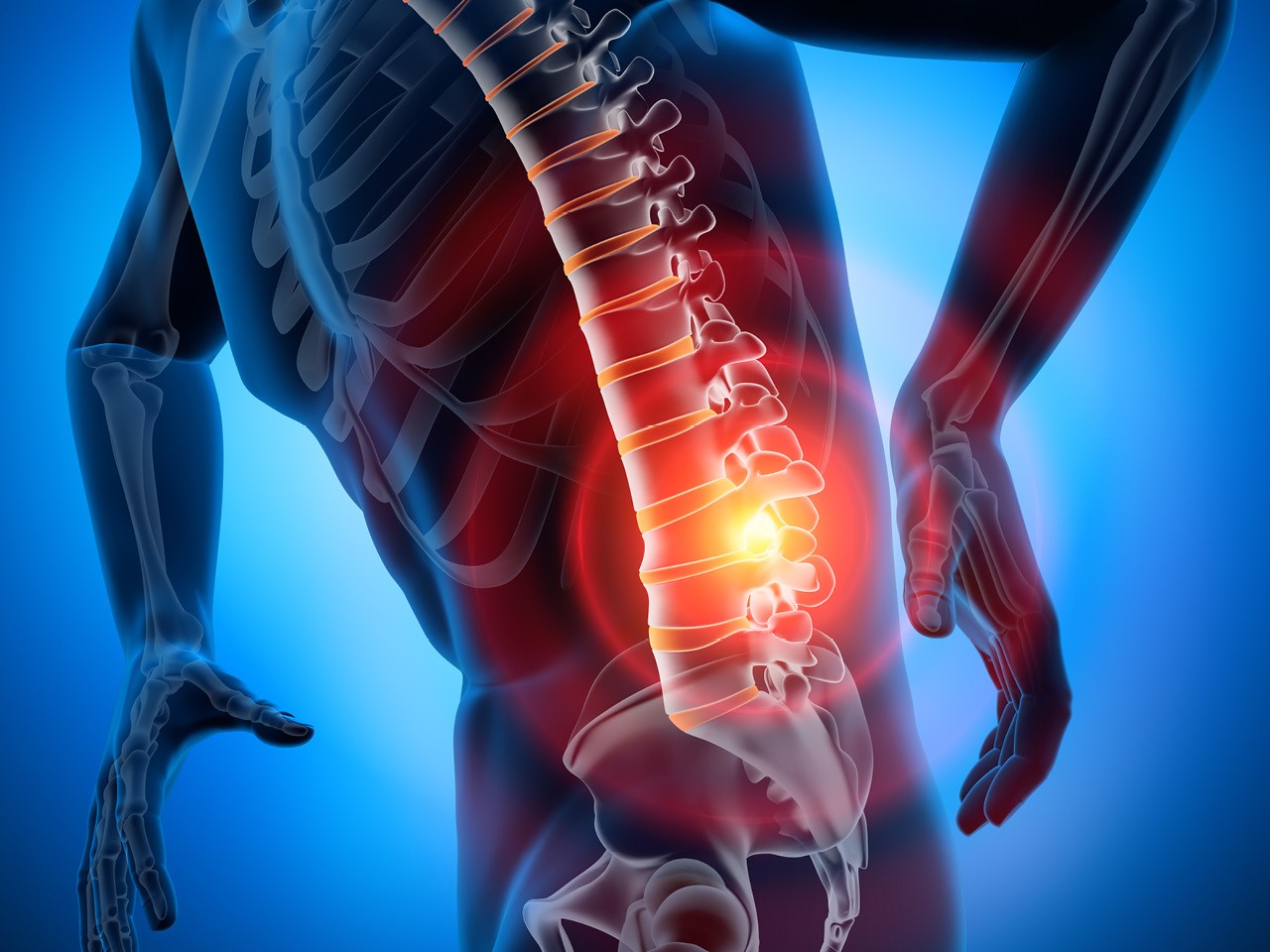
Key Takeaways: Herniated Discs
- Herniated discs in the spine can affect all ages. It is marked by irritating pain that shoots from the back into the legs.
- Many herniated discs will heal and not need surgery.
- If surgery is needed, a discectomy is the typical treatment.
Discs are your spine’s shock absorbers and provide a cushion between the vertebrae (bones). When you move your back, the discs absorb the pressure on your spine. Sometimes, an injury, genetics or lifestyle can impact the function of the discs and cause a herniated disc, resulting in pain, numbness and weakness.
“Herniated discs are one of the most common problems we see as spine surgeons. They affect pretty much all ages and demographics,” said Andrew Koivuniemi, MD, PhD, a neurosurgeon with Franciscan Physician Network Neurosurgery & Pain Specialists in Lafayette, Indiana.
What Are Herniated Discs?
The disc is the shock-absorbing part of the spine that sits between two large bones of the back. Sometimes the soft nucleus pulposus, the inner core of the disc, can push out and pinch against a nerve in your back. The soft jelly-like center of the disc bulges or leaks through the outer ring of the disc, and it starts causing problems.
“One element we teach our medical students who rotate within the neurosurgery department is occasionally a herniated disc can be so pronounced it pinches all the nerves inside the back at once and puts severe pressure on it,” Dr. Koivuniemi said.
What Are Signs Of Herniated Discs?
What patients often experience when they have a herniated disc happen is an extremely irritating pain that shoots from their back and down into their leg.
"If you're experiencing pain, we might try some other interventions in order to relieve that pain without requiring surgery," Dr. Koivuniemi said.
Those treatments may include steroid injections or physical therapy.
But other more concerning signs warrant more aggressive medical attention. They include:
Weakness in legs or feet
"If you're experiencing weakness, then typically we want to do this surgery sooner rather than later," Dr. Koivuniemi said. "That pinching can cause severe pain and even cauda equina syndrome, which is a surgical emergency."
Loss of bowel or bladder control
Cauda equina syndrome can cause significant weakness. People will have numbness around the groin and the perineum area.
“Many people also notice the syndrome affects the bowel and bladder,” said Dr. Koivuniemi. “Typically, people lose bowel and bladder control, what we call overflow incontinence, where you have a hard time going to the bathroom. Or they lose control of their sphincter, leading to fecal incontinence.
"When that happens, it’s necessary to go to the emergency department. Time is really of the essence in treating cauda equina syndrome."
Do Herniated Discs Always Need Surgery?
The majority of herniated discs heal on their own.
“In fact, most of the time, we recommend that even if you think you have a herniated disc, you really shouldn’t have anything ‘done for it’ for at least four weeks,” said Dr. Koivuniemi.
Some of the more common initial treatments a person can try for a herniated disc include:
- Light activities
- Over-the-counter pain medicine
- Participating in physical therapy
- Staying mobile
If a patient still has the same or worse problems, a magnetic resonance imaging (MRI) test can help identify the area of concern.
“We usually like to wait at least four to six weeks before considering surgery,” said Dr. Koivuniemi. “A lot of the time, a herniated disc will get better on its own.”
When Is Surgery Necessary?
Most people with herniated discs will never need surgery. “However, a small number,” Dr. Koivuniemi said, “do need surgery, and it’s the only option for relief.”
If signs of nerve damage, such as numbness, tingling and weakness, grow steadily worse, you may be a candidate for surgery. Likewise, a herniated disc that interferes with the bowel and bladder is a medical emergency and requires immediate treatment.
For other patients, doctors take a wait-and-see approach. “If your sciatica (pain shooting from your lower back down to your leg) lasts for six weeks or more despite self-care efforts, you and your doctor may want to consider getting an MRI and evaluating the need for surgery.
How Does A Surgeon Treat A Herniated Disc?
The traditional surgical treatment for a herniated disc is a discectomy. During this procedure, the surgeon removes the part of the disc pressing on the nerve. At the same time, the surgeon may perform a laminectomy, trimming some of the backside of the vertebrae to relieve pressure on the nerves.
“In recent years, surgeons have developed an effective approach,” said Dr. Koivuniemi. “They remove the troublesome part of the disc through a tiny incision using a special microscope, a procedure called a microdiscectomy.”
This technique is as effective as a standard discectomy, but patients tend to recover more quickly. According to the Mayo Clinic, success rates for discectomy and microdiscectomy – measured by pain relief and patient satisfaction – reach about 80 to 90%.
Having a herniated disc sounds serious — but it’s rarely an emergency. With care and time, the pain will usually disappear entirely.
What Is Recovery From Discectomy Like?
"Recovery from a microdiscectomy is very straightforward," Dr. Koivuniemi said. "The vast majority of these surgeries are outpatient, so you're able to go home the same day that the surgery is done.
"Most of the time, we're able to close the incision with a stitch that dissolves, so you don't have to worry about coming back to see us, to have your stitches removed," he said, "and then we can see you back usually in about four to six weeks to make certain that you're doing well."
Soreness in the back may be common after a discectomy, but the soreness improves with time, he said. Light movement can help with the recovery.
"I strongly recommend that you try to get up and move. If you're completely lying in bed and you don't move those muscles in your back can get more tight and more sore," Dr. Koivuniemi said, noting that many patients do not need physical therapy after the surgery. "I want you to get up and get around the house, climb stairs, do things like that."
"The only thing that we typically recommend is to avoid strenuous activity right after these surgeries. I've had a lot of my patients feel so good after the surgery that they start doing a bunch of things that they've neglected, and because they start lifting heavy objects and moving furniture, that can put a little bit too much stress on that disc and that can cause it to herniate. So that's our one little warning to every one of our patients."
Living With Lower Back Pain?
Talk to your healthcare provider if you’re experiencing back pain, numbness or weakness. They can determine if you may have a herniated disc.
"The good news about herniated discs is most of them get better on their own," Dr. Koivuniemi said. "The other good news is for the ones that don't get better on their own, the surgery to help them is a very, very straightforward procedure, and most patients do extremely well."
Don’t let the pain and discomfort hold you back from living your life to the fullest. Schedule an appointment with your provider today and get on the path to a healthier, more comfortable you.

Featured Providers

Andrew S Koivuniemi, MD, PhD
Accepting new patients
Franciscan Physician Network
