
Request An Appointment
Don't wait, prioritize your health. Find the right Franciscan Health doctor for your needs, and request an appointment today.
Search the site for providers, locations, and content.
Deep vein thrombosis (DVT) is a serious medical condition that can develop quietly but have life-threatening consequences if not recognized and treated properly.
To help patients better understand DVT risks, symptoms, and treatment options, Michael Ingram, MD, an Indianapolis vascular surgeon at Franciscan Physician Network Vascular Surgeons Indianapolis, shared expert insight on what to know about deep vein thrombosis and how to help prevent it.
“Deep vein thrombosis is a blood clot in one of the deep veins of the body,” Dr. Ingram explained. “Usually, we consider deep veins either that are in the legs, abdomen, pelvis or upper arms, those are some of the bigger veins in the body.”
According to Dr. Ingram, there are multiple factors that can put someone at risk for developing DVT.
“Some things that put you at risk are certainly if you’ve had DVT in the past, if you’ve been immobile for a long time, sometimes if you’ve had a catheter in one of the veins, or if you’re very sick or have cancer, you’re at higher risk as well.”
Pregnant women are also considered high risk. Dr. Ingram explained that’s due to “some of the hormonal changes as well as some of the compression on the veins that the actual uterus and enlarged uterus causes.”
DVT symptoms include:
“Warning signs of DVT most commonly present as a swollen leg,” Dr. Ingram said.
He explained that sometimes it’ll just be one leg that’s really swollen. It can be painful and you can have associated redness with it but swelling is really the big thing.
Risk factors for DVT include:
DVT can be life-threatening if untreated.
“It can lead to pulmonary embolism, which is when part of that blood clot breaks off from the vein and goes to the lungs and can block blood flow in the lungs,” Dr. Ingram warned.
“It’s a relatively quick process,” said Dr. Ingram. “The best way to diagnose it is actually with an ultrasound that can be performed in the vascular ultrasound laboratory, the hospital or the emergency department.”
DVT can also sometimes be diagnosed with a CT scan, but ultrasound really is the best option.
“The main side of treatment is starting someone on a blood thinner, or anticoagulation,” Dr. Ingram explained. “That’s something people will need to take for at least 90 days and potentially longer, depending on their condition.”
He added that in some cases, surgery or a minimally invasive procedure might be necessary.
“The recovery is usually in the one- to two-week time frame,” he said.
Dr. Ingram explained thar If you are at high risk and have been told that a blood thinner would be helpful, it’s important to continue taking it.
Otherwise, for the average person, Dr. Ingram recommends staying active to prevent blood clots.
“If you’re going to be immobile—like on a long flight or a long car trip—get up and walk in the aisle or stop at a rest area and walk for a few minutes to help get circulation going,” he said.
Dr. Ingram shared that many people think treatment for DVT is complex or high risk. “The surgery or interventions for it can be minimally invasive, and the technology is constantly changing. There have been some advances in the field lately that make treatment even better and lower risk.”
If you suspect a DVT or have symptoms such as sudden leg swelling, redness or pain, seek medical attention immediately. Early diagnosis and treatment can help prevent serious DVT complications.

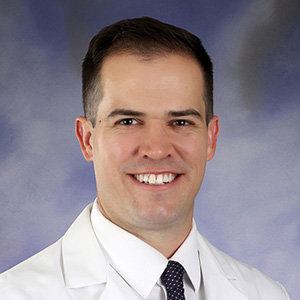
Vascular Surgery
Accepting new patients
Offers virtual visits
Franciscan Physician Network
