Request An Appointment
Don't wait, prioritize your health. Find the right Franciscan Health doctor for your needs, and request an appointment today.
Search the site for providers, locations, and content.
Pregnancy is an exciting time that’s full of unexpected joys. But sometimes it can bring unexpected health concerns. One of the most common issues is high blood pressure.
High blood pressure during pregnancy can affect mom and baby. It may also raise the risk of heart disease later in life. But the good news is that with the right care and support, many women go on to have healthy pregnancies.
Read on to learn what causes high blood pressure in pregnancy, the risks to watch for and how you can protect your long-term heart health.
High blood pressure, also called hypertension, happens when the force of blood against your artery walls is too high.
During pregnancy, high blood pressure can begin in different ways. Some women have it before pregnancy, while others develop it during pregnancy.
“Hypertensive disorders of pregnancy are among the most important conditions we look for today,” said Stephen Cook, MD, cardiovascular and congenital heart disease specialist at Franciscan Health Indiana Heart Physicians in Indianapolis. “They are now recognized as risk factors for heart disease later in life.”
Pregnancy and the Heart — The Hidden Clues
Scott Webb (Host): Some women who go through pregnancy may be at increased risk during and after pregnancy for heart or cardiovascular issues, and my guest today is here to explain the risks and conditions. I'm joined today by Dr. Stephen Cook. He's a Board-Certified Cardiologist, subspecializing in noninvasive cardiology at Franciscan Health.
This is the Franciscan Health Doc Pod. I'm Scott Webb.
Doctor, it's so nice to have you here today. We're going to talk about pregnancy and the heart, right? And some of the conditions, that women might be experiencing or be concerned about, whether it's, you know, things that they've been diagnosed with, or family history, whatever it might be. So, I'm just going to kind of give you a little bit of a list here and have you go through and kind of explain what these things are and how they might affect your pregnancy and the heart, if you will.
So let's start with preeclampsia, gestational diabetes, peripartum cardiomyopathy. Some big words here and I'll leave it to you, the expert.
Stephen Cook, MD, FACC: So these terms are incredibly important to recognize today. These are terms that we didn't really give much thought maybe several years ago. They're kind of maybe considered under an umbrella term now as adverse pregnancy outcomes. And, you know, I would actually kind of group preeclampsia under what we now classify as hypertensive disorders of pregnancy.
Gestational diabetes and preterm birth; these are all thought of today as adverse pregnancy outcomes. And why is this so important for a cardiologist to recognize? Well, these are now all what I call sex specific risk factors for cardiovascular disease in women. And these are all independent risk factors that are associated with what we call ischemic disease or cardiovascular disease later in life for women. So for example, what we call hypertensive disorders of pregnancy, which includes preeclampsia, and I'll go over what that definition means. So for hypertensive disorders of pregnancy, this is associated with a two to four times increased risk of cardiovascular disease in women later in life. And by later in life, if you're a 20-year-old woman, by age 40 or 50, this means that you have a two to four times more likelihood of having a heart attack or stroke compared to women who don't have hypertension in their pregnancy. These women are also three to six times more likely to have chronic hypertension should they have evidence of preeclampsia during their pregnancy or even just hypertension during their pregnancy. And these women are two times more likely of having an ischemic stroke compared to women without hypertension during their pregnancy. So let's talk about the spectrum of what hypertensive disorders of pregnancy means.
So these are women that just have a history of hypertension that then, you know, continues on during their pregnancy, or perhaps women that develop hypertension before 20 weeks. And then you can have what's called gestational hypertension. This is hypertension that's developed after 20 weeks of pregnancy, and then preeclampsia is a little bit more severe.
This is hypertension that develops after 20 weeks, fetal gestational age, or that's also associated with spilling protein in the urine. You can also develop some end-organ dysfunction or kidney dysfunction as well, so it's a little bit more severe hypertension during pregnancy. I also mentioned gestational diabetes, so for these women who develop diabetes during pregnancy; they're two times more likely to develop heart disease. So heart attacks and stroke, compared to those women who do not develop diabetes during their pregnancy. So for women who don't go on to progress to Type 2 diabetes after their pregnancy, it doesn't matter. These women are much more likely to develop heart disease if they have a history of gestational diabetes during their pregnancy.
And lastly, it's important to recognize preterm birth, though these are women who deliver before 37 weeks. These women are also two times more likely to develop heart disease compared to women who did not have a preterm delivery. So it's so important to recognize and to take this history as a cardiologist today because, you know, what are the clinical implications?
Well, you know, I typically will see women in the fourth trimester and start to be more aggressive with my postpartum screening. I definitely am more strict about blood pressure control postpartum. I'm more strict about getting cholesterol panels, and most important is empowering the patient. Really providing patient education post delivery in that fourth trimester visit about diet, exercise, and weight management.
Host: Yeah. Yeah. I have a couple of kids myself, of course, and you know, my wife carried our children, thankfully she did the heavy lifting, if you will, but it's, you know, hard enough to be carrying another human being around, or maybe multiple human beings inside your body, and then have to think about all of this, which may or may not affect someone during pregnancy, but as you're saying, may after pregnancy, after they give birth or years down the line. So it's a lot to think about. It makes me think, Doctor, that maybe that pregnancy is kind of a, a great stress test for the heart. That's what it sounds like to me. And maybe you could explain that.
Stephen Cook, MD, FACC: Yeah, a lot of people refer to pregnancy as a stress test, and it's commonly referred to this because of the incredible physiologic adaptations that occur during pregnancy. When I think about the cardiovascular system, and what do I mean by that? So when I'm referring to the cardiovascular system, I'm talking about the heart and the blood vessels.
So, for women, the blood volume increases significantly during pregnancy, and this increase starts in the first trimester, about six weeks, and the blood volume reaches a maximum volume of about 4.7 to five liters by 32 weeks, or by the third trimester. When you think about what is five liters, that's roughly the weight of 11 pounds of water.
And that rapid increase is typically noted by mid-pregnancy. Now, that to me, is a significant, uh, would be a significant stress test, especially if somebody had underlying heart disease, right? The heart rate also increases. The maximum increases anywhere from about 15 to 20 beats per minute. Again, this is happening by about 32 weeks per, 32 weeks gestation.
And why does all this water retention occur? Well, there's a lot of hormone changes, right? Estrogen itself, promotes the retention of sodium during pregnancy, and this increases our overall total body water content and creates this, what I call hypervolemia during pregnancy. So these types of changes will be poorly tolerated in women with heart disease. And the most common poor outcomes that we see, is heart failure and arrhythmias. These are the most common complications that we'll see in women with heart disease. And alternatively, if you have a woman who has heart disease, but it is unknown, it'll easily be unveiled during pregnancy. I know you mentioned this earlier, we can talk about this.
Probably one of the most common conditions that we see unveiled is a condition known as peripartum cardiomyopathy. I think it's important to recognize that it is, how do we assess pregnancy risk? Because cardiovascular disease affects one in seven pregnancies, So, it is incredibly important that women with heart disease can certainly benefit from preconception counseling, which really starts in not only the obstetrical office, but also the cardiology office.
You know, we can easily have a detailed discussion of the risks of pregnancy. Many women who have heart disease may require optimization of their heart status. If there are certain medications that are not safe for the baby to see during pregnancy. So it's up to me, the cardiologist to either stop that medication or switch to safer medications.
It's important to do what I call risk stratification, even doing a simple EKG, or perhaps they need what's called an ultrasound or an echocardiogram to look at the structure or the function of the heart. These are so many important things to do as you can see that those physiologic changes can certainly have some significant outcomes on women during their pregnancies.
Host: Yeah, and I wanted to finish up today, Doctor, I know we're going to talk again in the near future about women, equity, access to care, really important stuff. But let's finish up today. You touched on it there, and it kind of struck a chord for me how obstetricians and cardiologists work together, should work together, can collaborate together, for prevention of some of the things we're talking about here.
Stephen Cook, MD, FACC: Yeah, I, I think it's important to recognize that one of the key facets to successful care for women with cardiovascular disease who are pursuing pregnancy is really a multidisciplinary approach to care, right? We know that cardio obstetrics clinics have actually been shown to decrease adverse heart complications for women with pregnancy.
Members of teams, of cardio obstetrics teams, if you hear the term cardio obstetrics, you think, oh, it's just a cardiologist and an obstetrician. Many times that's not true. If you have somebody with heart failure, perhaps they need to see an advanced heart failure specialist.
If they have heart rhythm problems, perhaps they need to also see an electrophysiologist. Sometimes if they have severe valvular heart disease, perhaps do they need to see a cardiac surgeon? You know, it's also pulling in the nursing care to make sure that they understand the plan of care at the time of delivery.
So, it is certainly a real multidisciplinary team to really get these patients all the way through their pregnancy, delivery, and postpartum care. You know, probably one of the most important aspects of this team care from an operational standpoint is the importance of regular multidisciplinary meetings to really facilitate patient-centered decisions about their testing, how to manage their disease, and to ideally is to coordinate their delivery plans. And by having this team-based approach, I really believe that we can improve patient outcomes.
Host: Yeah, I'm sure you're right. And that's just, you know, music to my ears, if you will. It seems to be the way in medicine now is more a team approach. Multidisciplinary teams working together, patient-centered, working with patients and spouses and families and everybody for the best outcomes.
All sounds great to me. Like I said, we're going to speak again in the future, talk about women, equity, access to care, and how we can do better if you will. Thanks so much.
Stephen Cook, MD, FACC: Thank you.
Host: And to learn more, visit franciscanhealth.org/herheart.
And if you found this podcast helpful, please share it on your social channels, and be sure to check out the full podcast library for additional topics of interest. This is the Franciscan Health Doc Pod. I'm Scott Webb. Stay well, and we'll talk again next time.
Several types of high blood pressure can occur during pregnancy:
Preeclampsia is a serious condition. It involves high blood pressure along with signs of organ stress, such as protein in the urine.
Eclampsia happens when preeclampsia severely progresses. It can cause seizures and requires medical care right away.
This is high blood pressure that starts before pregnancy or before 20 weeks of pregnancy. It may continue after the baby is born.
This type develops after 20 weeks of pregnancy and usually goes away after delivery.
“Hypertensive disorders and preeclampsia can increase the lifetime risk of heart disease by two to four times,” said Dr. Cook.
High blood pressure during pregnancy is more than an issue that will go away after the baby is born. It can affect your health now and in the future.
Your care team’s focus is to make sure your pregnancy goes smoothly. But the team will also be mindful that high blood pressure can be an early warning sign of future heart disease.
Pregnancy places extra demands on your body, especially your heart. “Pregnancy is often described as a stress test for the heart,” Dr. Cook said.
These changes are normal. Still, they can be harder on your body if you already have heart disease or high blood pressure.
High blood pressure can affect women of all ages and not just older adults. It’s one of the most common preexisting conditions seen in pregnancy. You may be at higher risk if you:
According to the National Heart, Lung, and Blood Institute, some women develop high blood pressure during pregnancy, even though their blood pressure had been normal up to that point. That’s why it’s so important to get regular prenatal care.
High blood pressure doesn’t always cause clear symptoms. One reason regular prenatal visits are so important is to monitor your blood pressure. Some warning signs may include:
If you notice any of these symptoms, contact your doctor right away.
The most important step you can take is to work closely with your care team. “Successful care really comes down to a multidisciplinary approach,” Dr. Cook explained. This means your care may include:
The Cardio-Obstetrics Program at Franciscan Health offers a full spectrum of care for women who are pregnant, plan to become pregnant or have recently delivered. This includes:
Together, your care team will monitor your blood pressure, adjust your medicines if needed and create a plan for the safe delivery of your baby.
Here are some of the ways you can manage your blood pressure during pregnancy:
Always talk with your doctor before you change your medicines or any part of your daily routine.
Many women are surprised to learn that high blood pressure during pregnancy can affect their health years later.
Women who have conditions such as preeclampsia or gestational hypertension during their pregnancies may have a higher risk of:
If you have a hypertensive diagnosis during pregnancy, it isn’t a random event. Think of it as a warning sign and a chance for a cardio-obstetrics care team to step in and help early. It’s why having follow-up care after delivery, which is sometimes called the “fourth trimester,” is so important.
Talk to your provider if you:
Early care can make a big difference in your pregnancy and your long-term health.
Pregnancy can give your care team important insights about your heart health, so work with them. But also stay informed and make healthy lifestyle choices. Those are important ways you can lower your risk of future heart disease.
At Franciscan Health, our team is here to guide you every step of the way, from pregnancy through long-term heart care. If you’re pregnant or plan to become pregnant and have concerns about high blood pressure, talk with your doctor.
Our women’s health and heart care teams at Franciscan Health work together to support you and your baby before, during and after pregnancy. Find a provider near you.
"These women are three to six times more likely to have chronic hypertension should they have evidence of preeclampsia during their pregnancy or even just hypertension during their pregnancy," Dr. Cook said, adding that it also increases the risk of having an ischemic stroke in life.
"We now know that any hypertensive disorder of pregnancy, increases your risk for cardiovascular disease by as much as 63%," said Caitlin Luebcke, DNP, a board-certified nurse practitioner with advanced training in adult-gerontology care and a special interest in women’s heart health. "Women who have a hypertensive disorder during pregnancy are more likely to have premature cardiovascular disease incidences, compared to women who don't."
Franciscan Health's Cardio-Obstetrics program offers a full spectrum of care for women who are pregnant, plan to become pregnant or recently delivered their babies. This includes:
Yes. High blood pressure, preeclampsia, gestational diabetes and preterm birth can all point to a higher chance of heart disease later in life. Doctors now call these "risk enhancers." The good news is that knowing this early gives you time to protect your heart.
Pregnancy puts extra work on your heart and blood vessels. Just like an exercise stress test, it can show problems that were hidden before. If something comes up, it is a signal to take extra care of your heart after your baby arrives.
Symptoms of high blood pressure during pregnancy can include:
These symptoms may indicate hypertension-related complications like preeclampsia, eclampsia and HELLP syndrome.
According to the American Heart Association, you should seek medical help right away if you have any of these symptoms in the days and months after your delivery:
Yes. High blood pressure problems can continue or even start after delivery. Yet only about 6 in 10 women with these problems get a follow-up visit for blood pressure within six months, according to the American Heart Association. Ask your provider when to schedule your first check.
Continue to make your health a priority and get medical care that’s recommended for you after your delivery.
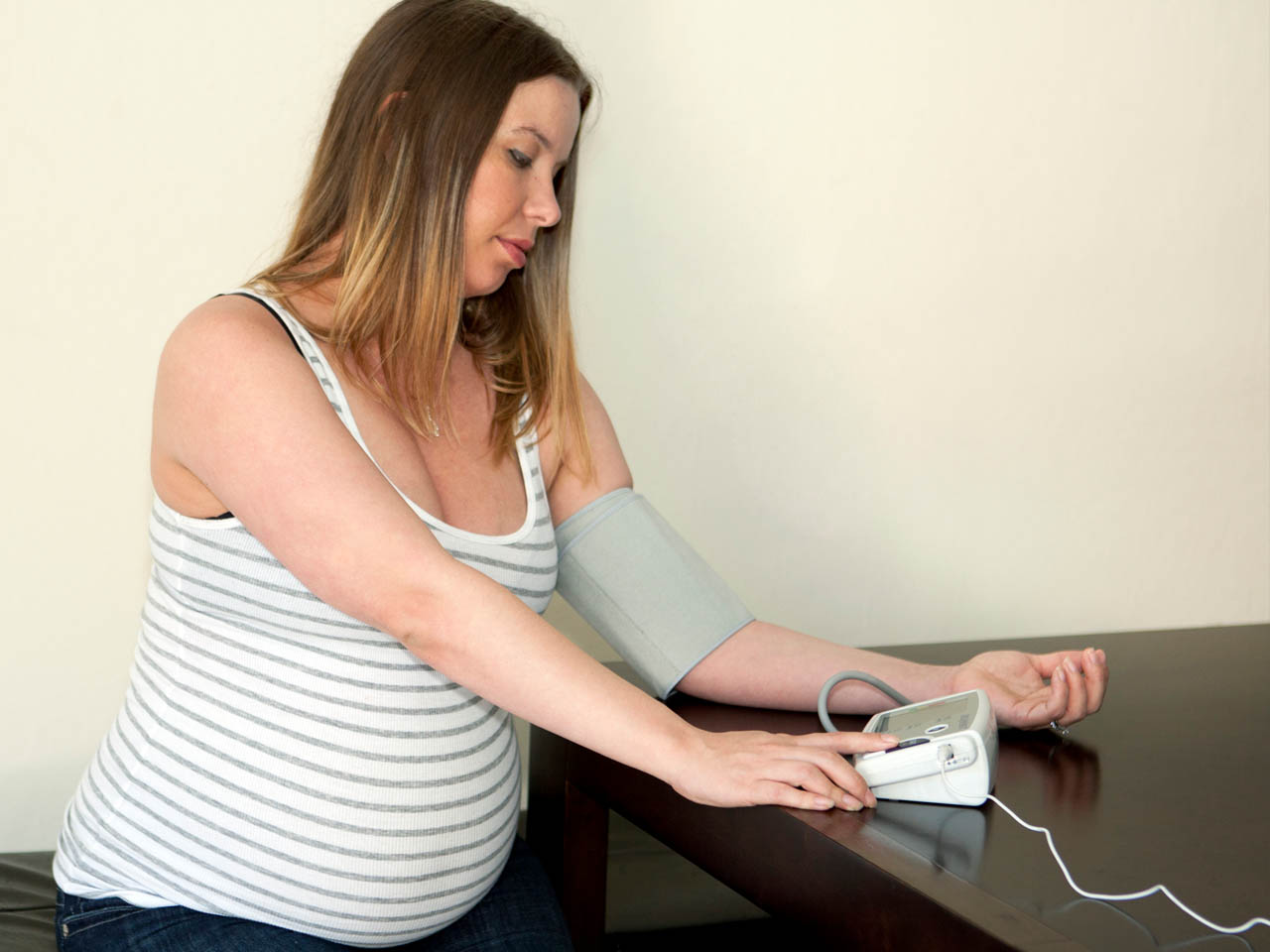
Home blood pressure checks can be very helpful, especially if you have had high blood pressure. Use a cuff that fits your upper arm, sit quietly for five minutes first, and write down your numbers. Ask your provider what blood pressure numbers should make you call.
Your pregnancy history is part of your heart history. A primary care doctor or cardiologist can use it to judge your risk and plan checkups. Share it even if your pregnancy was years ago.
Focus on the American Heart Association's Life's Essential 8:
Keep your follow-up visits with your provider, and know your numbers.


Cardiovascular Disease +1 more
Accepting new patients
Franciscan Physician Network
