Request An Appointment
Don't wait, prioritize your health. Find the right Franciscan Health doctor for your needs, and request an appointment today.
Search the site for providers, locations, and content.
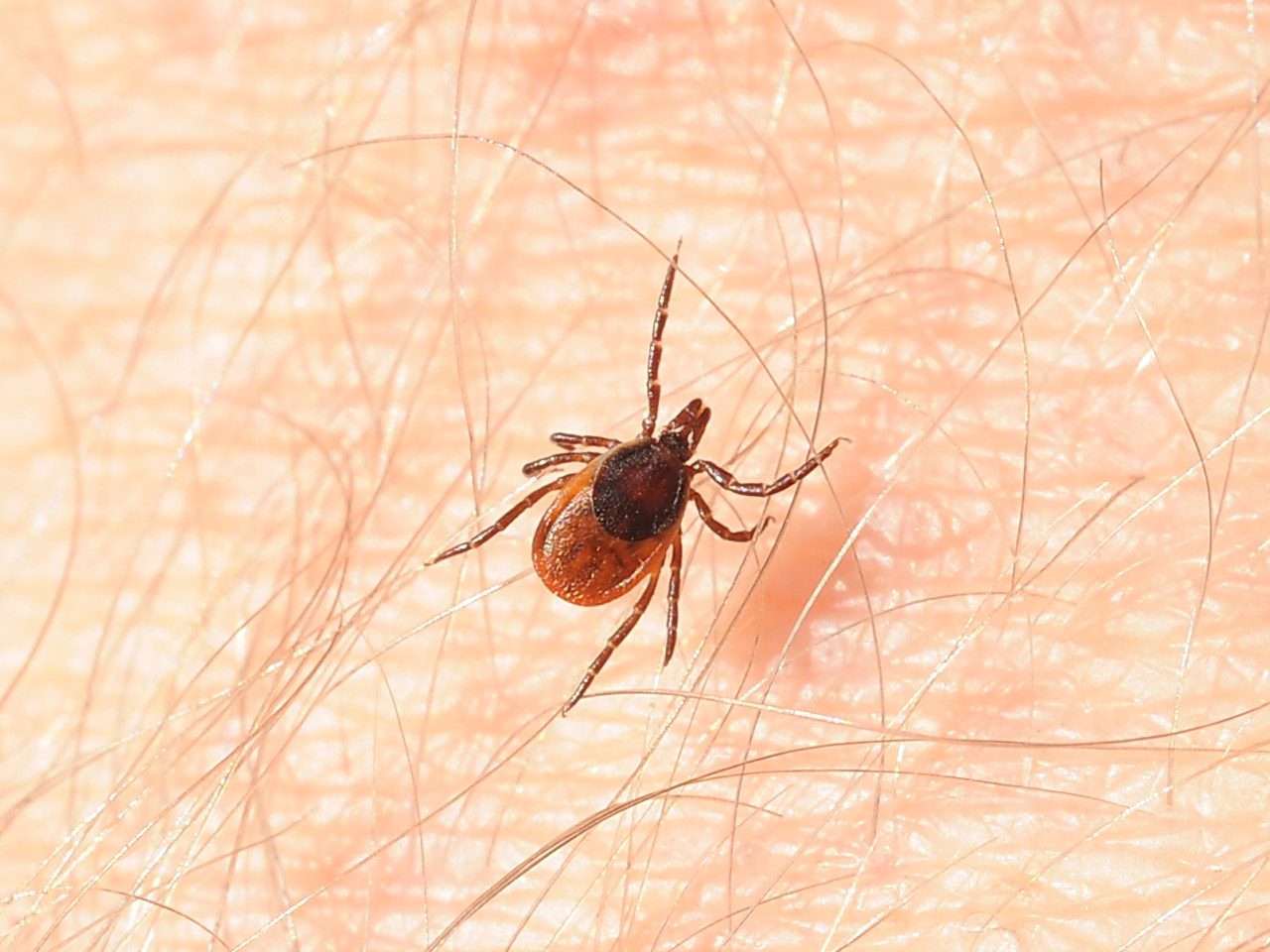
If you and your family enjoy the outdoors, it’s important to be aware of ticks — tiny, blood sucking bugs that can spread diseases such as Lyme disease or the Heartland tick virus. Ticks can be as small as a pin’s head or as large as a pencil eraser. They survive by feeding on the blood of mammals, birds, and sometimes reptiles or amphibians.
Ticks thrive in cool, damp, wooded, and overgrown areas such as tall grass, loose leaves, shrubs, bushes, woodpiles and unkempt fields. With more people spending time outside, the chances of encountering ticks are higher than ever. Franciscan Health experts explain what you should know about preventing and managing tick bites.
Tick bites occur when the small arachnid attaches to the skin and feeds. In Indiana, the most common ticks that spread disease include the American dog tick, blacklegged tick, brown dog tick and Lone Star tick, according to Kayla Ogden, FNP-C, nurse practitioner at Franciscan Physician Network Northside Family and Internal Medicine in Crawfordsville.
Many people think ticks are only active in summer, but they can actually be found year-round.
“There is no specific time of year. Ticks are around all year long. However, there are certain areas that are higher during certain times, like wooded areas,” said Robert P. Marino, DO, occupational medicine physician at Franciscan WorkingWell Michigan City.
Tick-borne diseases can share many of the same symptoms. According to the CDC, common signs include:
“Irritation, pain and redness are standard for tick bites and are non-concerning symptoms,” Dr. Marino explained. “If the area gets infected, warm, very red or you start to develop flu-like symptoms, you should call your doctor.”
Ogden added, “Symptoms of tick-borne illness include rash, particularly a bullseye appearing, skin lesion, fever, chills, fatigue, headache, neck stiffness, swollen lymph nodes, muscle pain, and joint swelling and pain within 30 days of the tick bite.”
Lyme disease occurs after being bitten by an infected blacklegged (deer) tick carrying Borrelia burgdorferi or Borrelia mayonii.
Early symptoms of Lyme disease include:
If untreated, Lyme disease can cause severe complications such as face palsy, arthritis, irregular heartbeat, nerve pain, and neurological problems even months or years later.
If you find a tick on your body, or that of a child or pet, remove the tick as soon as possible with a set of fine-tipped tweezers, says the U.S. Centers for Disease Control and Prevention.
The CDC offers step-by-step instructions for removing a tick:
“The key is to remove the tick as soon as possible, using fine-tipped tweezers to grasp the tick as close to the skin as you can, pulling upward with steady, even pressure,” Ogden said. “Don’t twist or jerk the tick.”
Dr. Marino added, “It will hurt, but don’t panic. Avoid any myths about tick removal and use tweezers. You should have something to catch the tick. Also, keep the area clean using soap and water.”
If part of the tick stays in the skin, clean the area with soap and water or rubbing alcohol. Monitor any symptoms closely.
“Patients should reach out to their primary care provider if they know that the tick was attached for greater than 36 hours, or if they are unsure of when the tick bite occurred and the tick was large at the time of removal,” said Ogden. “If the tick has been attached for fewer than 36 hours, the risk of developing Lyme disease and other tick-borne illnesses is very low, which is the biggest concern with tick bites.”
While there’s no guaranteed way to avoid ticks, there are steps you can take to lower your risk of tick bites:
Most tick bites are harmless, but if you develop a rash, flu-like symptoms, or know the tick was attached for more than 36 hours, seek medical advice right away to rule out Lyme disease or other tick-borne illnesses.
Ogden reminds patients, “When in doubt, don’t hesitate to reach out to your primary care doctor because when it comes to tick-borne illness, it is always better to be safe than sorry.”


Family Nurse Practitioner
Accepting new patients
Franciscan Physician Network