
Request An Appointment
Don't wait, prioritize your health. Find the right Franciscan Health doctor for your needs, and request an appointment today.
Search the site for providers, locations, and content.
Testicular cancer accounts for only 1 percent of all cancer cases in men, but it's the most commonly occurring cancer among males 15 to 34 years old. Researchers have charted a slow rise in the number of cases over the last 15 years.
With testicular cancer cases on the rise, it's crucial for men and their families to understand testicular cancer and know the warning signs.
Patrick Heckman, DO, a hematologist and oncologist, and and Naveed Rana, MD, a medical oncologist, explains what you need to know about testicular cancer, your cancer risk factors, and concerning signs to watch for.
"The name of the conditions kind of gives away that it's a growth of cells in the testicle area," said Dr. Heckman, who practices at Franciscan Health Cancer Center Indianapolis.
Dr. Heckman explains that there are a few different categories for these growths.
"We split them up into what we call germ cell tumors and non-germ cell tumors, which are tumors that are or are not involved with the reproductive cells," Dr. Heckman said. "Germ cell tumors are by far the most common out of the two."
"Cancers that form directly within the testicle area are known as primary testicular cancer, but secondary testicular cancer is a bit different," Dr. Heckman said. "When talking about secondary testicular cancer, it doesn't appear in the testicle directly. Instead it travels to the testicle from somewhere else in the body."
Dr. Heckman explains that secondary testicular cancer is a much rarer condition in comparison to primary testicular cancer.
"A secondary testicular cancer can often be related to blood disorders like lymphoma and leukemia," Dr. Heckman said. "And by far, the most common cause of secondary testicular cancer is an initial lymphoma condition."
Research even shows that testicular lymphoma is more common than primary testicular cancer for men above the age of 50 years old.
Although testicular cancer accounts for only 1 percent of all cancer cases in men, it's the most commonly occurring cancer among males 15 to 34 years old.
In fact, research shows that one in 250 males will develop testicular cancer in their lifetime, and the American Cancer Society predicted there would be more than 9,000 new cases of testicular cancer in the U.S. in 2023.
Fortunately, there has been a dramatic decrease in deaths caused by this form of cancer -- the result of early detection and more effective treatment.
Any man can get testicular cancer.
"Unfortunately, professionals can agree that there isn't a clear answer for what causes most testicular cancers," Dr. Heckman said. "While it continues to be an unknown area, some studies do point to a few risk factors."
Risk factors for testicular cancer include:
Testicular cancer has several symptoms that can become noticeable over time.
"By far the most common symptom that men will present with to start this whole process out is a painless mass, or there's some kind of painless swelling of one of their testicles," Dr. Heckman said.
"A little bit less often that there can be kind of a dull ache down there. And sometimes these tumors can secrete these certain substances throughout the body. Men can actually grow breasts and that can be a presenting symptom for them. And actually, over 50% of men who have these tumors, they can actually present with infertility too."
"Alongside several other symptoms, I would say probably the biggest one that always comes to mind for me is an undescended testicle."
Dr. Heckman said men who have these tumors can experience infertility. In roughly 2 percent of all cases of male infertility, the infertility is a symptom of a life-threatening disease such as testicular cancer. Both testicular cancer and its treatments can make men infertile. Testicular cancer can cause low sperm counts, resulting in complications around sperm bank storing before infertility causing treatments such as chemotherapy.
A self-exam for testicular cancer is easy. Do your self-exam after a warm bath or shower (warmth helps relax the scrotum, making it easier to detect anything unusual).
Standing in front of a mirror, look for any signs of swelling in the skin of your scrotum.
To check for unusual lumps or swelling in your testicles, place your index and middle fingers on the bottom of one testicle, with your thumb on the top; then gently roll the testicle between your fingers. Examine your other testicle in the same way.
Don't be surprised to discover that one testicle is slightly larger than the other. That's normal. Healthy testicles are smooth, oval-shaped, and rather firm.
Most lumps are found on the side of a testicle, but they can also show up on the front, so check the whole testicle carefully.
If the doctor confirms that something doesn't feel quite right, he or she may do an ultrasound examination, which uses sound waves to create an image of the testicles' interior.
If the ultrasound shows an abnormality, your doctor may order blood tests that are helpful in diagnosing testicular cancer. This generally provides enough information to make a diagnosis.
In rare cases, a biopsy may be needed.
Men who have these tumors can experience infertility. In roughly 2 percent of all cases of male infertility, the infertility is a symptom of a life-threatening disease such as testicular cancer. Both testicular cancer and its treatments can make men infertile. Testicular cancer can cause low sperm counts, resulting in complications around sperm bank storing before infertility causing treatments such as chemotherapy.
"Usually it's detected at early stage because it can be detected as the testicle size is getting larger," said Dr. Rana, who practices at Franciscan Health Cancer Center Indianapolis. "There's some discomfort, a pain, some nodularity that's felt on exam. And most of the time that is apparent enough that it can be felt and noticed early by the patients themselves. And then they would bring in attention to their physicians and then they have that taken care of. And that's one of the reasons that these patients who have this cancer do very well because those are detected at earlier stage."
Even though there are no known ways to prevent testicular cancer, there are effective treatments, including surgery, chemotherapy and radiation.
"For patients diagnosed with primary testicular cancer and scheduled for surgery, they will have the affected testicle removed along with the spermatic cord that's attached to the testicle," Dr. Heckman said. "Heckmans should be able to collect a lot of information to help get a sense of the testicular cancer stage that the patient is facing."
"Regarding stage I primary testicular cancer, after a patient goes through surgery to remove the affected testicle, they can continue to be watched very closely," Dr. Heckman said. "We can keep patients who are facing early-stage tumors from getting chemotherapy or radiation."
Dr. Heckman explained that when patients start facing stage II in primary testicular cancer, other types of characteristics can be involved, which can suggest treatment through radiation or chemotherapy after the initial surgery.
Cure rates are near 95%, especially when the cancer in the testicles is detected early.

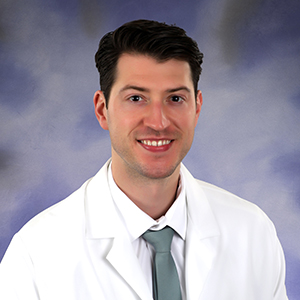
Hematology & Oncology +1 more
Accepting new patients
Franciscan Physician Network


Hematology & Oncology
Accepting new patients
Franciscan Physician Network