Request An Appointment
Don't wait, prioritize your health. Find the right Franciscan Health doctor for your needs, and request an appointment today.
Search the site for providers, locations, and content.
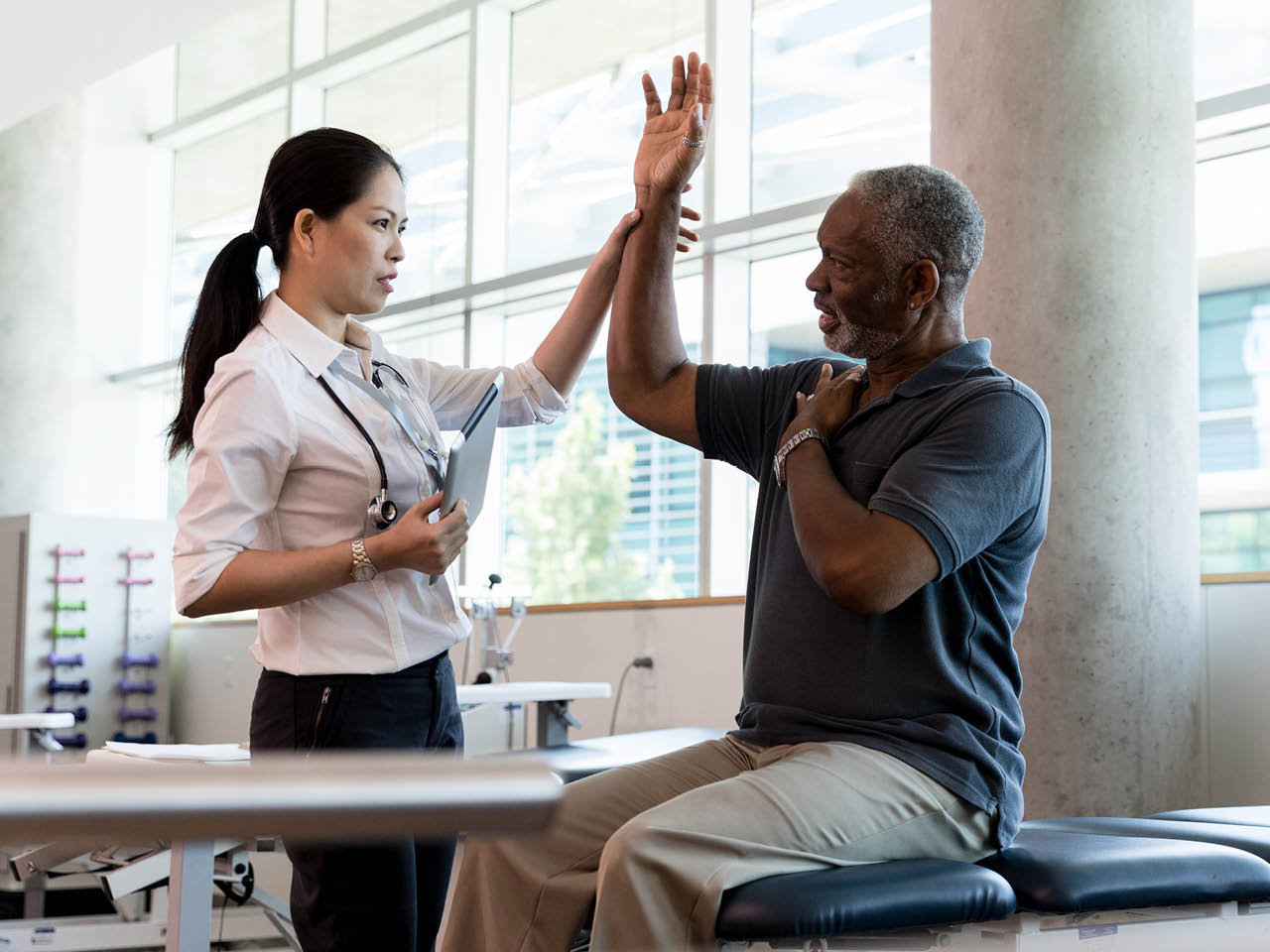
From diagnosing injuries to developing rehab plans to get players get back in the game to providing guidance on injury prevention, sports medicine specialists help athletes perform at their optimal levels throughout their competitive seasons.
"Our main focus and function is focusing on people's actual function and trying to optimize their movement patterns," said Andrew Hills, DO, sports medicine physician with Franciscan Physician Network Sports Medicine Specialists in Mooresville and Plainfield. "It can range from anyone, not only just athletes on the baseball diamond or our runners. It can also be our older population trying to stay active or weekend warriors playing pickleball." trying to stay active or weekend warriors playing pickleball."
A sports medicine doctor specializes in diagnosing, treating, and preventing injuries related to physical activity, exercise and sports. These doctors work with athletes, amateur sports enthusiasts, and active individuals of all ages to help them maintain their physical fitness and avoid injuries.
“We specialize in non-surgical treatments to get you back into the game, whether that is getting you back to a 5K or just playing with your grandkids in the backyard,” Dr. Hills said.
A sports medicine specialist has received specialized training in sports medicine and is equipped to handle various types of sports-related injuries, from sprains and strains to concussions and fractures. These medical experts work closely with athletes, helping them to recover from injuries, manage chronic conditions, and achieve optimal performance levels.
"I tend to use the analogy that we're like the primary care of orthopedics," said Blake Averill, MD, a sports doctor with Franciscan Physician Network Sports Medicine Specialists Indianapolis. "We're not surgeons, but we should be the first person you see for any sports-related injuries or concerns."
Dr. Averill emphasizes that athletes should visit a sports medicine specialist for even the slightest ache, pain, or injury experienced during or immediately after playing a sport to avoid worsening.
There are patients with several conditions that sports medicine physicians like Dr. Averill may see, such as teenagers with twisted ankles, middle-age patients attempting to get active while dealing with hamstring issues, or even the elderly playing light sports with sore shoulders.
You're not alone if you've wondered what the difference is between a primary care physician and a sports medicine doctor. You could use either physician as your first contact to help diagnose a wide range of health concerns.
"The majority of sports medicine specialists did complete a residency in family medicine, but then went on to do an additional fellowship in sports medicine," Dr. Averill said. "Still, it's not just family medicine, you can go on to do that sports med training if you did a residency in pediatrics, emergency medicine, internal medicine, and physiatry."
Dr. Averill explained that most sports medicine specialists come from different medical backgrounds but have chosen to get that additional training to focus on musculoskeletal medicine.
A sports medicine physician help prevent and treat activity- and sports-related injuries, including:
"I think the majority of people we see is going to be after acute injuries like falls, shoulder dislocations, or calf muscle sprains, but I'd like to see people more before the fact," Dr. Averill said. "Still, we do have a good amount of people who will come and see us before they start training."
Dr. Averill mentioned how people may visit him while preparing for extensive running, such as training for a 5K or a half marathon, to receive suggestions for performing at their best while avoiding injuries.
"I think that's where the uniqueness and what really I enjoy about sports medicine is how well we collaborate with other people," Dr. Averill said.
Sports medicine specialists can assist patients by referring them to other specialists depending on their injury or the specific sport they have in mind for preparation.
"We can get you connected with dieticians, physician therapists, occupation therapists, and even our athletic training staff," Dr. Averill said. "I can also talk to our orthopedic surgeons if there's an issue, so we do a really good job of making sure we bring everyone to the table and give you the best information you can have."
Children and their parents can also significantly benefit from the help of sports medicine specialists. Some children can be very excited and energetic while competing in their favorite sports. Understandably, immersion in a sport can distract a child from proper form and movement, which can lead to injuries over time.
"We see a lot of kids after the fact, so if they have any type of pain or curiosity at all, they can come in and we can do a full assessment in my office where I can look at their dynamics, arches, how they walk and run, and how their shoulders are moving," Dr. Averill said.
Dr. Averill explained that all of the assessment methods used, along with sports medicine-trained physical therapists, can help children avoid injuries and even improve their overall performance by correcting their form and helping them use the correct muscles as a runner or thrower, for example.
"I think part of what we can bring to the table is that we're more likely to help protect athletes from themselves," Dr. Averill said.
Sports medicine specialists are able to identify when an athlete is incorrectly using their joints and muscles, so they are more likely to reduce issues related to wear and tear several years later by making corrections early into a person's athletic career.
Dr. Averill emphasizes how these suggestions can also apply to short-term concerns.
"As an example, we can assess an injury, explain how it isn't season ending and provide ways to manage it and keep you playing through the year," Dr. Averill said.
Children and young adults may avoid discussing their strains and other injury concerns to avoid taking time away from the sport they enjoy. As Dr. Averill experiences these situations often, he suggests that young athletes give sports medicine specialists a timely visit so they can return to their sport quicker and risk-free.
"I think it really starts with that multidisciplinary approach. So, Franciscan has made it a priority to be a part of the community that we're in," Dr. Averill said.
He explains that sports medicine professionals with Franciscan Health have contracts with numerous high schools around Indianapolis. These agreements include having athletic trainers on-site for middle school and high school athletes.
"They see the athletes every day and they're at all the games, which can easily play a great part in improved care," Dr. Averill said. "If you know more about these athletes along with the injuries they've had in the past, it can definitely help the communication between athlete and athletic trainer."
With better communication, sports medicine specialists can get more accurate information on athletes from athletic trainers. Specialists can even be available on the sidelines for more concerning sports-related injuries such as concussions, potential spine damage and other orthopedic-related conditions.
You do not have to be an ""athlete"" to get sports medicine care.
“A sports medicine specialist is actually a physician who focuses on the total health of an active person,” Dr. Hills said. “So my job is to treat any condition that prevents you from moving. I tell my patients, ‘If you have a body, you're an athlete in the game of life.’ So you don't have to be competitive to deserve expert care.”
Conditions and injuries sports medicine doctors treat include:

Family Medicine +1 more
Accepting new patients
Franciscan Physician Network

Sports Medicine +1 more
Accepting new patients
Franciscan Physician Network