Request An Appointment
Don't wait, prioritize your health. Find the right Franciscan Health doctor for your needs, and request an appointment today.
Search the site for providers, locations, and content.
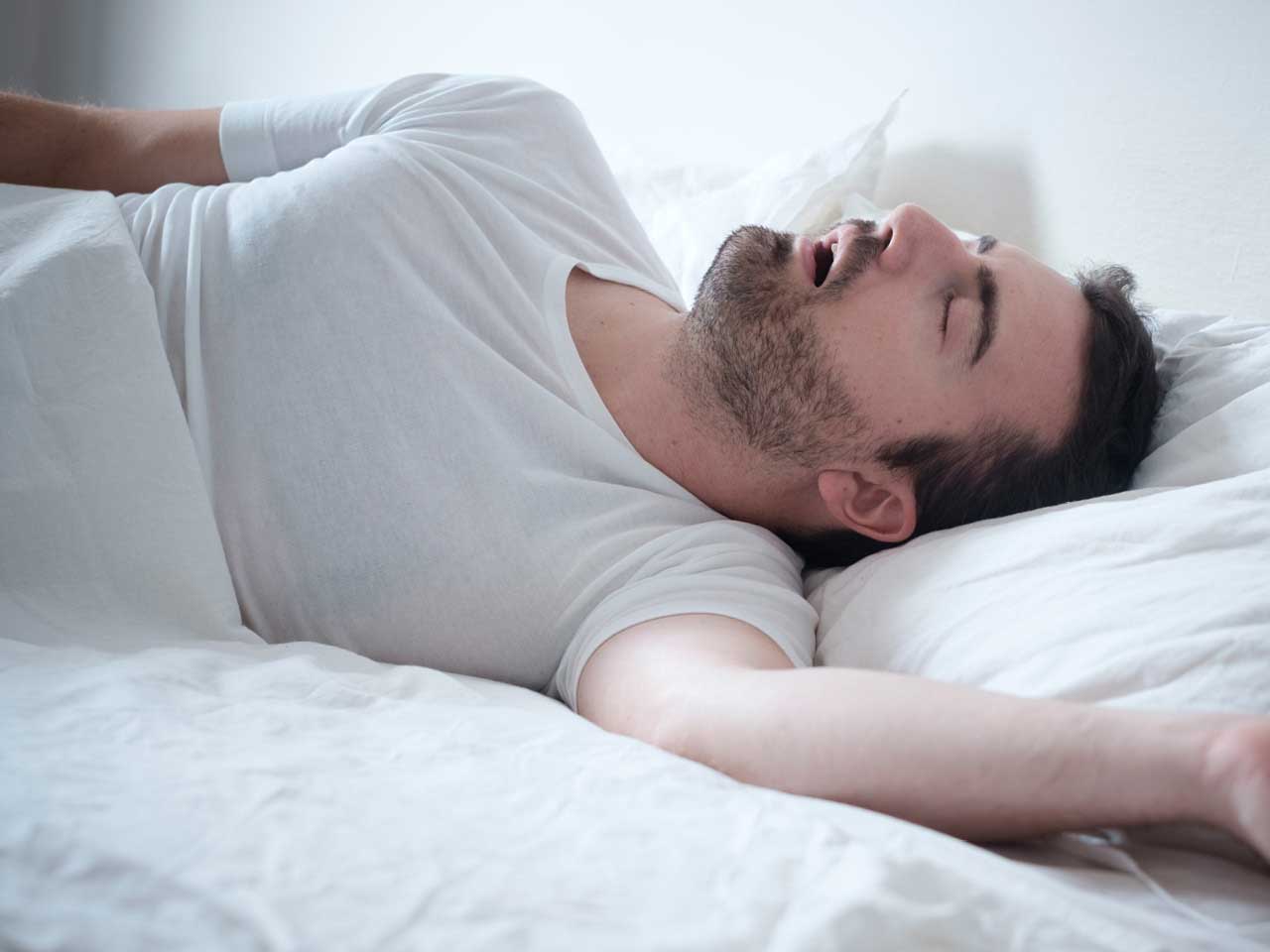
You've tried going to sleep early so you can get plenty of rest – and still, you're tired the next day. If you feel permanently exhausted, you may have sleep apnea. This condition causes you to stop breathing from 10 seconds to over a minute several times while you sleep.
"Sleep apnea takes a toll on you, physically and emotionally," said Tapan Desai, MD, a pulmonologist and sleep medicine specialist with Franciscan Physician Network in Munster, Ind. "You may try to power through the fatigue by drinking coffee or sleeping more on the weekends. But you can't recover from the sleep debt you're incurring with sleep apnea – even if you sleep in every weekend."
Sleep apnea causes people to stop breathing for at least 10 seconds to up to a minute or longer, multiple times a night.
"Sleep apnea is a condition when the airway is kind of narrow, and many things can cause these narrowing," explained Franciscan Physician Network pulmonologist Salim Semaan Abou-Jaoude, MD, who practices in Lafayette, Ind. "So, the body uses muscles to open up the airway during the day when you're awake. And as you fall asleep, these muscles relax and tend to occlude the airway."
Sleep apnea or the apneas of sleep apnea are divided into three different types.
Obstructive sleep apnea, the most common type of sleep apnea, occurs when the soft tissue at the back of the airway collapses due to pressure.
"The air will completely occlude and the flow to the lungs are decreased by 90%, essentially complete cessation of our airflow," Dr. Abou-Jaoude said. "The complete cessation of this airflow should be 10 seconds or longer to count as a sleep apnea."
With central sleep apnea, there is a problem with the brain signals that tell the muscles to breathe.
"There is effort with the chest trying to move air into the lungs, but there is an obstruction in the upper airway that will not allow the air to go to the lung," Dr. Abou-Jaoude said. "With central apnea, there is no order from the brain for the person to breathe. So, we can tell the difference on the sleep study when there is no effort in the chest, but there is cessation of flow."
Mixed sleep apnea is caused by a combination of obstructive and central sleep apnea.
You might not be aware if you're showing sleep apnea symptoms like snoring or stopping breathing.
Most of the time, people living with sleep apnea are unaware of their breathing stoppages. So the problem may not be apparent unless a bed partner has witnessed breathing difficulties.
The start-stop pattern of breathing associated with sleep apnea is different than snoring, though, says Dr. Desai.
"People think if you snore, you must have sleep apnea. But you can have sleep apnea without snoring, and you can have snoring without sleep apnea," he said. "Someone with sleep apnea will have multiple symptoms."
Here are some symptoms of sleep apnea to watch for, in addition to snoring:
"Other things include feeling tired during the day, not being able to sleep and staying asleep during the night, having headaches in the morning," Dr. Abou-Jaoude said. "Sometimes some of the symptoms of sleep apnea is refractory hypertension, blood pressure that is very difficult to control, even sometimes with three or four or five medications. Many times treating sleep apnea will help the blood pressure."
Sleep apnea can affect anyone at any age, even children. However, you may be at greater risk if you:
Sleep apnea also seems to run in some families, suggesting a potential genetic basis.
Many medical conditions can cause sleep apnea symptoms, said Dr. Abou-Jaoude.
"Usually, the most common cause of this sleep apnea is being a little bit overweight," he said. "There are some conditions such as maxillofacial abnormalities like bone structures, especially like small jaws, retrognathia can cause that, and sometimes genetic factors play a role by causing a narrowing inside the airway, and many congenital diseases also can cause that."
Children can also have sleep apnea, often due to issues with their tonsils or adenoids.
If you're experiencing sleep apnea symptoms, talk to your family doctor. You may need a referral for sleep testing (monitored sleeping), which is how doctors diagnose sleep apnea.
"There are three different kinds of sleep studies that can be done," said Dr. Abou-Jaoude. "One is done at home. One is a sleep study that's done in the sleep lab, and the whole night is done looking for sleep apnea and recording sleep apnea. The other kind of a sleep study is being done in the hospital, but this is called split night polysomnography, meaning the first half of the night we do the diagnosis for sleep apnea, and the second half of the night we try to find a CPAP pressure that is appropriate to resolve sleep apnea."
The good news is that sleep apnea is highly treatable.
"The most important thing is to recognize that you need help. People often fail to realize how fatigued they feel because they're so busy," says Dr. Desai. "Take the time to check in with yourself and get the care you need to live life to the fullest."
Your doctor may recommend these lifestyle changes to help sleep apnea symptoms:
Noninvasive sleep apnea treatments your doctor may recommend include:
Other treatment options for sleep apnea include the implantable Inspire device.
Sleep apnea impacts as many as 18 million Americans. Often going undiagnosed, sleep apnea not only causes chronic sleep deprivation but also may increase your risk of mental health conditions and other disease, including:
Other health effects of sleep apnea can include:
Here's what makes sleep apnea so tricky to diagnose: Most often, people only partially awaken – enough to resume breathing – and aren't aware of what's happening. So they wake up tired without knowing why.
You can have sleep apnea without snoring, and you can have snoring without sleep apnea.
Sleep apnea is often diagnosed using a sleep study.

Pulmonary Disease +1 more
Accepting new patients
Franciscan Physician Network
