Request An Appointment
Don't wait, prioritize your health. Find the right Franciscan Health doctor for your needs, and request an appointment today.
Search the site for providers, locations, and content.
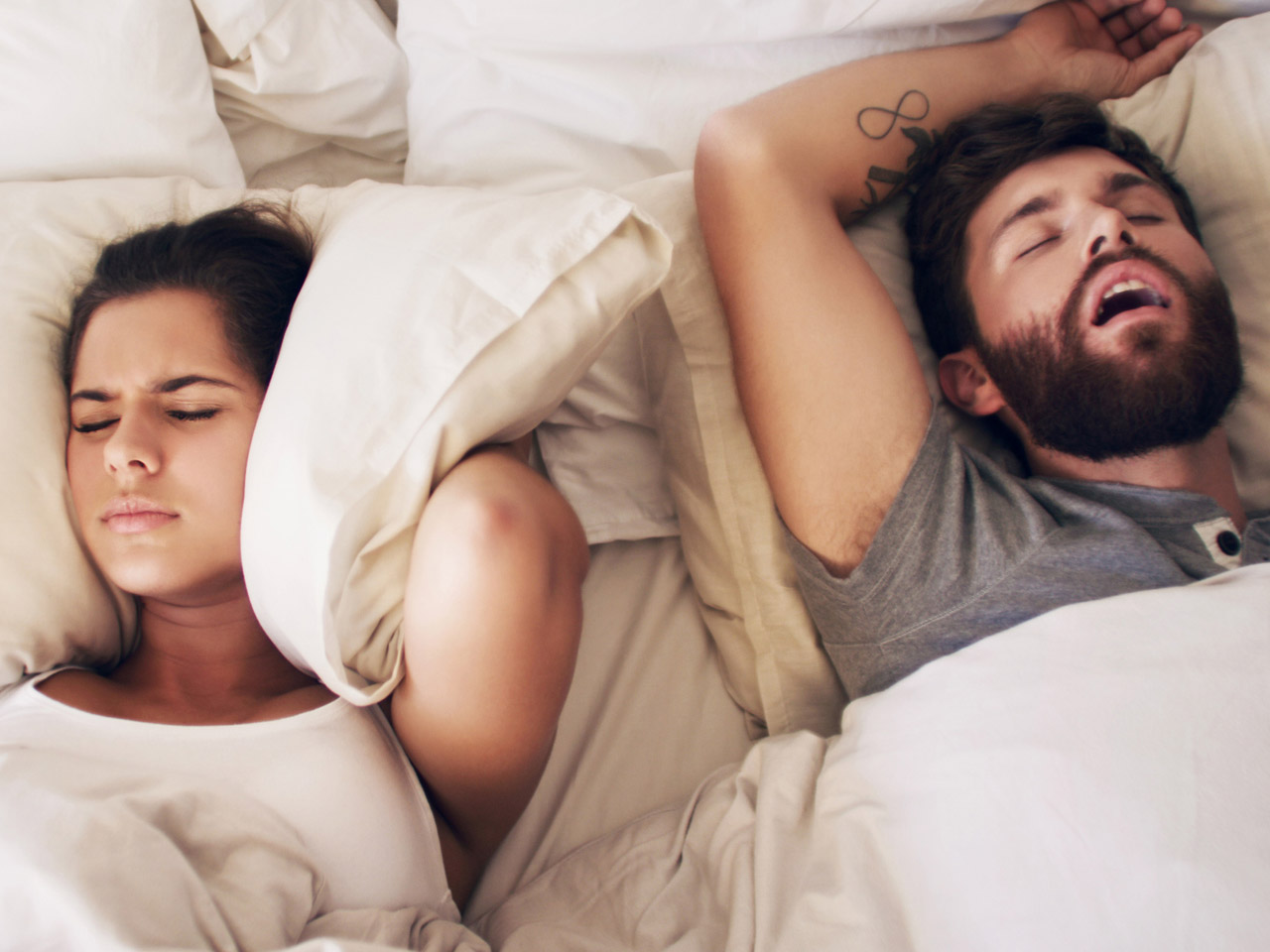
Whether we want to admit it or not, nearly half of us - about 45% - snore sometimes, and about one in four snore almost every time we sleep.
Snoring can be bothersome to your partner, but for some people, snoring can be a serious health concern. Snoring can be a sign of obstructive sleep apnea, a common medical condition that causes people to stop breathing when they sleep.
Is the sound of snoring disrupting sleep in your household? Find out causes and treatment options for this common problem. Learn about common causes of snoring, the link between snoring and sleep apnea, and treatments for snoring from a Franciscan Health pulmonologist.
Obstructive sleep apnea is a medical condition that causes you to stop breathing in your sleep.
If you have sleep apnea, you might stop breathing multiple times a night, from 10 seconds to a minute or more at a time. People with mild sleep apnea typically experience five to 14 hypopnea (decreased airflow) events per hour of sleep, while those with severe sleep apnea can have 30 or more events per hour.
If you have sleep apnea, your snores will likely sound like loud bursts, followed by silence lasting 10 seconds or more. Then, you’ll likely make a sudden gasp and snort or choke as your brain senses low oxygen levels and signals for your body to breathe. This pattern typically repeats throughout the night.
However, not all people with sleep apnea snore. “You can have sleep apnea without snoring, or you could have snoring without sleep apnea. They're independent,” explained Tapan Desai, MD, a pulmonologist and sleep medicine specialist with Franciscan Physician Network Munster Medical Center.
Anyone can develop sleep apnea, though males are more likely to be diagnosed with the condition than women. Even children can develop sleep apnea, but the risk of diagnosis increases as you age. Additional common risk factors of sleep apnea include:
Studies suggest sleep apnea affects as many as one in five adults. People with sleep apnea typically have at least two of the following key signs:
"If you have at least two of those indicators, that's a high predictor for having sleep apnea,” Dr. Desai said.
Roughly 45 percent of adults snore sometimes, and about 25 percent snore every time they sleep.
Not all snoring links to sleep apnea. Snoring occurs when the vibrations of soft tissues in the upper airway cause noisy breathing. It happens when the muscles of the throat and tongue relax and narrow your breathing airway as you sleep.
You might be more likely to snore if you:
While potentially bothersome to a sleeping partner, snoring itself does not cause health problems. However, loud snoring can be a sign that you may have obstructive sleep apnea, a serious health concern.
Not all snoring is a cause for concern.
"Snoring is not an indicator of sleep apnea. Snoring is just vibration of air flow," Dr. Desai said. "People think, 'I got sleep apnea when I snore.' That's not necessarily true.
"Some people have primary snoring due to a deviated septum or other anatomical issue, but that doesn't mean they have sleep apnea or that their airway stops as they sleep."
Because sleep apnea interrupts your sleep, it can have profound effects on your energy levels and overall health. Many people with sleep apnea feel sleepy during the day — increasing the risk for accidents while driving or using machinery.
Some studies have also linked sleep apnea to an increased risk of stroke, heart attack and type 2 diabetes.
“If you have sleep apnea and you don't know it, untreated sleep apnea, you're at a higher risk of high blood pressure, strokes, heart attacks, irregular heartbeats, like AFib,” said Mikalynn Lopez, lead polysomnographer at Franciscan Physician Network in Michigan City.
To limit these negative health effects, you should seek treatment for sleep apnea if you feel you may have the condition.
If you have snoring accompanied by breathing stoppages plus you gasp or choke in your sleep, you should ask your doctor if you might have sleep apnea.
Your provider will likely order an overnight sleep test to measure your heart rate, breathing patterns and blood oxygen levels as you sleep. These tests can establish whether or not you experience breathing stoppages during the night — and if so, at what rate.
If you are diagnosed with sleep apnea, you’ll have many treatment options to consider. These include:
When you treat your sleep apnea, you reduce your risk of long-term health complications and improve your immediate feelings of rest and well-being.
Your provider may suggest that you make some lifestyle changes as a start. Lifestyle changes that can help your snoring include:
Aside from lifestyle changes, there are also devices, services and procedures to treat your snoring. Even though snoring may not pose any physical risks, treatments are available for those troublesome nighttime airway noises. such as:
With a discussion on sleep apnea with your provider and several options to treat snoring, you can return to comfortable and confident sleeping patterns.
“Improved sleep has multiple influences on our health,” Dr. Desai said. “Sleep affects our memory, mood regulation, cognitive performance and immune system function. It also helps our heart health, reduces cortisol levels and supports a healthy metabolism.”


Pulmonary Disease +1 more
Accepting new patients
Franciscan Physician Network
