
Ready To Schedule Your Colonoscopy?
Time to schedule your colon cancer screening? We make it easy to get started.
Search the site for providers, locations, and content.
If your doctor found polyps during your colonoscopy, don’t panic. This is why screening matters. Polyps are common and removing them early helps prevent colon cancer. Here’s what colon polyps are, what they mean for your health and how your care team can help you through the next steps for treatment.
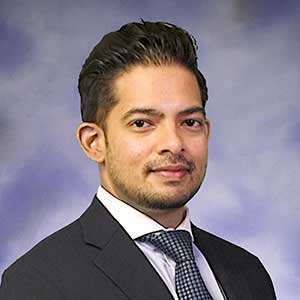
“Colon polyps are small growths that form on the inside lining of your colon,” said Zohair Ahmed, MD, a gastroenterologist with Franciscan Physician Network in Michigan City. “You can think of them like a small mushroom or bump. It’s just a cluster of abnormal cells that grow where they shouldn’t.”
Colon polyps are common, especially after age 45. While most are harmless, some can slowly change into precancerous growths if left in place for years.
Most people with colon polyps have no symptoms, according to the National Institute of Diabetes and Digestive and Kidney Diseases. That’s what makes getting a routine colonoscopy so important.
A colonoscopy finds these growths — and allows your doctor to remove them before they turn into colon or rectal cancer.
If you do have symptoms of colon polyps, they may include:
Polyps in the colon are common, but some need closer attention.
“They can be benign or they can be malignant, or they can have cancerous potential,” said Kevin Bree, MD, a general surgeon with Franciscan Physician Network Surgical Specialists Crawfordsville. “There's no way to really tell just by looking at them most of the time, but that's why we biopsy them.”
The type of polyp found in your colon helps your doctor determine your colorectal cancer risk and how soon you’ll need another screening.
“The type of polyp matters because certain polyps are higher risk than others,” said Evan Fitz, MD, colon and rectal surgeon with Franciscan Health Indianapolis. “You can’t see or feel them yourself — that’s our job. We find them, remove them and tell you exactly what kind they are.”
Common types of polyps include:
“The chances that a single polyp will ever develop into cancer are around 1 percent, but about 98 percent of cancers start as a polyp,” Dr. Fitz said. “We remove them right away to stop that process before it begins.”
After your colonoscopy, your doctor will explain what kind of polyps they found and what that means for your next screening. Knowing the type helps your care team decide how closely to monitor your colon health.
During a colonoscopy, your doctor uses a thin, flexible tube with a camera to look at the colon’s lining. If they find a polyp, it’s removed immediately using specialized instruments, a simple procedure called polypectomy.
“If I see anything that looks suspicious, I remove it or biopsy it right away,” Dr. Fitz explained. “It usually takes 15 to 20 minutes. After that, we review the results and tell you when you’ll need your next colonoscopy — maybe in 10 years if everything looks great, or sooner if we find a few polyps.”
The doctor will gently remove smaller polyps with a wire loop or heat. Larger or flatter colorectal polyps may need advanced techniques, but can usually be removed during the same procedure.
You might not even notice a difference in recovery.
“Polyps are tiny, often 5 millimeters or less,” Dr. Fitz said. “Removing one doesn’t change recovery. Very rarely, someone might notice a little bleeding once or twice, but it goes away quickly.”
After your colonoscopy, your doctor will explain what kind of polyps they found and what that means for your next colon cancer screening or medical treatment.
Knowing the type of colon polyps found helps your care team decide how closely to monitor your colon health.
Once colon polypsare removed, they’re sent to a lab to confirm their type.
Your doctor uses those results to plan when your next colonoscopy should happen.
Here’s what that usually looks like:
“The bigger the polyp, the more closely we follow up,” Dr. Fitz said. “If you had a one-centimeter polyp, we might do another scope in a year or three,” Dr. Fitz said. “We want to stay ahead of anything new.”
“If the cancer is found early – which is the whole goal here, because you may not have symptoms, but we may find a cancer – it's very treatable,” Dr. Bree said. “The survival rate is very high. And the prognosis and outlook's very good. So, that's why we try to find it early.”
You can’t always prevent colon polyps from forming, but you can lower your risk with healthy habits and regular screening.
Colon cancer is one of the most preventable cancers. Screening and lifestyle changes together save lives.
If you want to know what symptoms to watch between screenings, read our blog on colon cancer symptoms in women. Understanding early signs of colon cancer helps you stay aware and confident about your health.
Franciscan Health offers comprehensive colon cancer screening and advanced colonoscopy services to find and remove polyps early.
If you’ve had polyps removed or want to understand your personal risk, take our Colon Cancer Risk Assessment. It’s a quick, easy way to learn your risk factors and discuss the right screening schedule with your provider.
Colonoscopies find 95% of polyps, compared with stool tests (42%) and blood tests for colon cancer (13%).
Experts say people born in 1990 have double the risk of colon cancer and quadruple the risk of rectal cancer at, say, age 40, compared to someone born in 1950 at age 40. While most adults should begin colon cancer screening at 45, talk to your doctor about whether earlier colonoscopies are appropriate given your personal or family medical history.

Gastroenterology +1 more
Accepting new patients
Franciscan Physician Network


Colon & Rectal Surgery
Accepting new patients
Franciscan Physician Network