Connect With A Cardiologist
Request an appointment with a Franciscan Health cardiologist near you and stay on top of your heart health.
Search the site for providers, locations, and content.
When it comes to heart health, many people think it’s only a concern for older adults or those with obvious heart disease symptoms. But the truth is, heart problems can be silent, subtle and can start earlier than you think.
A Franciscan Health interventional cardiologist explains the truths behind common myths about heart health.
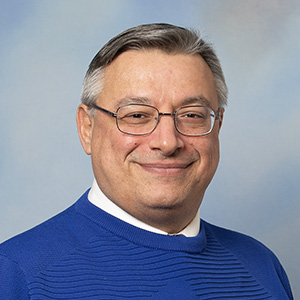
Tansel Turgut, MD, a Michigan City interventional cardiologist with Franciscan Physician Network, shares facts about heart disease and set the record straight regarding some of the common myths.
How you live now and the choices you make can affect your risk for heart disease later in life.
“Heart disease starts basically when we are born,” said Dr. Turgut. “Aortic disease, atherosclerosis or heart disease doesn't start when we're like 40, 50, 60. It starts at ages like 3, 4, 5. Weight, obesity, diabetes, high blood pressure, unhealthy eating habits and smoking directly affect us starting at a very, very young age, contrary to what we have been thinking for many years, that it starts in the elderly. Heart disease doesn’t check our ID.”
Get tips for preventing heart disease in your 20s and 30s.
Even when blood sugar levels are under control, people living with diabetes are still at increased risk for heart disease and stroke.
"Diabetes increases cardiovascular death, like two to four times more,” said Dr. Turgut “It not only also affect the heart, it affects all the vessels, including the brain vessels, leg vessels. So, diabetes is a major problem. And then, even if it's well-controlled, it has to be something that's taken into consideration very early and very aggressively managed. So even if your diabetes is excellently controlled, dying from heart disease complications is 50% more."
Although it’s common to have chest pain or discomfort, heart attack symptoms may be subtle. These include:
“Crushing, sweating, nausea, vomiting, feeling like you can’t breathe and heavy chest pain. That stuff doesn't happen all the time,” explained Dr. Turgut. "Women especially do not have classical chest pain a lot of times. I've seen heart attacks with ear pain, throat pain, toothaches, back pain, abdominal pain, not feeling good.
“If you're suspecting something is wrong, sometimes shortness of breath, abdominal pain, people know that something is wrong a lot of times. It may be a good idea to come to the emergency room or see your primary physician immediately.”
High blood pressure is called the “silent killer” because you don’t usually often feel or recognize its symptoms.
“Sometimes it may cause headaches. Sometimes they feel a little bit weak or, you know, a little bit tired. They think they're getting old,” Dr. Turgut said. “It's called a silent killer because the damage is very slow. Same thing like some pipes in the heart and all the body constantly is being pressured by this flow. Then, the vessels are elastic, collagen and stuff, and they start getting damaged. So, suddenly, the heart vessels, leg vessels, brain vessels. And then, it may cause strokes or dementia.”
Dr. Turgut recommends regularly checking your blood pressure.
"Getting a good blood pressure cuff at home may be very, very important. People should have a blood pressure cuff at home and not that wrist one, they're very inaccurate. And not the cheap one, an accurate one.” (Get tips for checking your blood pressure at home.)
“So, that's also completely wrong,” said Dr. Turgut. “Genetics, you cannot change. But you know, smoking, significantly, you can cut back your risk if not smoking. Weight exercising with the modifications, you can decrease your risk around 46%.”
Although people with a family history of heart disease are at higher risk of developing heart disease themselves, there are ways to take steps to reduce their risk. Some ideas include:
“Atherosclerosis is a generalized vascular problem. So, it can be blockages in the legs, it can be blockages in the heart, it can be blockages in the neck vessels,” Dr. Turgut said.
Those blockages can lead to serious health problems.
“So, neck vessels, you get strokes,” Dr. Turgut said. “In small vessels in the brain, you start getting dementia. Heart, you get heart attacks. Legs, you get claudication, like a pain when walking. So, more than half of the patients in the U.S actually with leg pain are diagnosed like arthritis and, you know, lumbar back pain and stuff. So if you have leg pain, especially with walking, this may be a sign of a peripheral vascular disease and atherosclerosis.”
Leg pain felt in the muscles could be a sign of peripheral artery disease. PAD results from blocked arteries in the legs caused by plaque buildup. The risk of a heart attack or stroke increases for people with PAD.
"If you have a blockage in the legs, this increases your chance of having a heart problem, almost four or five times,” Dr. Turgut said. “So if you have a blockage in the leg, there's a very good chance you have a blockage in the heart.”
Measuring risk factors in young adults allows for estimating the lifetime risk of cardiovascular disease.
"The American Heart Association recommends checking (cholesterol) by age 20,” Dr. Turgut said. “If you have a strong family history, I recommend it much earlier than 20.
"We know that decreasing cholesterol decreases cardiac events in half. A lot of people in the U.S. with cholesterol problems are not treated.”
Get moving as soon as possible with a physician-approved plan. Research has proven that heart attack survivors who are regularly physically active and make other heart-healthy changes live longer than those who don’t.
“We want activity after a heart attack. Very soon, we want them out of bed, we want them walking,” Dr. Turgut said. “We want them as active as possible, and we send them to cardiac rehab. That's another thing, cardiac rehab decreases deaths actually 25-30% in the hospitalizations, but only 20-30% of our patients go to cardiac rehab.”
"Most of the heart attacks don't have actually fast-beating hearts,” said Dr. Turgut. “If you have a fast rhythm, you know that's with exercise, it's usually normal; without exercise, if it's still fast, it may be a good idea to go and see a doctor."
Variation in your heart rate is normal. Your heart rate speeds up during exercise or when you get excited and slows down when you sleep. Most of the time, a change in your heartbeat is nothing to worry about. But sometimes, it can be a sign of arrhythmia, an abnormal or irregular heartbeat.
“If you have a fast heart rhythm, if it's very fast, like you're dizzy, passing out level, you need to go to the emergency room,” Dr. Turgut said. It is very important, if it's irregular and fast, it's atrial fibrillation, which may cause strokes that needs to be checked urgently."
The heart suddenly stops beating during cardiac arrest, not heart failure. With heart failure, the heart keeps working, but it doesn’t pump blood as well as it should. It can cause shortness of breath, swelling in the feet and ankles or persistent coughing and wheezing.
Steps you can take to prevent heart disease include:
“From you are born, you can decrease your risk of dying from a heart disease almost half doing the right thing," Dr. Turgut said.
Having diabetes increases your risk of cardiovascular death.
“Even if your diabetes is excellently controlled, dying from heart disease complications is 50% more,” Dr. Turgut said.
“Some of these semaglutide and similar medicines actually are decreasing cardiovascular mortality and also heart failure, which is very important because we never had any weight loss medicines that affect diabetes, that decrease mortality, cardiac mortality before,” Dr. Turgut said.
“Only around 25% of the people have good blood pressure control in the U.S.," Dr. Turgut said. "Twenty-five percent of the people with hypertension, almost 30 to 40% people, they don't even know that they have high blood pressure. And the other ones that they know, two-thirds don't even have a well-controlled blood pressure. So, it's a big public problem.”
"Blood pressure is a lot of times not diagnosed at all," Dr. Turgut said. "This is something preventable completely because there's blood pressure cuffs, pharmacies, you know, malls everywhere. And it's called a silent killer because the damage is very slow.”
“Get checked at least a couple times a year when you're young," Dr. Turgut said. When you're like more than 30, getting a blood pressure at home may be very, very important.”
"The American Heart Association recommends checking it by age 20. And then, acting," Dr. Turgut said. "You can modify your diet. Most people don't want to take medications and that's completely understandable. If you have a strong family history, I would recommend it much earlier than 20."
"You get genes from your parents," Dr. Turgut said. "Significantly, you can cut back your risk if not smoking. Weight, if you're obese, losing weight or eating healthy, exercising with the modifications, you can decrease your risk more than 50% actually, so around 46%.”
“Atherosclerosis is a generalized vascular problem," Dr. Turgut said. "So, it can be blockages in the legs, it can be blockages in the heart, it can be blockages in the neck vessels. So, neck vessels, you get strokes. You know, in small vessels in the brain, you start getting dementia. Heart, you get heart attacks. Legs, you get claudication, like a pain when walking. If you have leg pain, especially with walking, this may be a sign of a peripheral vascular disease and atherosclerosis."
“If you have a blockage in the legs, this increases your chance of having a heart problem, almost like four or five times," Dr. Turgut said. "So if you have a blockage in the leg, there's a very good chance you have a blockage in the heart. That may be a good warning for you actually, for people to get it checked actually."
Classical chest pain appears in about half of all heart attacks.
“If you're suspecting something is wrong, sometimes shortness of breath, abdominal pain, you know, people know that something is wrong a lot of times,” Dr. Turgut said. “And then, it may be a good idea to come to the emergency room or see your primary physician immediately.”
"Most of the heart attacks don't have actually fast-beating hearts," Dr. Turgut said.
"We want activity after a heart attack. Very soon, we want them out of bed. We want them walking," Dr. Turgut said. "We want them as active as possible, and we send them to cardiac rehab. Cardiac rehab decreases deaths actually 25-30% in the hospitalizations, but only 20-30% of our patients go to cardiac rehab."
"Heart failure, it can be two things," Dr. Turgut said. "Number one, it can be a weak heart. It's like a pump. So, the pump is weak. It cannot force the blood. And then, if the pump is weak, the blood goes back to the lungs and you cannot breathe. That's a heart failure.
"The other kind of heart failure is you have a strong heart, but the vessels, they're resistant. So, the vessels that push, the pipes, have a high blood pressure. So, you cannot pump the blood through those pipes. So, what happens if you cannot pump it? It goes back again to the lungs. So, one can be with a weak heart, pump problem. The other one can be high blood pressure, for example, stiff. So if you have a very high blood pressure, you can have a heart failure without even any weak heart. Or you can have a very good blood pressure, but a weak heart. And then, it goes back to heart failure.”

Interventional Cardiology +2 more
Accepting new patients
Franciscan Physician Network
